

In the era of smart water management, electromagnetic water meters have emerged as cornerstone devices for accurate, reliable flow measurement across municipal, industrial, and commercial sectors. What distinguishes modern electromagnetic water meters from traditional models is the integration of advanced sensing technology—combining precision engineering, digital signal processing, and intelligent connectivity to address the limitations of conventional measurement methods. This article explores the core advanced sensing technologies powering modern electromagnetic water meters, their technical advantages, practical impacts, and future development trajectories.
Core Advanced Sensing Technologies in Modern Electromagnetic Water Meters
Modern electromagnetic water meters leverage cutting-edge sensing principles and innovative hardware design to enhance measurement performance, adaptability, and usability. Key technologies include:
- High-sensitivity electromagnetic sensing coils: Unlike basic coils in early models, modern meters use microfabricated, multi-layered electromagnetic coils with optimized winding structures. These coils generate a stable, uniform magnetic field with minimal energy consumption, ensuring accurate induction of the electromotive force (EMF) from flowing water. The high sensitivity enables detection of ultra-low flow rates (as low as 0.01 m/s), expanding application scenarios to small-diameter pipelines and low-consumption environments.
- Precision electrode materials and structures: Advanced meters adopt corrosion-resistant, low-polarization electrode materials such as tantalum, platinum-iridium alloys, or specialized conductive ceramics. The electrodes feature a streamlined, flush-mounted design that eliminates flow disturbance and reduces fouling accumulation. Additionally, some models integrate self-cleaning electrode technology—using micro-current pulses to remove adherents, maintaining consistent signal transmission and measurement accuracy over long-term use.
- Digital signal processing (DSP) and adaptive filtering: The raw EMF signals from electrodes are processed in real time by high-performance DSP chips. Advanced algorithms such as adaptive notch filtering and wavelet transform effectively suppress interference from pipeline vibrations, temperature fluctuations, and external electromagnetic fields. This ensures stable signal output even in harsh industrial environments, reducing measurement errors to ±0.2% or better.
- Multi-parameter sensing integration: Beyond flow rate, modern electromagnetic water meters integrate additional sensors to capture comprehensive water data. Common integrated sensors include temperature sensors (for thermal energy calculation), pressure sensors (for leak detection), and conductivity sensors (for media quality monitoring). This multi-parameter sensing capability transforms the meter into a holistic water management node, providing actionable insights beyond basic flow measurement.
- Non-intrusive and clamp-on sensing options: For scenarios where pipeline modification is impractical, advanced clamp-on electromagnetic water meters use external sensing probes. These probes attach to the outer wall of pipes, detecting magnetic field changes through the pipe material without contacting the water. This non-intrusive design minimizes installation downtime, avoids pipeline damage, and is ideal for retrofitting in existing water systems.
Technical Advantages Driven by Advanced Sensing
The integration of advanced sensing technology endows modern electromagnetic water meters with unparalleled advantages over traditional flow measurement devices:
- Superior measurement accuracy and rangeability: Advanced sensing coils and DSP algorithms enable a wide turndown ratio (up to 1:1000), covering both ultra-low and high flow rates with consistent accuracy. This eliminates the need for multiple meters for different flow ranges, reducing equipment costs and simplifying system design.
- Strong adaptability to complex media: Corrosion-resistant electrodes and adaptive sensing technology allow the meters to handle diverse water media, including wastewater, industrial effluents, and water with high turbidity or sediment content. They maintain performance without being affected by media viscosity, density, or temperature (within -20°C to 180°C for most models).
- Low maintenance and long service life: Flush-mounted electrodes, self-cleaning technology, and sealed sensing components reduce fouling, corrosion, and mechanical wear. Most modern models have a service life of 10–15 years with minimal calibration requirements, lowering operational and maintenance costs for users.
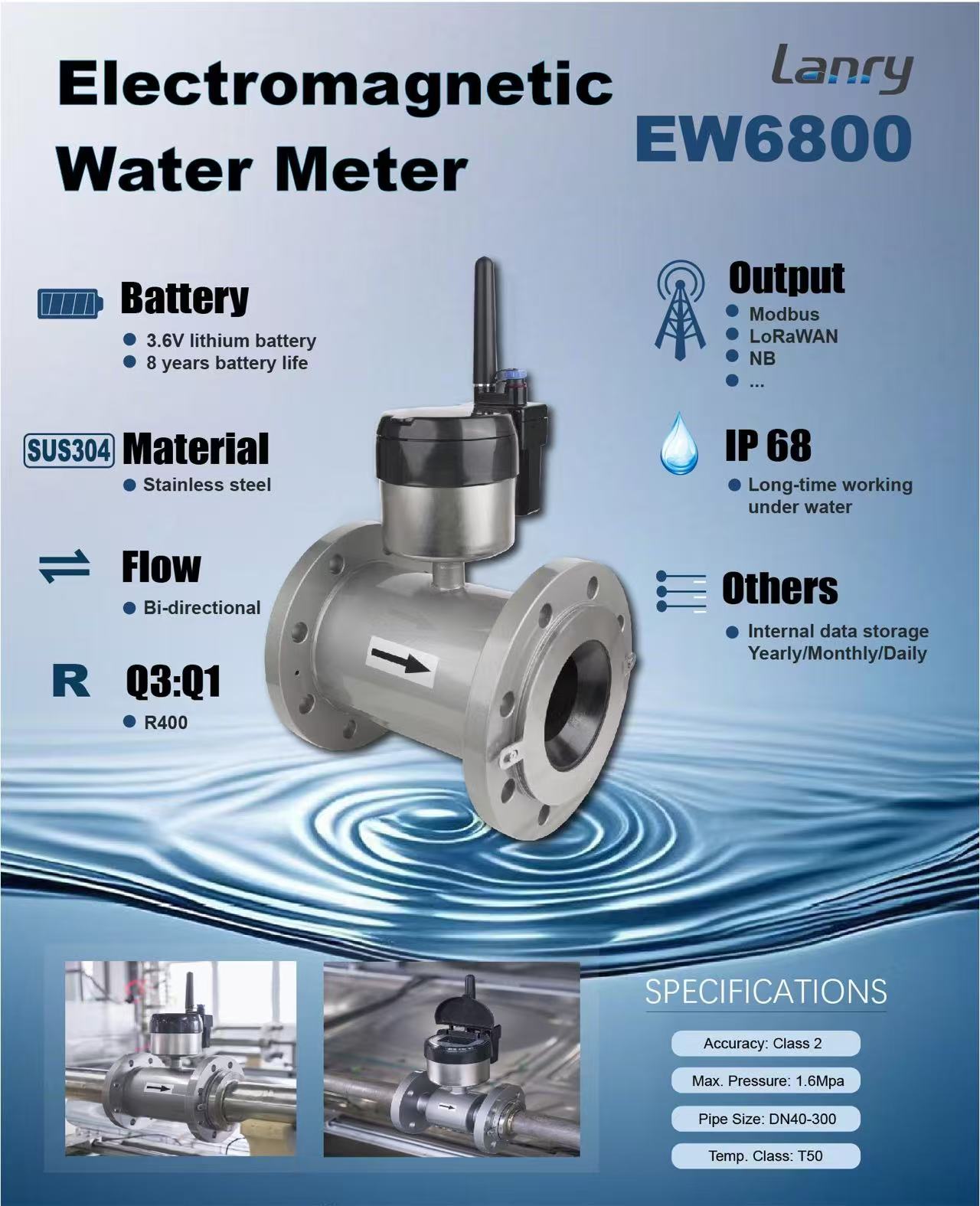
- Real-time data visibility and smart connectivity: Advanced sensing modules integrate with digital communication protocols (e.g., Modbus TCP, BACnet, NB-IoT, LoRaWAN). The meters transmit real-time flow, temperature, and pressure data to cloud platforms or SCADA systems, enabling remote monitoring, data analysis, and predictive maintenance. This connectivity empowers intelligent water management, such as leak detection, consumption optimization, and demand forecasting.
Practical Applications Transformed by Advanced Sensing
Advanced sensing technology has expanded the application scope of electromagnetic water meters, driving efficiency and sustainability across key sectors:
- Municipal water supply and distribution: In urban water networks, meters with high-precision sensing and leak-detection capabilities help utilities monitor water loss in real time. The ability to measure low flow rates identifies hidden leaks in pipelines, while multi-parameter sensing tracks water quality and pressure, ensuring reliable supply to households and businesses.
- Industrial process control: Industries such as chemical, pharmaceutical, and food processing rely on electromagnetic water meters for precise measurement of process water, cooling water, and wastewater. Advanced sensing technology withstands harsh industrial environments (e.g., high pressure, chemical corrosion) and provides data to optimize production processes, reduce water waste, and ensure compliance with environmental regulations.
- Commercial and residential buildings: Smart buildings integrate electromagnetic water meters with building management systems (BMS). Advanced sensing enables sub-metering of individual units, tenant billing, and monitoring of water usage in HVAC systems. Residents and facility managers can access real-time consumption data, promoting water conservation and reducing operational costs.
- Agricultural irrigation: In precision agriculture, electromagnetic water meters with low-flow sensing capabilities accurately measure irrigation water usage. This helps farmers optimize water distribution, reduce waste in water-scarce regions, and improve crop yields through data-driven irrigation management.
Future Trends in Sensing Technology for Electromagnetic Water Meters
As smart water management evolves, advanced sensing technology in electromagnetic water meters will continue to innovate in three key directions:
- AI-enhanced sensing and self-optimization: Future meters will integrate artificial intelligence (AI) algorithms to analyze historical sensing data, identify patterns of flow behavior, and self-calibrate in real time. AI will also enable predictive maintenance—detecting potential sensor degradation or fouling before it affects measurement accuracy.
- Miniaturization and low-power sensing: Advances in microelectromechanical systems (MEMS) will lead to smaller, more energy-efficient sensing modules. Battery-powered electromagnetic water meters with low-power sensing technology will become more prevalent, suitable for remote areas or locations without stable power supply.
- Integration with IoT and digital twins: Sensing data from electromagnetic water meters will be seamlessly integrated into IoT-based smart water networks and digital twin platforms. This integration will enable virtual simulation of water systems, real-time optimization of water distribution, and holistic management of water resources at a city or regional scale.
Conclusion
Advanced sensing technology is the backbone of modern electromagnetic water meters, elevating them from simple flow measurement devices to intelligent, data-rich tools for water management. Through high-sensitivity electromagnetic coils, precision electrodes, digital signal processing, and multi-parameter integration, these meters deliver unprecedented accuracy, adaptability, and connectivity. Their impact spans municipal, industrial, commercial, and agricultural sectors, driving water conservation, operational efficiency, and sustainability. As AI, MEMS, and IoT technologies advance, the sensing capabilities of electromagnetic water meters will continue to evolve, playing an increasingly critical role in building resilient, smart water systems for the future. For organizations seeking reliable, intelligent water measurement solutions, modern electromagnetic water meters—powered by advanced sensing technology—are the definitive choice.
Post time: Nov-12-2025