

In the field of flow measurement, multi-channel ultrasonic flow meters have emerged as a highly efficient and reliable solution, offering several distinct advantages over traditional flow measurement devices. These advantages make them increasingly popular across a wide range of industries, from water and wastewater treatment to oil and gas, and from power generation to chemical processing.
High Measurement Accuracy
Multi-channel ultrasonic flow meters are designed to achieve remarkable accuracy in flow measurement. By using multiple channels, they can capture the velocity profile of the fluid more comprehensively. Each channel independently measures the flow velocity at different positions within the pipe. This multi-point measurement approach effectively reduces the impact of flow disturbances, such as those caused by elbows, valves, or pumps in the pipeline. For example, compared to single-channel ultrasonic flow meters or other velocity-type flow meters like electromagnetic flow meters, multi-channel ultrasonic flow meters are less sensitive to upstream obstacles. In a well-installed system, with typical requirements of at least 5D upstream and 2D downstream straight inlet pipe sections (where D is the pipe diameter), the measurement accuracy of multi-channel ultrasonic flow meters can reach as high as 0.5%. In contrast, the repeatability of electromagnetic flow meters is often only about 1/3 of this precision, and that of single-channel ultrasonic flow meters is around 1/5. This high accuracy is crucial in applications where precise flow measurement is essential, such as in trade settlement, where accurate measurement of fluid quantities directly impacts financial transactions.
Low Requirement for Straight Pipe Sections
Another significant advantage of multi-channel ultrasonic flow meters lies in their relatively low requirement for straight pipe sections. They employ a double integration method to calculate the flow based on velocity distribution and area distribution. This advanced algorithm enables them to accurately measure the flow in both laminar and turbulent flow conditions, ensuring the accuracy of measurement handover. As a result, they can operate effectively with shorter straight pipe lengths compared to many other flow meters. For instance, while some traditional flow meters may require 20D or more of straight pipe upstream for accurate measurement, multi-channel ultrasonic flow meters typically need only 10D upstream and 3D downstream. This flexibility in installation is a major benefit, especially in situations where space is limited or where modifying the existing pipeline layout to accommodate long straight pipe sections is costly or impractical. It also allows for more versatile installation in complex pipeline networks, expanding the range of applications where these flow meters can be used.
High Measurement Sensitivity
Multi-channel ultrasonic flow meters are characterized by their high measurement sensitivity. The time measurement accuracy in these meters is extremely high, often reaching the picosecond level. This high precision in time measurement enables them to achieve accurate flow rate measurements even at low flow velocities. For example, they can accurately measure flows with velocities as low as 0.5 m/s with an accuracy of 0.5%. This sensitivity is particularly valuable in applications where the flow rate may vary widely, including both high and low flow conditions. The wide range ratio, which can be as high as 400:1, means that these flow meters can effectively measure flows over a broad spectrum, from very low flow rates during standby or low-demand periods to high flow rates during peak operation. This ability to handle a wide range of flow rates without sacrificing accuracy makes multi-channel ultrasonic flow meters suitable for diverse industrial processes where flow rate fluctuations are common.
Adaptability to Complex Fluids and Working Conditions
These flow meters are highly adaptable to different types of fluids and challenging working conditions. Their ultrasonic measurement principle is not affected by many physical properties of the fluid, such as temperature, pressure, and viscosity within a wide range. This makes them suitable for measuring a variety of fluids, including clean water, seawater, acids, alkalis, oils, and even fluids with a certain amount of suspended solids or bubbles (although the presence of excessive solids or bubbles may still have some impact, they generally perform better than many other types of flow meters in such conditions). In addition, multi-channel ultrasonic flow meters can operate in a wide temperature range, from -10°C to 150°C in many cases, and can withstand high pressures, making them suitable for use in harsh industrial environments. For example, in oil and gas pipelines, where the fluid may be a complex mixture of hydrocarbons with varying temperatures and pressures, multi-channel ultrasonic flow meters can provide reliable flow measurement data.
Non-Intrusive and Low Maintenance
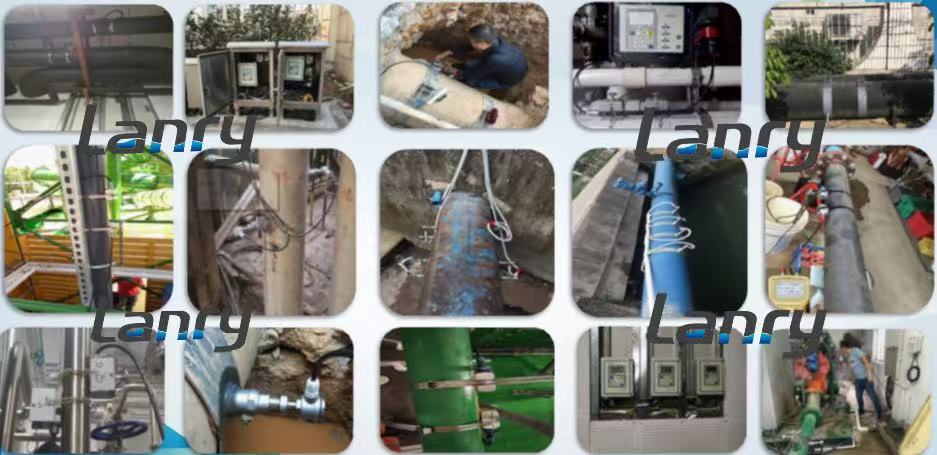
Many multi-channel ultrasonic flow meters offer a non-intrusive measurement option, especially those with external clamp-on ultrasonic sensors. This non-intrusive installation method does not require cutting or modifying the pipeline, which simplifies the installation process and reduces installation costs. It also minimizes the risk of leaks or disruptions to the fluid flow. Moreover, since the sensors do not come into direct contact with the fluid, they are less prone to corrosion, erosion, or fouling, which significantly reduces maintenance requirements. In contrast, intrusive flow meters with moving parts or parts in direct contact with the fluid may require frequent maintenance, calibration, and replacement due to wear and tear or damage from the fluid. Even for plug-in ultrasonic sensors that are in direct contact with the fluid, many multi-channel ultrasonic flow meters are designed to allow for continuous flow and pressure installation and online maintenance. This means that if the sensor is affected by scaling or other issues over time, it can be removed and maintained without shutting down the entire pipeline system, ensuring continuous operation and reducing downtime.
Versatility and Compatibility
Multi-channel ultrasonic flow meters are highly versatile and compatible with various industrial systems. They can be easily integrated with other process control and monitoring devices. For example, they often come with standard communication interfaces such as RS485, which allows for seamless communication with programmable logic controllers (PLCs), distributed control systems (DCSs), or other data acquisition and control systems. This enables real-time monitoring and control of the flow rate, as well as the integration of flow data into overall plant management systems. Additionally, some multi-channel ultrasonic flow meters can be equipped with temperature sensors to simultaneously measure both flow and heat (in the case of heating or cooling applications), providing more comprehensive data for energy management and process optimization. They can also be customized to meet specific application requirements, such as different pipe sizes, materials, and measurement accuracies, making them suitable for a wide range of industries and applications.
In conclusion, multi-channel ultrasonic flow meters offer a plethora of advantages that make them an attractive choice for modern flow measurement needs. Their high accuracy, low straight pipe section requirements, high sensitivity, adaptability to complex fluids and conditions, non-intrusive nature, low maintenance, and versatility position them as a leading solution in the field of flow measurement, driving efficiency, accuracy, and reliability in industrial processes across the globe.
Post time: May-27-2025