

In sewage treatment plants, accurate flow measurement is of great significance for efficient operation and environmental protection. Flowmeters play a crucial role in monitoring and controlling the flow of wastewater, sludge, and gases.
Types of Flowmeters Used in Sewage Treatment
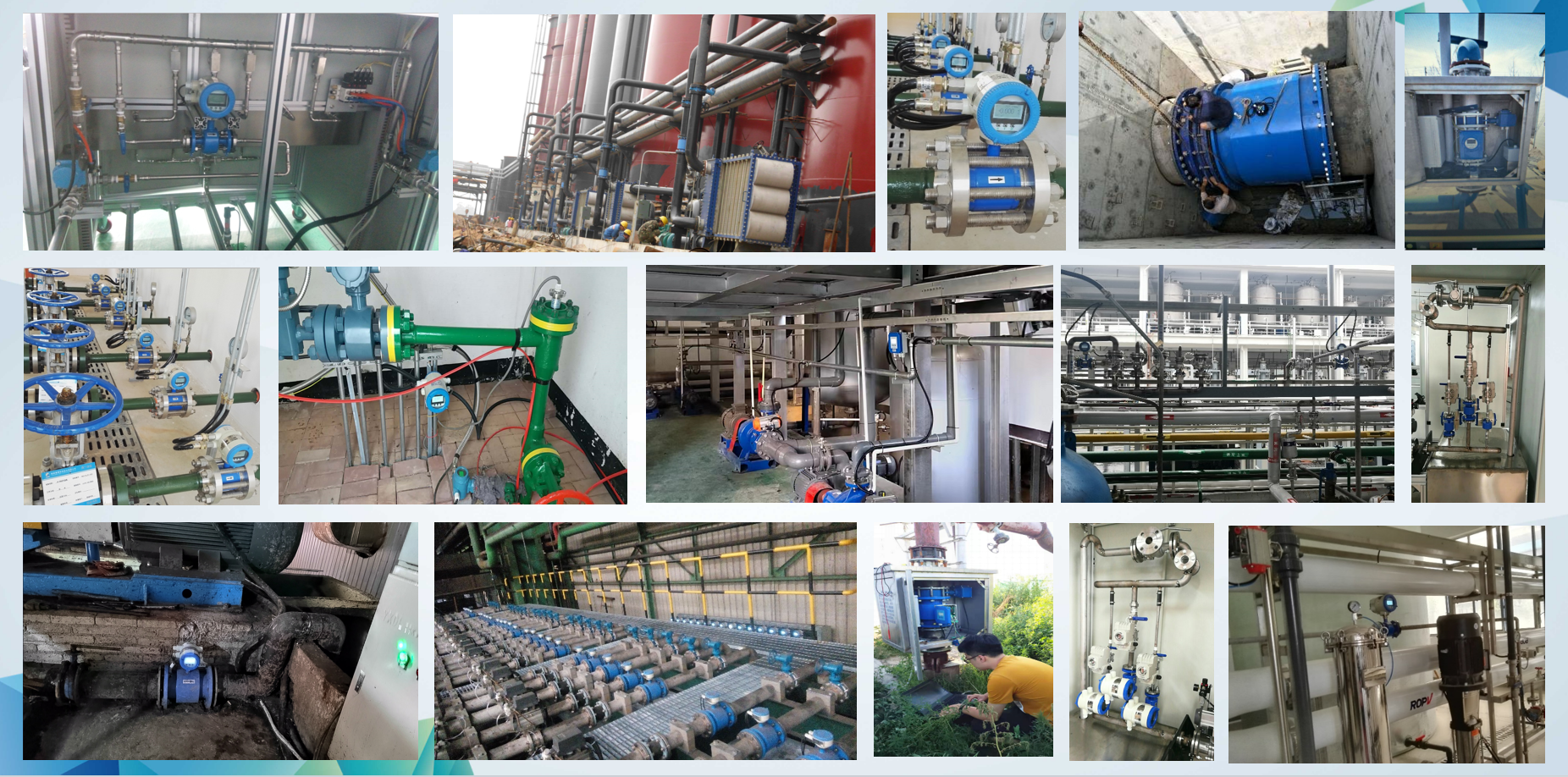
Electromagnetic flowmeters are widely used in sewage treatment due to their high accuracy and reliability. They operate based on Faraday's law of electromagnetic induction. When conductive sewage flows through a magnetic field, an electromotive force is generated, and the magnitude of this force is proportional to the flow velocity. These flowmeters have no moving parts, which reduces the risk of wear and tear. They can measure a wide range of flow rates and are suitable for measuring dirty and corrosive fluids like sewage. For example, they are often installed at the inlet and outlet of the treatment plant to monitor the overall flow of wastewater.
Ultrasonic flowmeters measure the flow velocity of fluids by using ultrasonic waves. There are two main types: transit - time and Doppler - effect ultrasonic flowmeters. Transit - time flowmeters calculate the flow velocity by measuring the difference in the time it takes for ultrasonic waves to travel upstream and downstream in the fluid. Doppler - effect flowmeters detect the frequency shift of ultrasonic waves reflected by particles or bubbles in the sewage. Ultrasonic flowmeters are non - intrusive, which means they do not need to be inserted into the pipeline, thus reducing installation costs and potential blockages. They are suitable for measuring the flow of raw sewage in large - diameter pipes.
Vortex Shedding Flowmeters
Vortex shedding flowmeters work by creating vortices in the fluid as it passes an obstruction in the pipeline. The frequency of these vortices is directly related to the flow velocity of the sewage. They have a simple structure, low pressure drop, and can measure a wide range of flow rates. Vortex shedding flowmeters are often used to measure the flow of sludge in pipelines, as they can handle the relatively viscous and solid - containing nature of sludge.
Applications of Flowmeters in Sewage Treatment Processes
Influent Flow Monitoring
At the inlet of the sewage treatment plant, flowmeters are used to measure the volume and flow rate of incoming raw sewage. This information is essential for operators to determine the treatment load and plan the dosing of chemicals. For instance, if the influent flow rate suddenly increases, operators may need to adjust the treatment process to ensure that the plant can handle the increased volume effectively.
Chemical Dosing Control
In the treatment process, accurate flow measurement is crucial for chemical dosing systems. Flowmeters help ensure that the correct amount of chemicals, such as coagulants and disinfectants, is added to the wastewater. For example, in the disinfection stage, a flowmeter measures the flow of treated water, allowing for the precise dosing of chlorine to meet the required disinfection standards.
Sludge Flow Measurement
Flowmeters are also used to measure the flow of sludge in the treatment plant. This is important for sludge handling and disposal processes. By accurately measuring the sludge flow, operators can optimize the sludge treatment process, such as anaerobic digestion or dewatering. For example, if the sludge flow rate to the anaerobic digester is too high or too low, it can affect the efficiency of methane production.
Effluent Flow Monitoring
Before the treated water is discharged into the environment, flowmeters are used to measure the effluent flow rate and volume. This data is not only important for ensuring compliance with environmental regulations but also for evaluating the overall effectiveness of the treatment process. If the effluent flow rate is too high or the quality does not meet the standards, it indicates that there may be problems in the treatment process that need to be addressed.
In conclusion, flowmeters are essential devices in sewage treatment plants. Their accurate measurement capabilities enable the efficient operation of treatment processes, compliance with environmental regulations, and the protection of the environment. With the continuous development of technology, more advanced and reliable flowmeters will be applied in sewage treatment plants, further improving the treatment efficiency and quality.
Post time: Jun-11-2025