

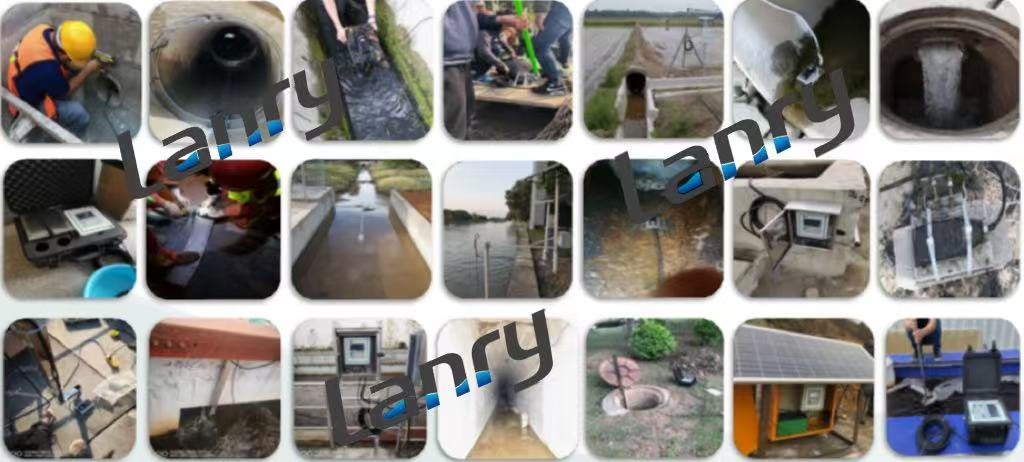
Open-channel flowmeters play a crucial role in modern fluid management systems, finding extensive applications in both pipelines and channels. These meters are designed to measure the flow rate of fluids in open conduits where the fluid surface is exposed to the atmosphere, offering unique advantages that make them indispensable in various industrial, environmental, and municipal settings.
Working Principles and Types
Open-channel flowmeters operate based on different physical principles. One common type is the weir-based flowmeter. Weirs are structures placed across the channel, and as water flows over them, the height of the water upstream of the weir is measured. By using established hydraulic formulas, the flow rate can be calculated. For example, a rectangular weir has a specific relationship between the water head (height of water above the weir crest) and the flow rate, allowing for relatively accurate flow measurements.
Another type is the flume-based flowmeter. Flumes are carefully designed channel constrictions that create a specific flow pattern. Venturi flumes, for instance, narrow the channel in a particular shape, causing the water velocity to increase and the water level to change predictably. Sensors placed at specific points in the flume measure parameters such as water depth and velocity, which are then used to determine the flow rate.
Doppler ultrasonic open-channel flowmeters are also widely used. They work by emitting ultrasonic waves into the flowing fluid. As particles in the fluid move, they reflect the ultrasonic waves, and the change in the frequency of the reflected waves (Doppler shift) is measured. This shift is related to the velocity of the fluid, and combined with the cross-sectional area of the channel, the flow rate can be calculated.
Applications in Pipelines
In pipeline systems, open-channel flowmeters are often used in situations where the pipeline discharges into an open channel or where there is a need to measure the flow rate before the fluid enters a treatment process. For example, in wastewater treatment plants, pipelines carry raw sewage from collection systems. Open-channel flowmeters installed at the entrance of treatment facilities help operators accurately determine the volume of sewage entering the plant. This information is vital for adjusting the dosage of treatment chemicals, scheduling sludge removal, and ensuring the overall efficiency of the treatment process.
In industrial pipelines, when fluids need to be transferred from a closed pipeline system to an open storage or processing area, open-channel flowmeters can provide real-time flow rate data. This is especially useful in industries such as food and beverage, where precise control of fluid flow is necessary to maintain product quality and consistency. For instance, during the filling process of liquid products into open vats or tanks, an open-channel flowmeter can monitor and regulate the flow rate to prevent overfilling or underfilling.
Applications in Channels
In natural and man-made channels, open-channel flowmeters are essential for water resource management, flood control, and environmental monitoring. In river systems, flowmeters are installed at strategic locations to measure the flow rate of the river. This data is crucial for predicting floods. By continuously monitoring the river flow, authorities can issue timely flood warnings, plan evacuation routes, and take preventive measures to protect lives and property.
In irrigation channels, open-channel flowmeters help farmers manage water distribution efficiently. By accurately measuring the flow rate of water in the channels, farmers can ensure that each field receives the right amount of water, optimizing crop growth while conserving water resources. This is particularly important in regions where water is scarce.
Moreover, in environmental monitoring, open-channel flowmeters are used to measure the flow of stormwater runoff. Understanding the volume and rate of stormwater flow helps in assessing the impact on water quality, as well as in designing effective stormwater management systems to reduce pollution and prevent urban flooding.
Advantages and Challenges
The use of open-channel flowmeters in pipelines and channels offers several advantages. They can handle a wide range of flow rates, from very low to high flows, making them suitable for diverse applications. Many open-channel flowmeters require minimal maintenance compared to some in-pipe flowmeters, especially those with moving parts. They are also relatively easy to install, especially in existing channels or at the outlets of pipelines.
However, there are also challenges. Accuracy can be affected by factors such as changes in fluid characteristics (e.g., sediment concentration in water), improper installation, and variations in channel geometry. In some cases, external factors like debris accumulation in the channel can interfere with the measurement. Additionally, calibration of open-channel flowmeters may be more complex compared to some other types of flowmeters, as it often involves considering hydraulic conditions and the specific design of the weir, flume, or ultrasonic sensor setup.
In conclusion, open-channel flowmeters have become an integral part of fluid measurement in pipelines and channels. Their diverse applications, from industrial processes to environmental protection, highlight their importance in modern fluid management. Despite the challenges, continuous technological advancements are improving their accuracy, reliability, and ease of use, ensuring that open-channel flowmeters will continue to play a vital role in various sectors for years to come.
Post time: Jun-05-2025