

Measuring corrosive liquids, such as acids, alkalis, and chemical solvents, poses significant challenges in industrial processes due to their destructive nature to equipment materials. Electromagnetic flow meters (EMFs), based on Faraday's electromagnetic induction principle, have emerged as a reliable solution for this scenario. Their non-intrusive measurement structure, compatibility with a wide range of corrosive media, and high measurement accuracy make them indispensable in industries where harsh chemical environments are prevalent. This article explores the unique advantages of EMFs in corrosive liquid measurement, their typical applications across key industries, and critical considerations for optimal performance.
The core advantage of electromagnetic flow meters in corrosive liquid measurement lies in their structural design and material adaptability. Unlike traditional flow meters with intrusive components that are prone to corrosion, EMFs feature a sensor with a lining that isolates the measuring element from the corrosive medium. Common lining materials include PTFE (polytetrafluoroethylene), PFA (perfluoroalkoxy alkane), and rubber, all of which exhibit excellent resistance to acids, alkalis, and organic solvents. Additionally, the electrodes of EMFs can be made of corrosion-resistant alloys such as Hastelloy, titanium, or tantalum, ensuring long-term stability even in highly aggressive liquids. This non-contact measurement method also eliminates pressure loss and the risk of clogging, which is crucial for maintaining continuous industrial operations.
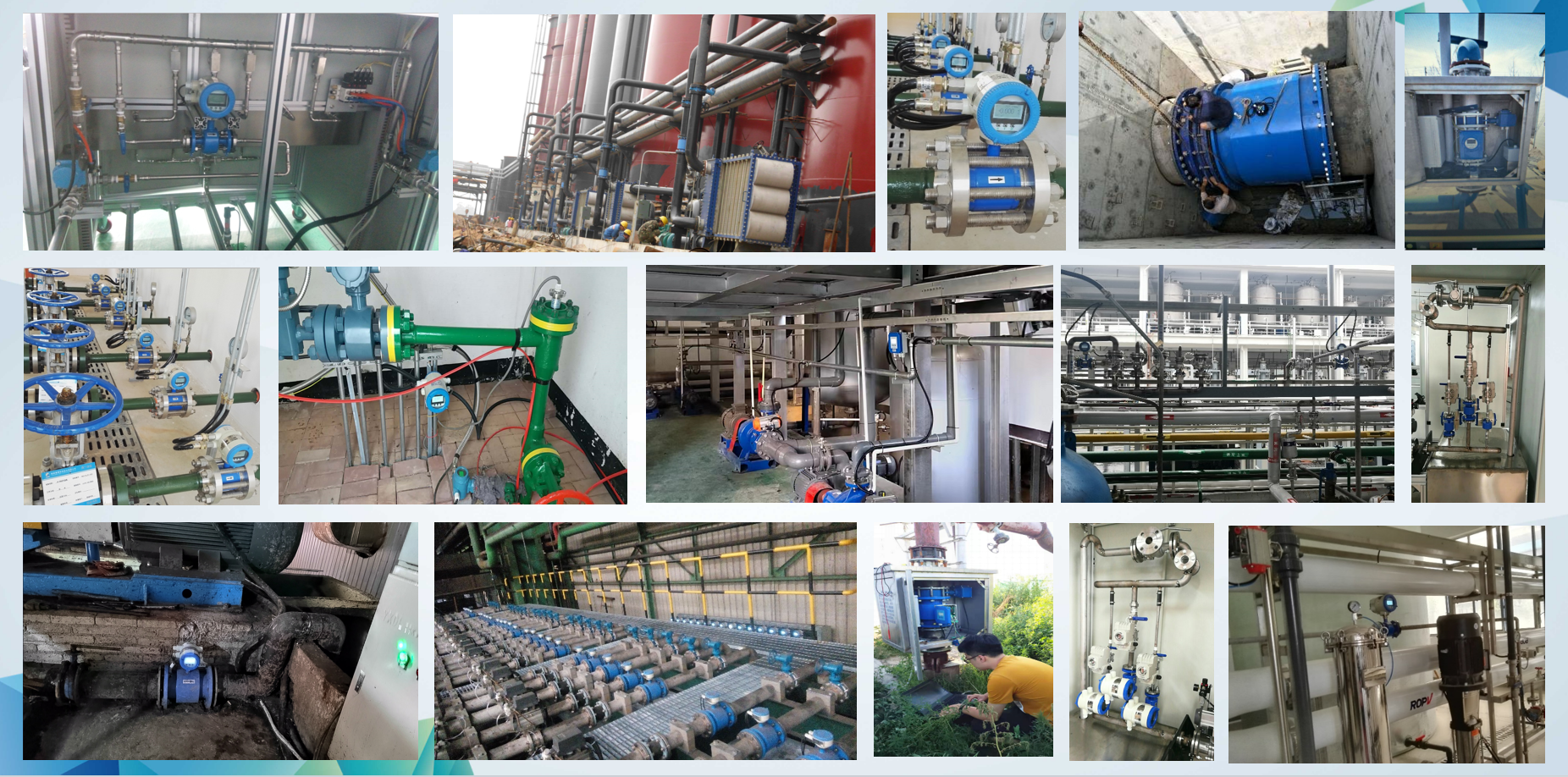
The chemical industry is the primary application field for EMFs in corrosive liquid measurement. In chemical synthesis processes, a variety of corrosive media such as sulfuric acid, hydrochloric acid, and sodium hydroxide need precise flow control to ensure reaction efficiency and product quality. For example, in the production of fertilizers, EMFs with PTFE linings and Hastelloy electrodes accurately measure the flow rate of concentrated sulfuric acid, enabling precise dosing with ammonia. In pesticide manufacturing, they monitor the flow of corrosive organic solvents, ensuring the safety and stability of the reaction process. The ability of EMFs to measure conductive corrosive liquids with high accuracy (typically ±0.5% of the measured value) makes them a key component in chemical process automation.
The mining and metallurgy industry also relies heavily on EMFs for measuring corrosive liquids. In the leaching process of non-ferrous metals (such as copper, zinc, and gold), corrosive leaching agents (e.g., sulfuric acid solution, cyanide solution) are used to extract metals from ores. EMFs are employed to measure the flow rate of these leaching agents, ensuring uniform mixing with ores and optimizing leaching efficiency. In metallurgical processing, they also monitor the flow of corrosive cooling liquids and waste acid, helping to reduce energy consumption and meet environmental discharge standards. The robust structure of EMFs allows them to withstand the high-temperature and high-pressure conditions often encountered in mining and metallurgy operations.
Wastewater treatment plants are another important application scenario. Industrial wastewater often contains corrosive components such as heavy metal ions, acids, and alkalis, which require accurate flow measurement for effective treatment. EMFs measure the flow rate of corrosive wastewater in collection and treatment processes, enabling precise control of chemical additives (e.g., neutralizers) and ensuring compliance with discharge regulations. Their resistance to fouling and corrosion ensures stable operation even in complex wastewater environments, reducing maintenance costs and downtime.
To ensure optimal performance of EMFs in corrosive liquid measurement, several key considerations must be noted. First, select appropriate lining and electrode materials based on the type and concentration of the corrosive medium. Second, ensure the measured liquid has sufficient conductivity (usually above 5 μS/cm), as EMFs cannot measure non-conductive liquids. Third, install the meter correctly to avoid electromagnetic interference and ensure a stable flow field. Regular maintenance, such as checking the integrity of the lining and cleaning electrodes, is also essential for long-term reliability.
In conclusion, electromagnetic flow meters have become the preferred choice for corrosive liquid measurement due to their material adaptability, high accuracy, and stable performance. Their wide applications in the chemical, mining, and wastewater treatment industries highlight their critical role in ensuring process efficiency, product quality, and environmental safety. With continuous advancements in material technology and sensor design, EMFs are expected to provide more reliable solutions for even more extreme corrosive measurement scenarios in the future.
Post time: Dec-09-2025