

In industrial processes ranging from chemical manufacturing to wastewater treatment, fluid measurement faces relentless challenges. Corrosive acids, viscous slurries, and abrasive slurries with solid particles have long tested the limits of traditional flow meters, leading to frequent breakdowns, inaccurate readings, and costly downtime. Against this backdrop, electromagnetic flow meters (EMFs) have emerged as a robust solution, designed to conquer the harshest fluid conditions. Unlike mechanical meters that succumb to wear, clogging, or chemical attack, EMFs thrive where others fail—proving that no fluid is too tough to measure with precision and reliability.
Traditional flow measurement technologies struggle to keep pace with demanding fluids. Turbine meters, for example, rely on rotating blades that are easily worn down by abrasive particles or gummed up by viscous fluids like molasses or sludge. Orifice plates and Venturi tubes are prone to clogging when handling slurries, while their metal components corrode rapidly in contact with chemicals like hydrochloric acid or sodium hydroxide. These limitations translate to compromised accuracy: a clogged or worn meter can deviate by 10% or more from true flow rates, leading to incorrect dosing in chemical processes, overbilling in fluid transport, or non-compliance with environmental regulations. For industries where fluid properties are dynamic—such as food processing, where viscosity shifts with temperature—traditional meters offer little flexibility, requiring frequent recalibration or replacement.
Electromagnetic flow meters overcome these challenges through a fundamentally different design: they measure flow without direct contact with moving parts, leveraging Faraday’s Law of Electromagnetic Induction. Here’s how it works: the meter’s pipe is lined with a chemically resistant material (such as PTFE, rubber, or ceramic), while two electrodes embedded in the lining generate a magnetic field across the fluid. As conductive fluid flows through the field, it induces an electric voltage proportional to its velocity—this voltage is measured by the electrodes and converted into flow rate data. The absence of moving parts eliminates wear from abrasives and clogging from viscous fluids, while the non-metallic lining acts as a barrier against corrosive substances. This design ensures that EMFs remain durable and accurate even when handling fluids that would destroy traditional meters.
What makes EMFs truly versatile is their ability to adapt to extreme fluid characteristics. For corrosive fluids—from industrial acids and alkalis to seawater and chemical solvents—the meter’s lining material can be customized to match the application. PTFE linings resist most organic and inorganic chemicals, making them ideal for pharmaceutical or petrochemical processes, while rubber linings excel in handling abrasive slurries with large particles, such as mining tailings or wastewater with sediment. Viscous fluids, including adhesives, lubricants, and food products like chocolate or syrup, flow smoothly through the unobstructed pipe of an EMF, with no narrow passages to cause buildup. Even abrasive fluids containing sand, gravel, or metal shavings pass through without damaging the meter, as there are no rotating components to wear down. This adaptability means a single EMF can handle multiple fluid types across different process stages, reducing the need for specialized meters.
Beyond durability, EMFs deliver precision that matters in critical applications. They maintain accuracy within ±0.5% of full scale (and often better) across a wide flow range, from low velocities (as low as 0.01 m/s) to high flow rates suitable for industrial pipelines. This precision is crucial for chemical processing, where precise dosing of raw materials ensures product quality and safety, and for wastewater treatment, where accurate flow data supports compliance with discharge limits. EMFs also excel at measuring non-homogeneous fluids, such as slurries with varying solid content, which confound traditional meters. Their ability to provide consistent, reliable data even in unstable fluid conditions makes them indispensable for industries where process control is mission-critical.
The practical benefits of EMFs extend to operational efficiency and cost savings. With no moving parts to maintain or replace, they require minimal upkeep—typically just periodic calibration every 1–3 years, compared to quarterly maintenance for mechanical meters. This reduces downtime and maintenance costs, especially in hard-to-reach locations like underground pipelines or high-temperature industrial settings. EMFs are also easy to install, with options for flange, wafer, or insertion mounting that fit existing pipework without major modifications. Many modern EMFs integrate IoT connectivity, allowing real-time monitoring of flow rates, diagnostic alerts for lining wear or electrode fouling, and remote calibration. This digital intelligence enables proactive maintenance, preventing unexpected failures and ensuring continuous operation.
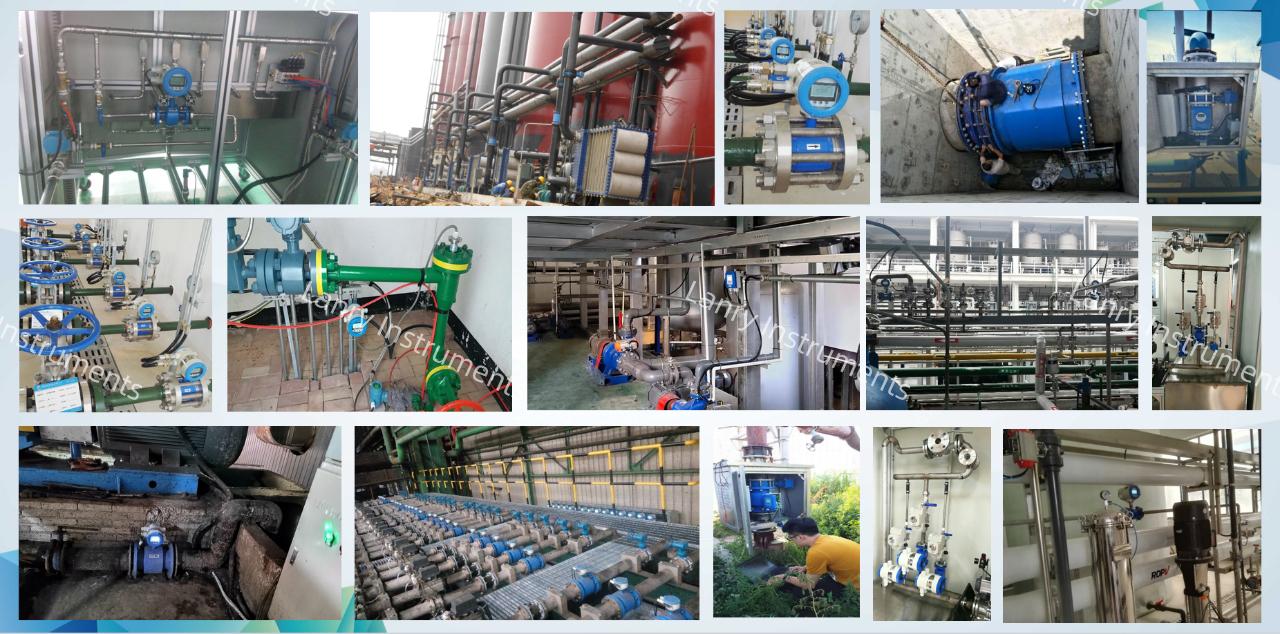
From mining and oil and gas to food processing and pharmaceuticals, EMFs have become the go-to choice for industries grappling with tough fluids. In chemical plants, they measure corrosive reagents with pinpoint accuracy, ensuring safe and efficient reactions. In wastewater treatment facilities, they handle abrasive sludge and corrosive cleaning agents, providing data to optimize treatment processes. In the food and beverage industry, they measure viscous products like honey or tomato paste without contaminating the fluid or compromising taste. Even in extreme environments—such as high-pressure pipelines or cryogenic applications—EMFs deliver consistent performance, proving their versatility across sectors.
As industrial processes grow more complex and fluid challenges become more severe, the demand for reliable, adaptable flow measurement will only increase. Electromagnetic flow meters stand out as a solution that doesn’t just measure fluids—it conquers them. By handling corrosive, viscous, and abrasive fluids with ease, they eliminate the trade-offs between durability and accuracy that plague traditional meters. For businesses, this means reduced costs, improved process control, and peace of mind knowing that their flow measurement is up to any challenge.
In a world where fluids are the lifeblood of industry, electromagnetic flow meters are the unsung heroes that keep processes running smoothly. They prove that no matter how tough the fluid, precision measurement is not just possible—it’s practical. As technology advances, EMFs will continue to evolve, offering even greater resilience and intelligence. But for now, they remain the gold standard for handling the most demanding fluids, redefining what’s possible in industrial flow measurement.
Post time: Nov-20-2025