


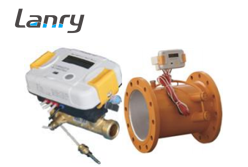
In the realm of thermal energy measurement, electromagnetic heat meters and ultrasonic heat meters stand out as two popular and technologically advanced devices. Despite their shared purpose of accurately measuring heat consumption, they exhibit significant differences in their working principles, performance characteristics, and application scenarios. Understanding these distinctions is crucial for selecting the most suitable heat - metering solution for various heating and cooling systems.
1. Working Principles
1.1 Electromagnetic Heat Meters
Electromagnetic heat meters operate based on Faraday's law of electromagnetic induction. Inside the meter, there is a magnetic field generated by coils. When the conductive heating medium, such as water, flows through the meter's measuring tube perpendicular to this magnetic field, an electromotive force is induced. According to Faraday's law, the magnitude of this electromotive force is directly proportional to the flow velocity of the medium and the strength of the magnetic field. By measuring this induced voltage, the flow rate of the heating medium can be determined. Coupled with the measurement of the temperature difference between the supply and return pipes, the heat consumption can be calculated accurately. This principle makes electromagnetic heat meters highly sensitive to the flow of conductive fluids, and they can provide reliable measurement results as long as the fluid maintains electrical conductivity.
1.2 Ultrasonic Heat Meters
Ultrasonic heat meters, on the other hand, utilize the principle of ultrasonic propagation in fluids. They consist of ultrasonic transducers that emit and receive ultrasonic waves. There are two main methods for flow measurement: the transit - time method and the Doppler method. In the transit - time method, ultrasonic waves are sent upstream and downstream through the flowing medium. The difference in the propagation time of ultrasonic waves traveling in the upstream and downstream directions is measured. This time difference is related to the flow velocity of the medium. As the medium flows, the ultrasonic wave traveling downstream is accelerated, while the one traveling upstream is decelerated. By calculating this time difference and using relevant formulas, the flow rate can be obtained. The Doppler method, applicable mainly to fluids with suspended particles or bubbles, measures the frequency shift of the ultrasonic waves reflected from these moving particles to determine the flow velocity. Similar to electromagnetic heat meters, ultrasonic heat meters also measure the temperature difference between the supply and return pipes to calculate heat consumption.
2. Measurement Accuracy and Sensitivity
2.1 Electromagnetic Heat Meters
Electromagnetic heat meters generally offer high accuracy and stability, especially for clean, conductive fluids. Their accuracy is less affected by factors such as fluid viscosity and density, as long as the fluid remains conductive. They can achieve an accuracy level of ±0.5% to ±1% under normal operating conditions. However, if the fluid contains a large amount of non - conductive substances, such as air bubbles or non - conductive particulates, it may disrupt the magnetic field and reduce the measurement accuracy.
2.2 Ultrasonic Heat Meters
The accuracy of ultrasonic heat meters depends on various factors, including the quality of the ultrasonic transducers, the installation quality, and the characteristics of the measured fluid. In ideal conditions, with clean fluids and proper installation, ultrasonic heat meters using the transit - time method can achieve an accuracy of around ±1% to ±2%. However, the presence of suspended solids, scale, or air bubbles in the fluid can interfere with the propagation of ultrasonic waves, leading to measurement errors. The Doppler - type ultrasonic heat meters, which are more suitable for dirty fluids, generally have relatively lower accuracy compared to the transit - time type, usually around ±2% to ±5%.
3. Application Scenarios
3.1 Electromagnetic Heat Meters
Electromagnetic heat meters are well - suited for applications where the heating medium is clean and conductive, such as in centralized heating systems with treated water, modern building heating systems, and industrial processes with conductive fluids. They are not recommended for use with non - conductive fluids or fluids with a high content of non - conductive impurities, as this can cause measurement failures. Additionally, due to their structure, electromagnetic heat meters require a certain length of straight pipes before and after installation to ensure stable flow conditions, which may limit their use in some space - constrained environments.
3.2 Ultrasonic Heat Meters
Ultrasonic heat meters are more flexible in terms of application scenarios. The transit - time type is suitable for clean fluids and is commonly used in residential heating systems, district heating networks, and water supply systems. The Doppler - type ultrasonic heat meters can handle fluids with suspended particles or bubbles, making them applicable in industrial processes where the fluid may contain impurities, such as wastewater treatment plants or some manufacturing processes with dirty fluids. Moreover, ultrasonic heat meters do not require as much straight - pipe length as electromagnetic heat meters, making them a more convenient choice for installations in tight spaces.
4. Maintenance and Durability
4.1 Electromagnetic Heat Meters
Electromagnetic heat meters typically have a simple internal structure without moving parts, which reduces the risk of mechanical wear and tear. However, the measuring tube may be subject to corrosion and scaling over time, especially when dealing with fluids containing corrosive substances or high levels of minerals. Regular inspection and cleaning of the measuring tube are necessary to maintain measurement accuracy. Additionally, the electromagnetic coils and electrodes need to be protected from electrical interference and physical damage.
4.2 Ultrasonic Heat Meters
Ultrasonic heat meters also have no moving parts, which contributes to their long - term reliability. The main maintenance concern for ultrasonic heat meters is the performance of the ultrasonic transducers. Over time, the transducers may degrade due to factors such as temperature fluctuations, chemical corrosion, or mechanical vibrations. Regular calibration and inspection of the transducers are required to ensure accurate measurement. However, compared to electromagnetic heat meters, ultrasonic heat meters are generally less affected by fluid corrosion and scaling, making them more durable in some harsh fluid environments.
In conclusion, electromagnetic heat meters and ultrasonic heat meters each have their own advantages and limitations. Electromagnetic heat meters excel in measuring clean, conductive fluids with high accuracy, while ultrasonic heat meters offer greater flexibility in application scenarios and are more adaptable to various fluid conditions. When choosing between the two, factors such as the nature of the heating medium, required measurement accuracy, installation space, and maintenance requirements should be carefully considered to ensure the optimal performance of the heat - metering system.
Post time: May-27-2025