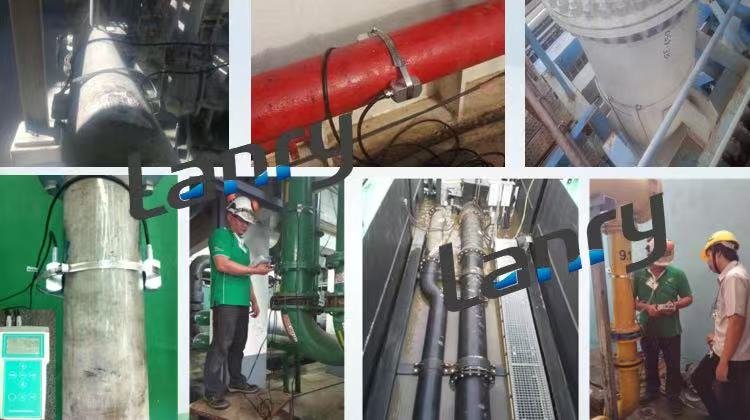
In the complex landscape of industrial fluid management—where accuracy, adaptability, and reliability are make-or-break factors—Doppler flow meters have emerged as a transformative solution. Unlike traditional flow measurement tools that struggle with non-homogeneous fluids or harsh conditions, Doppler flow meters leverage the Doppler effect (the change in wave frequency caused by the relative motion of a wave source and observer) to deliver consistent data, even when measuring fluids with suspended solids, bubbles, or high viscosity. From wastewater treatment plants to mining operations, these meters have become indispensable for industries where "one-size-fits-all" devices fall short. By combining advanced technology with rugged design, Doppler flow meters not only solve longstanding measurement challenges but also drive efficiency, cost savings, and compliance—solidifying their role as a cornerstone of modern fluid monitoring systems.
At the heart of Doppler flow meters’ effectiveness is their unique operating principle, which eliminates the limitations of intrusive or moving-part-based meters. Traditional tools like turbine or electromagnetic flow meters rely on direct contact with fluids or require conductive liquids to function; in contrast, Doppler meters use ultrasonic waves to measure flow rate without physical interference. Here’s how it works: A transducer mounted on the pipe’s exterior (or inserted into the fluid) emits high-frequency ultrasonic waves into the fluid. These waves bounce off suspended particles, bubbles, or turbulence within the fluid—collectively known as "seeding agents"—and reflect back to the transducer. The frequency of the reflected waves shifts relative to the original frequency (the Doppler shift), and the meter’s processor calculates flow velocity by analyzing this shift. This non-intrusive (or minimally intrusive) design offers two critical advantages: first, it avoids clogging, wear, or corrosion that plagues mechanical meters when handling abrasive fluids (e.g., mining slurries or wastewater with sludge); second, it works with non-conductive fluids (e.g., oils, alcohols) that stymie electromagnetic meters. For a food processing plant, this means accurately measuring tomato paste with pulp particles without fear of meter blockages; for an oil refinery, it enables reliable tracking of crude oil flow without compatibility issues.
Beyond their technical versatility, Doppler flow meters deliver tangible operational benefits that reduce costs and minimize downtime. One of the most significant advantages is their ease of installation and maintenance. Non-intrusive models can be mounted on the outside of existing pipes—no need to cut into lines, drain fluids, or shut down operations. This not only slashes installation time (from days to hours in many cases) but also eliminates the risk of leaks or contamination, which is critical for industries like pharmaceuticals or drinking water treatment. Maintenance is equally streamlined: without moving parts to replace or internal components to clean, Doppler meters require only periodic checks of transducers and calibration (often annually or bi-annually). Compare this to turbine meters, which may need monthly part replacements when handling abrasive fluids, and the cost savings become clear. A municipal wastewater plant, for example, can avoid losing thousands of dollars in downtime from shutting down treatment lines to service clogged meters—all while maintaining accurate flow data for regulatory reporting.
Precision is another area where Doppler flow meters excel, even in challenging environmental conditions. Modern models boast accuracy rates of ±1% to ±3% of full scale, with advanced signal processing that filters out noise from pipe vibrations or external interference. This level of precision is vital for industries where flow data directly impacts product quality, resource optimization, or compliance. In mining, for instance, accurate measurement of slurry flow ensures that chemicals are dosed correctly for mineral extraction—reducing waste and improving yields. In power plants, Doppler meters monitor cooling water flow to prevent overheating of turbines, protecting expensive equipment from damage. Additionally, many Doppler flow meters include smart features such as digital displays, remote monitoring via IoT platforms, and alarm systems for abnormal flow rates. These tools allow operators to track data in real time, identify issues (e.g., a sudden drop in flow indicating a blockage) before they escalate, and make data-driven decisions to optimize operations. For a chemical plant, remote monitoring means avoiding unnecessary site visits to check flow rates—saving time and labor while ensuring 24/7 oversight.
As industries continue to evolve and face growing pressure to operate more efficiently, sustainably, and compliantly, Doppler flow meters remain at the forefront of fluid measurement innovation. Their ability to handle diverse fluids, simplify installation and maintenance, and deliver reliable precision makes them a versatile solution for sectors ranging from agriculture (irrigation water measurement) to manufacturing (chemical processing). Whether used to monitor wastewater discharge, track oil flow in pipelines, or measure food-grade fluids, Doppler flow meters prove that effective fluid measurement doesn’t have to be complicated—or costly. In a world where every drop (or gallon) counts, these meters are more than just tools—they are partners in driving operational excellence, ensuring that industries can meet their goals while minimizing waste, reducing downtime, and staying ahead of regulatory requirements. For any operation seeking a reliable, adaptable flow measurement solution, Doppler flow meters are not just a choice—they are a necessity.