

In the diverse landscape of flow measurement technology, Doppler flowmeters stand out as a specialized solution tailored to one of the most common industrial challenges: measuring the flow rate of fluids containing suspended particles, bubbles, or solids. Unlike electromagnetic flowmeters (which require conductive fluids) or ultrasonic transit-time flowmeters (which rely on clean, homogeneous liquids), Doppler flowmeters excel in quantifying flow in complex, heterogeneous fluids—a capability that makes them indispensable in industries ranging from wastewater treatment and mining to food processing and oil & gas, where traditional flowmeters often fail due to fluid turbidity or contamination. Below is a focused exploration of their key advantages, real-world applications, and critical considerations for optimal deployment, designed to highlight their practical value in industrial settings.
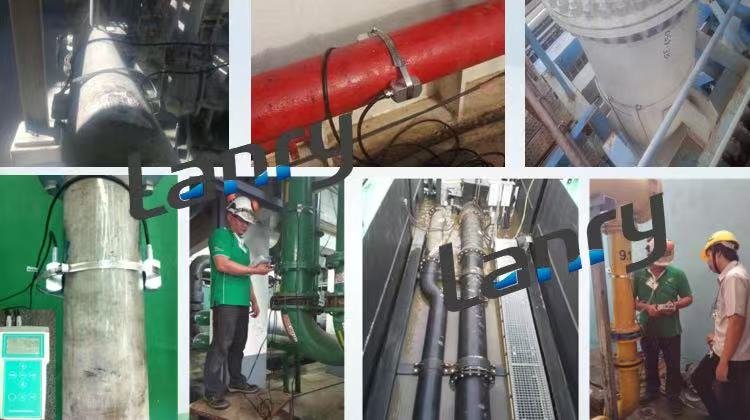
- No Disruption to Operations: Non-intrusive models require no drilling, cutting, or system shutdowns to install. Technicians simply attach the transducer to the pipe using clamps or adhesives—a process that takes minutes, not hours. For facilities with critical processes (e.g., chemical reactors, wastewater pumps) that cannot tolerate downtime, this is a game-changer. A municipal wastewater plant upgrading its flow monitoring system, for instance, can install non-intrusive Doppler meters on existing sewage pipes without stopping pump operations, avoiding costly service disruptions for local communities.
- Zero Contamination or Leak Risk: Since the transducer never contacts the fluid, there is no risk of introducing contaminants—a critical advantage for food, pharmaceutical, or semiconductor applications where product purity is non-negotiable. It also eliminates the risk of leaks, a major safety concern when measuring hazardous fluids like acids, hydrocarbons, or toxic chemicals.
- Extended Service Life with Minimal Upkeep: Intrusive flowmeters are exposed to abrasive fluids, corrosion, and pressure fluctuations, leading to frequent component replacement. Non-intrusive Doppler models, by contrast, have no parts in the fluid, so their service life typically extends to 10–15 years. Routine maintenance is limited to periodic transducer cleaning (to remove dust or debris) and calibration checks—far less intensive than the upkeep required for mechanical or intrusive alternatives.
- Wide Pipe Size Range: They can be used with pipes ranging from 0.5 inches (for small-scale food processing lines) to 120 inches (for large municipal wastewater culverts), eliminating the need to source multiple meter types for different parts of a facility.
- Compatibility with Diverse Materials: They work seamlessly with pipes made of steel, PVC, copper, concrete, or fiberglass. Non-intrusive models use transducers calibrated for different pipe thicknesses and materials, ensuring reliable signal transmission even through thick steel or non-metallic pipes.
- Raw Sewage Monitoring: Non-intrusive Doppler meters track the flow of incoming sewage into WWTPs, ensuring pumps are sized to handle peak flows (e.g., after heavy rains) and preventing overflow. This data is critical for optimizing pump energy use and avoiding costly infrastructure damage.
- Activated Sludge Management: Intrusive Doppler meters—equipped with rugged, corrosion-resistant transducers—measure the flow of sludge in aeration tanks. This helps operators adjust oxygen levels and microbial activity, ensuring efficient removal of nutrients (nitrogen and phosphorus) and compliance with environmental standards.
- Effluent Discharge Compliance: Doppler meters monitor the flow of treated effluent into rivers or oceans, providing data to prove compliance with regulations like the U.S. Clean Water Act or the EU’s Urban Wastewater Treatment Directive. In developing countries like India or Brazil, where wastewater infrastructure is often overburdened, this data helps utilities prioritize investments in treatment capacity, reducing pollution and protecting public health.
- Slurry Transport Optimization: Doppler meters monitor the flow of ore slurries in pipelines from mines to processing plants, ensuring consistent delivery and preventing pipe blockages (which can cause downtime costing $10,000 or more per hour). They also help adjust pump speeds to reduce energy consumption while maintaining throughput.
- Tailings Management: Mines use Doppler meters to measure the flow of tailings (waste slurry) into storage ponds, ensuring compliance with strict environmental regulations that limit tailings discharge. This prevents soil and water contamination, a major concern for mining operations in ecologically sensitive areas.
- Leachate Monitoring: In heap leaching operations (used to extract gold or copper), Doppler meters track the flow of acidic leachate through mineral heaps. This data helps optimize chemical dosing, improving metal recovery rates and reducing the volume of waste chemicals.
- Fruit and Vegetable Processing: They measure the flow of fruit pulp (e.g., tomato, apple, or mango) in stainless steel pipes, ensuring precise dosing of sugar, preservatives, or flavorings. This consistency is key to maintaining product quality across batches.
- Dairy and Confectionery: Doppler meters monitor the flow of chocolate slurry (with cocoa solids) or yogurt (with fruit chunks) without contaminating the product. Their non-intrusive design complies with strict hygiene standards like FDA (U.S.) and EU 10/2011, which prohibit contact between measurement devices and food products unless fully sanitizable.
- Brewing: In craft breweries, Doppler meters measure the flow of wort (with suspended malt particles) during fermentation. This helps brewers control yeast activity and alcohol content, ensuring each batch of beer meets flavor and strength specifications.
- Upstream Crude Oil Measurement: They measure the flow of crude oil from wells to pipelines, which often contains sand particles and natural gas bubbles. Traditional turbine meters would be damaged by sand, while Doppler meters ignore the bubbles and use the sand to generate a reliable signal. This ensures accurate measurement of production volumes, critical for revenue tracking.
- Downstream Fuel Blending: In refineries, Doppler meters monitor the flow of heavy fuels (e.g., bunker fuel) or lubricating oils with suspended impurities. They ensure accurate blending of additives, helping refineries meet fuel quality standards (e.g., ASTM International specifications) and avoid costly product recalls.
- Pipeline Leak Detection: Non-intrusive Doppler meters installed at intervals along pipelines compare flow rates between points. A sudden drop in flow indicates a leak, triggering automated alerts to maintenance teams. This early detection minimizes environmental damage and financial losses—critical when transporting hazardous hydrocarbons.
- Minimum Particle Concentration: Doppler flowmeters require at least 100 parts per million (ppm) of suspended particles or bubbles to generate a reliable signal. In clean fluids (e.g., pure water, distilled alcohol), they will produce inaccurate readings or no signal at all. For these applications, ultrasonic transit-time or electromagnetic meters are better choices.
- Particle Size and Velocity: Particles must be large enough (≥10 μm) to reflect signals effectively and move at the same velocity as the fluid. In fluids with very fine particles (e.g., colloidal suspensions) or particles that settle (e.g., heavy sand in slow-moving water), readings may be unstable. Testing fluid samples before installation can help verify compatibility.
- Pipe Wall Thickness and Material: Non-intrusive Doppler meters struggle with very thick pipes (≥2 inches) or highly attenuative materials (e.g., lead-lined steel), as signals may not penetrate the wall sufficiently. Manufacturers typically provide guidelines for compatible pipe parameters—selecting a transducer calibrated for your specific pipe ensures optimal performance.
- Flow Profile Disturbances: Obstacles like elbows, valves, or pumps upstream of the meter can create turbulent flow, causing particles to move at inconsistent velocities. To mitigate this, install the meter at least 10 pipe diameters downstream of obstacles and 5 pipe diameters upstream of the next component. This ensures a stable flow profile and accurate readings.
Post time: Sep-02-2025