

Introduction
In industrial and environmental operations, many critical fluids are far from "clean"—think wastewater laced with debris, mining slurries loaded with sediment, or industrial effluents containing suspended solids. For these "dirty liquids," traditional flowmeters often fail: mechanical meters clog, ultrasonic devices struggle with signal interference, and intrusive sensors foul quickly. This is where Doppler flowmeters shine. Leveraging the Doppler effect—where sound waves bounce off moving particles in the fluid to calculate velocity—these devices turn a challenge (suspended solids) into an advantage. Unlike conventional meters that view dirt as a barrier, Doppler flowmeters rely on it, making them the go-to choice for measuring flows in some of the harshest, dirtiest liquid environments. From municipal wastewater treatment to mining operations, they deliver reliable, real-time data that keeps processes efficient, compliant, and cost-effective.
Why Doppler Flowmeters Excel in Dirty Liquids
The secret to Doppler flowmeters’ success with dirty liquids lies in their unique operating logic and design. Unlike ultrasonic flowmeters that measure flow by transmitting sound waves through the fluid (easily disrupted by solids), Doppler models emit high-frequency sound waves (typically 0.5–2 MHz) that target suspended particles, bubbles, or debris in the liquid. When these waves hit moving particles, their frequency shifts—this shift, measured by the meter’s sensor, is directly proportional to the fluid’s velocity. Since the presence of solids is required for accurate readings, dirty liquids are not a problem but a prerequisite, eliminating the clogging and fouling issues that plague other meters.
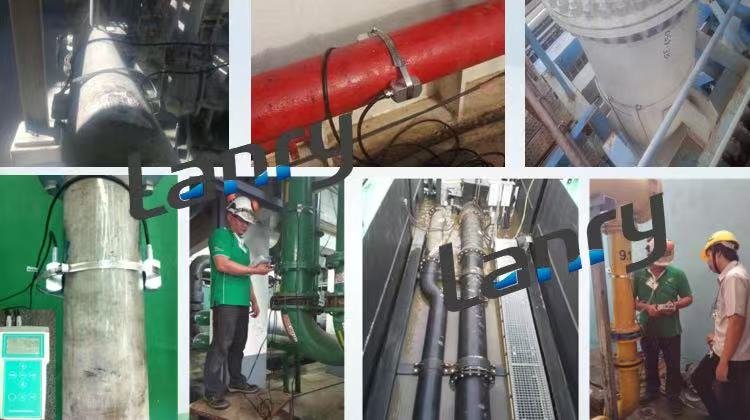
Another key advantage is their non-intrusive or minimally intrusive design. Most Doppler flowmeters are clamp-on: they attach externally to the pipe, with no sensors protruding into the fluid. This means no contact with corrosive, abrasive, or contaminated liquids—no parts to wear down, no leaks to risk, and no need to shut down the system for installation or maintenance. For example, in a sewage pipe carrying grit and organic waste, a clamp-on Doppler meter avoids the risk of sensor blockages that would render an intrusive turbine meter useless. Even insertion-type Doppler models (used for larger pipes) have rugged, coated sensors that resist abrasion and chemical damage, ensuring longevity in harsh conditions.
Additionally, Doppler flowmeters offer wide compatibility with dirty liquid types. They handle everything from wastewater (with 1–5% solids content) to mining slurries (up to 40% solids), viscous fluids like oil-contaminated water, and even liquids with gas bubbles (e.g., aerated wastewater). Their accuracy (typically ±2–5% of reading) remains consistent across these varied fluids, outperforming other meters that require clean, homogeneous liquids to function properly.
Real-World Applications in Dirty Liquid Scenarios
The reliability of Doppler flowmeters in dirty liquids has made them indispensable across multiple industries, solving long-standing measurement challenges.
Municipal Wastewater Treatment
Wastewater plants are a primary user of Doppler flowmeters, where they monitor flows of raw sewage, activated sludge, and treated effluent—all loaded with solids, organic matter, and debris. At the inlet, Doppler meters measure raw sewage flow to optimize the plant’s treatment capacity, ensuring no overloads. In aeration tanks, they track the flow of activated sludge (a thick, microbe-rich mixture) to maintain proper oxygen levels, critical for breaking down pollutants. Unlike mechanical meters that clog with sludge, Doppler models operate seamlessly, reducing maintenance downtime and ensuring compliance with environmental discharge standards.
Mining and Mineral Processing
Mining operations generate large volumes of slurries—mixtures of water and crushed ore, sand, or tailings (waste material). Accurately measuring slurry flow is essential for optimizing mineral recovery and managing waste. Doppler flowmeters excel here: they handle highly abrasive slurries (with particles up to several millimeters in size) that would destroy other meters. For example, in copper mining, Doppler meters track the flow of ore slurries to flotation tanks, where chemicals separate copper from waste. In tailings management, they monitor the flow of waste slurries to storage ponds, preventing overflows and environmental damage. Their non-intrusive design also avoids contamination of the slurry, a key concern for mineral purity.
Industrial Manufacturing
Many manufacturing processes produce dirty effluents that require precise flow measurement. In food processing, for instance, Doppler meters monitor the flow of wastewater containing food scraps, oil, and detergents—fluids that would clog traditional meters. In chemical manufacturing, they measure the flow of corrosive liquids mixed with solid byproducts (e.g., plastic pellets in polymer production), ensuring safe disposal and compliance with waste regulations. In pulp and paper mills, they track the flow of black liquor (a viscous, chemical-rich byproduct of wood pulping), helping mills recover energy from the liquor while avoiding equipment damage.
Construction and Civil Engineering
Construction sites often deal with dirty water from excavation, concrete washing, or stormwater runoff (loaded with sediment). Doppler flowmeters are used to measure the flow of this water to treatment systems (e.g., sedimentation tanks) before discharge, ensuring compliance with local environmental laws that prohibit sediment-laden water from entering natural waterways. Their portability—many models are battery-powered and easy to install temporarily—makes them ideal for construction sites, where flows are often temporary and locations change frequently.
Specialized Designs for Extreme Dirty Liquid Conditions
To meet the unique demands of different dirty liquid environments, manufacturers offer specialized Doppler flowmeter models:
- Abrasion-Resistant Models: For highly abrasive slurries (e.g., mining tailings), these meters feature sensors coated with tungsten carbide or ceramic—materials that resist wear from hard particles. Some insertion-type models also have retractable sensors, allowing for inspection or replacement without shutting down the flow.
- High-Temperature/High-Pressure Models: For industrial processes with hot or pressurized dirty liquids (e.g., chemical reactors), these meters are built with rugged enclosures and sensors rated for temperatures up to 200°C and pressures over 100 bar. They maintain accuracy even in extreme conditions, critical for process safety.
- Portable Doppler Meters: Designed for field use (e.g., construction sites, temporary wastewater monitoring), these compact, battery-powered models have clamp-on sensors that can be installed in minutes. They store data locally or transmit it wirelessly, making them ideal for short-term projects or troubleshooting.
- Explosion-Proof Models: For hazardous environments (e.g., oil refineries handling flammable dirty liquids), these meters meet ATEX or CSA safety standards, with flameproof enclosures and intrinsically safe circuits that prevent sparks from igniting flammable vapors.
Maintenance and Best Practices
While Doppler flowmeters are low-maintenance compared to other meters for dirty liquids, proper care ensures optimal performance:
- Sensor Cleaning: For clamp-on models, periodic cleaning of the sensor (to remove dirt, oil, or debris from the pipe surface) is essential—this ensures clear sound wave transmission. For insertion models, retractable sensors can be cleaned without shutting down the flow.
- Calibration: Annual calibration is recommended, especially for applications requiring high accuracy (e.g., regulatory compliance). Calibration should be done using a reference standard that simulates the dirty liquid’s properties (e.g., particle size, concentration) to ensure accuracy in real-world conditions.
- Pipe Condition Checks: The pipe’s interior surface can affect signal transmission—rust, scale, or thick deposits can weaken sound waves. Regular inspections of the pipe (via cameras or visual checks) help identify issues that may impact meter performance.
- Signal Adjustment: For liquids with variable particle concentrations (e.g., wastewater that fluctuates between low and high solids), adjusting the meter’s signal sensitivity can maintain accuracy. Many modern Doppler meters have auto-adjustment features that adapt to changing fluid conditions.
Conclusion
Doppler flowmeters have revolutionized flow measurement in dirty liquids, turning a once-frustrating challenge into a manageable task. Their ability to leverage suspended solids for accurate readings, combined with non-intrusive, durable designs, makes them irreplaceable in industries like wastewater treatment, mining, and manufacturing. By eliminating clogging, fouling, and maintenance headaches, they save time and costs while ensuring compliance with environmental standards. As technology advances—with improvements in signal processing, IoT connectivity for remote monitoring, and even more rugged materials—Doppler flowmeters will continue to adapt to the evolving needs of dirty liquid applications. For any operation dealing with non-clean fluids, the Doppler flowmeter is not just a tool—it’s a critical enabler of efficiency, safety, and sustainability.
Post time: Oct-15-2025