

In industries where precise fluid measurement is critical to safety, quality, and efficiency—especially when dealing with conductive fluids—choosing the right flow meter can make or break operational success. Conductive fluids, from the syrups in food production to the solvents in pharmaceutical manufacturing and the crude oil in petrochemical plants, demand a measurement solution that is accurate, non-intrusive, and compatible with their unique properties. Electromagnetic flow meters (often called “magmeters”) stand out as the perfect fit: their technology is tailored to conductive fluids, and their design addresses the strict requirements of the food, pharmaceutical, and petrochemical sectors.
At the core of electromagnetic flow meters’ suitability for conductive fluids is Faraday’s Law of Electromagnetic Induction. Unlike mechanical flow meters that rely on moving parts (which can clog, wear down, or contaminate conductive fluids), magmeters use a non-intrusive setup: a pipe lined with an insulating material, surrounded by electromagnetic coils. When a conductive fluid flows through the pipe, it cuts through the magnetic field generated by the coils, creating a small electrical voltage. The magnitude of this voltage is directly proportional to the fluid’s velocity—allowing the meter to calculate flow rate with exceptional accuracy (typically ±0.5% of reading, and even ±0.1% for high-precision models). This design eliminates contact between the meter’s sensing components and the fluid, a key advantage for conductive fluids that may be corrosive, viscous, or prone to leaving residues.
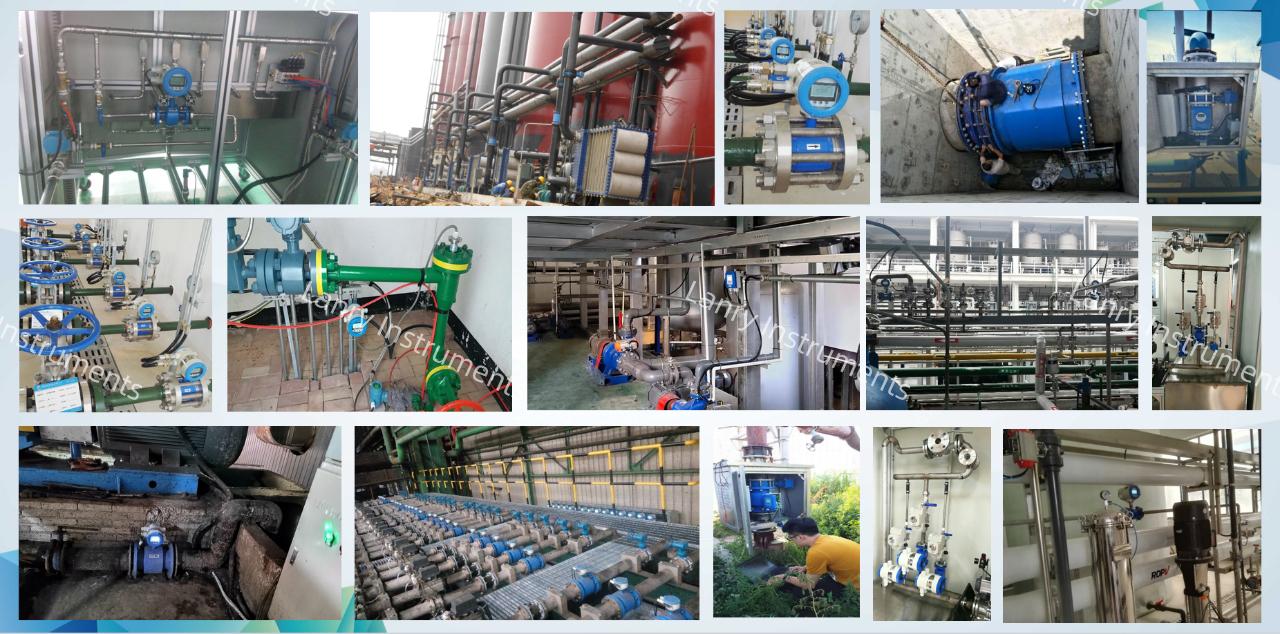
For the food industry, where hygiene and product purity are non-negotiable, electromagnetic flow meters are a game-changer. Conductive fluids like fruit juices, dairy products, sauces, and syrups require equipment that meets strict FDA (Food and Drug Administration) or EU 10/2011 standards to avoid contamination. Magmeters’ smooth, crevice-free linings (often made of food-grade materials like PTFE or ETFE) prevent fluid buildup and are easy to clean—critical for avoiding bacterial growth between production runs. In a large beverage plant, for example, magmeters are used to measure the flow of conductive syrup into mixing tanks: their accuracy ensures consistent sweetness across batches, while their non-intrusive design eliminates the risk of metal particles (from worn mechanical parts) contaminating the product. Additionally, magmeters handle the high viscosity of fluids like chocolate or honey without clogging, a common issue with traditional meters that rely on impellers.
The pharmaceutical sector has even stricter requirements, as conductive fluids (such as liquid medications, sterile water, and chemical solvents) must meet rigorous quality control and traceability standards. Electromagnetic flow meters excel here by providing precise, repeatable measurements—essential for ensuring that drug formulations have the correct dosage of active ingredients. Their non-intrusive design also supports sterile processing: since there are no moving parts inside the pipe, there’s no risk of particle generation or cross-contamination between batches. A pharmaceutical manufacturer producing injectable drugs, for instance, uses magmeters to monitor the flow of conductive saline solution into vials. The meters’ real-time data transmission allows the plant to track every step of the process, ensuring compliance with regulatory bodies like the FDA and EMA (European Medicines Agency). Moreover, magmeters are resistant to the harsh cleaning agents (such as hydrogen peroxide) used in pharmaceutical facilities, ensuring long-term reliability.
In the petrochemical industry, where conductive fluids range from crude oil and gasoline to industrial solvents and wastewater, electromagnetic flow meters tackle some of the most challenging measurement tasks. Corrosion is a major concern here—many petrochemical fluids are highly corrosive, and mechanical meters with metal parts can degrade quickly, leading to inaccurate readings and costly leaks. Magmeters’ corrosion-resistant linings (such as rubber or ceramic) and non-metallic wetted components withstand these harsh fluids, extending their lifespan to 10–15 years (compared to 3–5 years for mechanical meters). Additionally, petrochemical plants often operate under high pressure and temperature conditions, and magmeters are available in rugged designs that handle pressures up to 1,000 bar and temperatures from -40°C to 200°C. For example, a refinery uses magmeters to measure the flow of conductive crude oil through pipelines: their accuracy helps optimize refining processes, reduce waste, and ensure safe transport—critical for preventing environmental spills and meeting safety regulations.
While electromagnetic flow meters have a higher upfront cost than mechanical alternatives, their long-term benefits for food, pharmaceutical, and petrochemical sectors far outweigh this investment. Reduced maintenance costs (no moving parts to replace), fewer product recalls (due to contamination prevention), and improved operational efficiency (via accurate data) lead to a typical return on investment within 2–3 years. For industries where even small measurement errors can have catastrophic consequences—from spoiled food to ineffective medications or environmental disasters—magmeters are not just a tool, but a safeguard.
As the food, pharmaceutical, and petrochemical sectors continue to evolve, with stricter regulations and growing demands for sustainability, electromagnetic flow meters remain the gold standard for conductive fluid measurement. Their ability to combine accuracy, hygiene, and durability makes them indispensable for ensuring product quality, operational safety, and environmental compliance. For any facility working with conductive fluids, magmeters are more than a measurement solution—they are a key driver of success in a competitive, regulated landscape.
Post time: Oct-20-2025