

Introduction
In the complex network of industrial operations and environmental monitoring, accurate flow measurement is the backbone of efficiency, safety, and sustainability. Among the array of flow-measuring devices, the electromagnetic flowmeter (EMF) stands out as a game-changer. Unlike traditional mechanical flowmeters that rely on moving parts, EMFs leverage advanced electromagnetic technology to deliver reliable data, making them indispensable in sectors where precision and adaptability are non-negotiable. From managing wastewater treatment to ensuring product quality in food processing, EMFs have redefined how industries track and control fluid flow, solidifying their role as a cornerstone of modern engineering solutions.
Key Features
What sets electromagnetic flowmeters apart from conventional alternatives is their unique set of advantages tailored to meet diverse industrial needs. First and foremost is their exceptional accuracy—EMFs typically boast an error margin of less than ±0.5%, even when measuring fluids with varying viscosities or containing small solid particles, such as slurries in mining operations. Unlike turbine or orifice plate flowmeters, they cause zero pressure loss in the fluid system. This is a critical benefit for industries like oil and gas, where pressure drops can lead to reduced operational efficiency and increased energy costs.
Another standout feature is their minimal requirement for straight pipe sections. Traditional flowmeters often demand long stretches of unobstructed pipe to ensure stable flow, which can be a logistical challenge in compact industrial setups. EMFs, however, can function effectively with short upstream and downstream pipe lengths, saving valuable space and simplifying installation. Additionally, their compatibility with a wide range of fluids—from corrosive chemicals in the pharmaceutical industry to conductive beverages in food production—makes them highly versatile. Many EMF models also come with corrosion-resistant materials like PTFE or Hastelloy, ensuring longevity even in harsh operating environments.
Applications
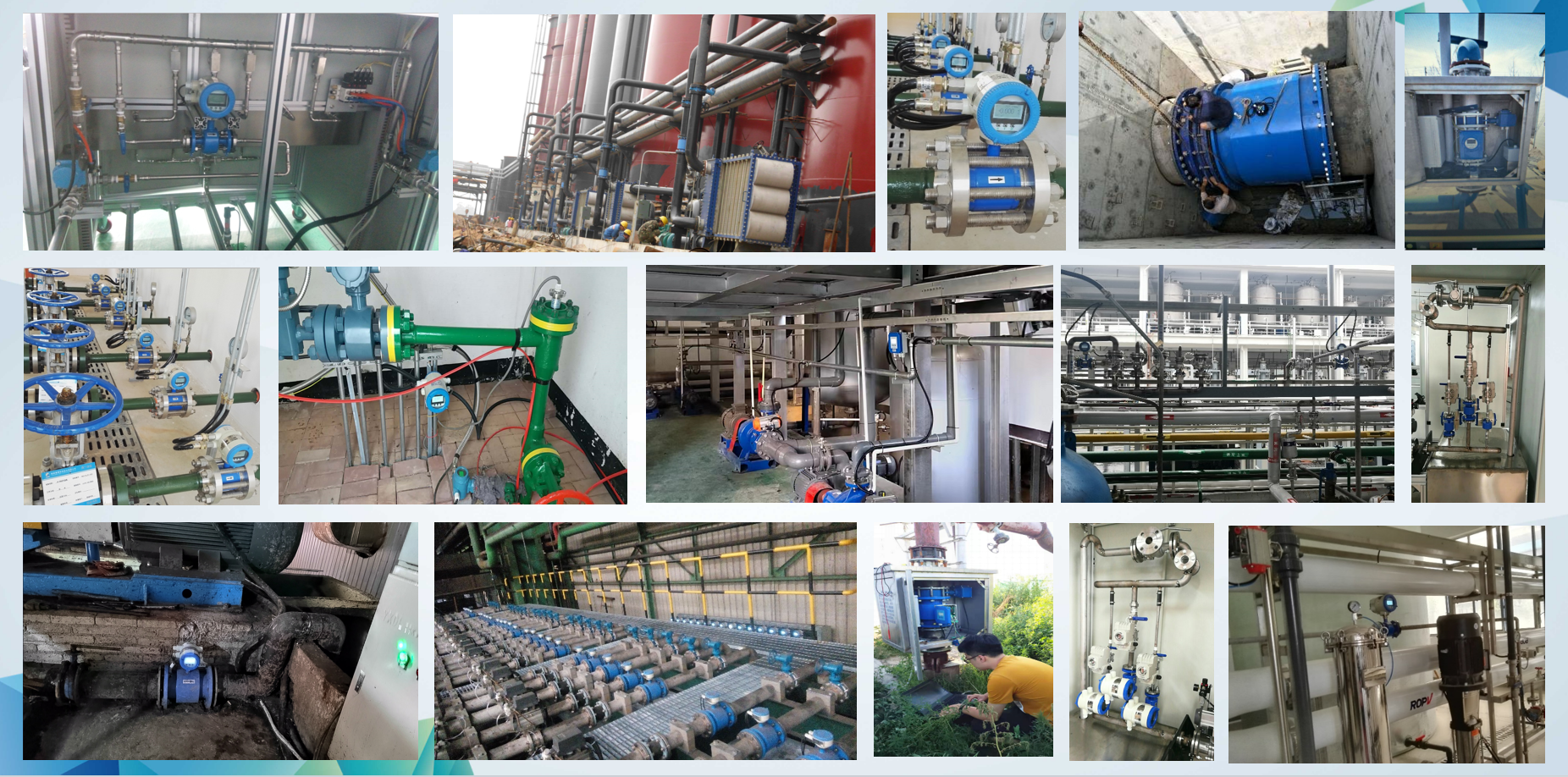
The versatility of electromagnetic flowmeters translates to a broad spectrum of real-world applications across industries. In environmental monitoring, EMFs are pivotal in wastewater treatment plants, where they track the flow of sewage and treated water to ensure compliance with regulatory standards. For example, municipal wastewater facilities use EMFs to measure the volume of effluent discharged into rivers or oceans, preventing over-pollution and supporting ecological balance. They also play a key role in stormwater management systems, helping cities monitor runoff during heavy rains to mitigate flooding risks.
In the industrial sector, EMFs are equally indispensable. In the chemical industry, they accurately measure the flow of hazardous or corrosive fluids, such as acids and solvents, reducing the risk of leaks and ensuring precise mixing ratios in production processes. The food and beverage industry relies on sanitary-grade EMFs to monitor the flow of liquids like milk, juice, and syrups. These specialized EMFs feature smooth, easy-to-clean surfaces that meet strict hygiene standards, preventing contamination and safeguarding product quality. In the mining and 冶金 (metallurgy) sector, EMFs handle abrasive slurries, providing reliable data to optimize mineral processing and minimize equipment wear.
Types and Specialized Designs
To cater to specific industry requirements, electromagnetic flowmeters are available in a variety of specialized designs. Sanitary EMFs are engineered for the food, beverage, and pharmaceutical industries. They feature polished inner linings and quick-disconnect fittings, allowing for easy disassembly and sterilization, which is essential for maintaining aseptic conditions. Explosion-proof EMFs are designed for hazardous environments, such as oil refineries or chemical plants where flammable gases or vapors may be present. These models are built with flameproof enclosures and intrinsically safe circuits, ensuring they do not ignite potentially explosive atmospheres.
For remote or off-grid applications, battery-powered low-consumption EMFs are an ideal choice. These devices operate on long-lasting lithium-ion batteries, eliminating the need for external power sources, and are commonly used in agricultural irrigation systems to monitor water flow in remote fields or in environmental research projects to track river currents in isolated areas. Additionally, clamp-on EMFs offer a non-intrusive solution—they are mounted externally on existing pipes, avoiding the need to cut or modify the pipe system. This makes them perfect for retrofitting in older industrial facilities or for measuring flow in pipes that carry sensitive or high-pressure fluids.
Installation and Maintenance
While electromagnetic flowmeters are relatively easy to install, proper setup is crucial to ensure optimal performance. During installation, it is important to select a location that avoids strong magnetic interference from equipment like motors or transformers, as this can disrupt the EMF’s readings. Although EMFs require minimal straight pipe sections, it is still recommended to install them in areas with stable flow—avoiding elbows, valves, or pumps directly upstream—to prevent flow disturbances. Grounding the device correctly is also essential, especially when measuring conductive fluids, to eliminate electrical noise and ensure accurate data collection.
In terms of maintenance, EMFs are low-maintenance compared to mechanical flowmeters, but regular checks are still necessary to prolong their lifespan. Periodic calibration, typically once a year, ensures that the device continues to provide accurate readings. Cleaning the electrodes and the inner lining of the measuring tube is another key maintenance task—this prevents the buildup of deposits, such as scale or sludge, which can affect the EMF’s performance. For industries handling corrosive fluids, inspecting the lining for signs of wear or damage is critical, as a compromised lining can lead to leaks or inaccurate measurements. Most modern EMFs also come with self-diagnostic features, which alert operators to potential issues like electrode fouling or power supply problems, allowing for timely repairs.
Future Developments
As technology advances, electromagnetic flowmeters are poised to become even more sophisticated, expanding their capabilities and applications. One of the most promising trends is the integration of Internet of Things (IoT) technology. Future EMFs will be equipped with wireless connectivity, enabling real-time data transmission to cloud-based platforms. This will allow industries to monitor flow rates remotely, analyze data using artificial intelligence (AI) algorithms, and predict maintenance needs—reducing downtime and optimizing operational efficiency. For example, in a large-scale water distribution network, IoT-enabled EMFs could detect leaks early by analyzing abnormal flow patterns, saving water and reducing repair costs.
Another area of development is the miniaturization of EMFs. Smaller, more compact models will be designed for use in microfluidic applications, such as medical devices that measure blood flow in diagnostic equipment or lab-on-a-chip systems for chemical analysis. Additionally, advancements in sensor technology will enhance the accuracy of EMFs even further, allowing them to measure ultra-low flow rates or fluids with extremely low conductivity—expanding their use in industries like semiconductor manufacturing, where precise control of ultrapure water flow is essential.
Conclusion
Electromagnetic flowmeters have emerged as a vital tool in modern industrial and environmental management, thanks to their accuracy, versatility, and low maintenance requirements. From ensuring compliance in wastewater treatment to safeguarding product quality in food processing, their applications are diverse and far-reaching. With specialized designs tailored to specific industry needs and ongoing technological advancements in IoT and miniaturization, EMFs are set to play an even more critical role in the future. As industries continue to prioritize efficiency, sustainability, and safety, the electromagnetic flowmeter will remain a reliable and innovative solution, driving progress in flow measurement for years to come.
Post time: Oct-15-2025