

Electromagnetic flowmeters, often called "magmeters," have revolutionized fluid measurement across industries by leveraging Faraday’s Law of electromagnetic induction to provide accurate, non-intrusive flow data. Unlike traditional their reliance on complex technology, these devices offer unique advantages in handling challenging fluids—from corrosive chemicals to slurries—making them indispensable in sectors like water treatment, chemical processing, and food production.
How Electromagnetic Flowmeters Work
At their core, magmeters operate on a simple scientific principle: when a conductive fluid flows through a magnetic field, it generates a small electrical voltage proportional to its velocity. The meter consists of four key components:
- A non-magnetic pipe lined with an insulating material (to prevent electrical interference).
- Two electromagnetic coils that create a magnetic field across the pipe.
- Electrodes mounted on opposite sides of the pipe to detect the induced voltage.
- A transmitter that converts this voltage into a flow rate reading.
Since the voltage is directly proportional to fluid velocity, the meter calculates flow volume by multiplying velocity by the pipe’s cross-sectional area. Notably, this design has no moving parts, eliminating issues like clogging or wear—common pitfalls of mechanical flowmeters.
Key Advantages for Industrial Applications
Electromagnetic flowmeters outperform traditional devices in several critical areas:
-
Accuracy Across Conditions: They maintain precision (typically ±0.5% of reading) regardless of fluid density, viscosity, or temperature—making them ideal for fluids like sludge, which vary in consistency.
-
Non-Intrusive Design: With no internal components protruding into the flow, magmeters avoid pressure drops, clogs, or damage from abrasive particles (e.g., in mining slurries). This reduces maintenance and extends service life.
-
Versatility in Fluid Types: They handle conductive fluids (including water, acids, and wastewater) and work with sanitary fluids in food/beverage production, thanks to smooth, easy-to-clean liners (e.g., PTFE).
-
Bi-Directional Measurement: Unlike some flowmeters, magmeters accurately measure flow in both directions—valuable in systems with reverse flow, such as water distribution networks.
Real-World Applications
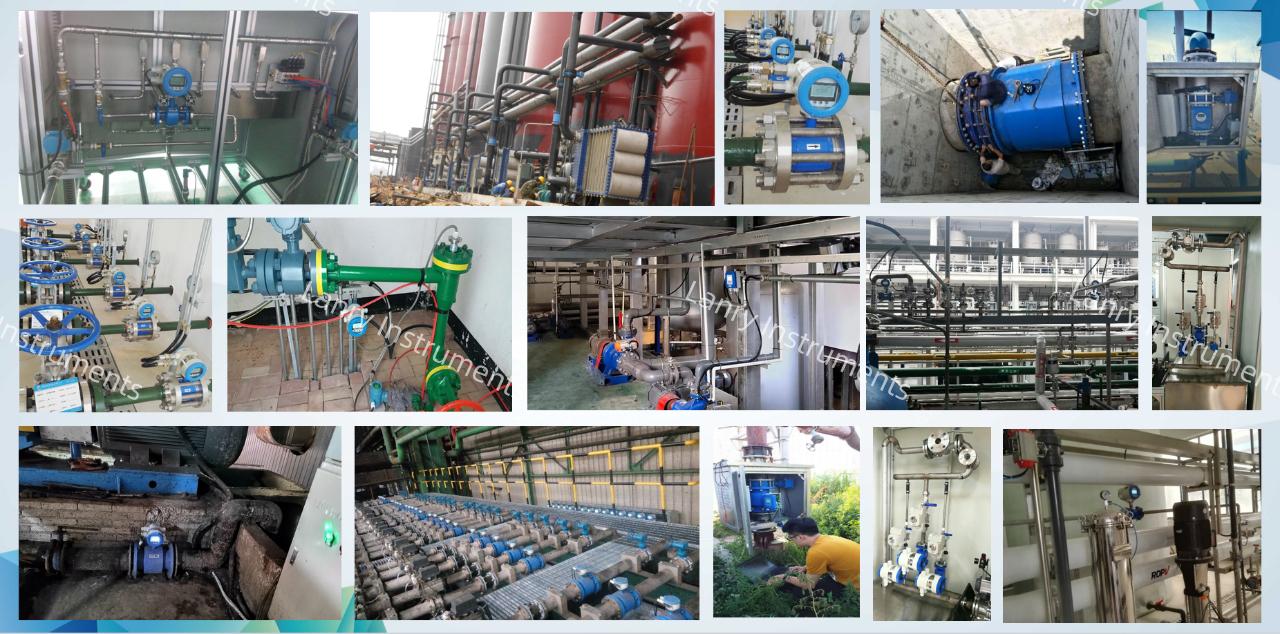
Their versatility makes electromagnetic flowmeters a staple in diverse industries:
- Water and Wastewater: Used to monitor raw water intake, treat effluent flow, and detect leaks in distribution systems.
- Chemical Processing: Measure corrosive or toxic fluids (e.g., acids, alkalis) without risk of contamination or meter damage.
- Food and Beverage: Sanitary models with FDA-approved liners track flow in dairy, juice, or beer production, ensuring hygiene and compliance.
- Mining: Handle slurry flows containing solids (e.g., ore particles), where mechanical meters would quickly wear out.
Considerations for Implementation
While highly effective, magmeters have limitations to note:
- They require fluids to be conductive (≥5 µS/cm), ruling out use with oils or gases.
- Proper installation (e.g., ensuring full pipe flow, avoiding nearby metal structures) is critical to avoid magnetic interference.
- Initial costs are higher than mechanical meters, though lower maintenance needs often offset this over time.
Conclusion
Electromagnetic flowmeters combine scientific innovation with practical design, offering reliable, low-maintenance flow measurement for challenging industrial environments. By eliminating moving parts and adapting to diverse fluids, they solve longstanding problems in accuracy and durability. As industries increasingly demand precise, efficient process control, magmeters will remain a cornerstone of modern flow measurement technology.
Post time: Sep-10-2025