

Wastewater treatment plants (WWTPs) operate in one of the most challenging fluid environments: wastewater is often loaded with solids, bubbles, and varying levels of viscosity—conditions that can render traditional flowmeters (like mechanical or even standard transit-time ultrasonic models) inaccurate or unreliable. This is where Doppler ultrasonic flowmeters stand out: designed to thrive in turbulent, particle-laden fluids, they have become a critical tool for enhancing flow monitoring in WWTPs, ensuring operational efficiency, regulatory compliance, and cost-effectiveness.
Why Traditional Flowmeters Fall Short in WWTPs
Traditional flow measurement technologies struggle with wastewater’s unique properties. Mechanical meters, which rely on moving parts (e.g., turbines), easily clog with debris like hair, grease, or sediment—leading to frequent maintenance, reduced accuracy, and unplanned downtime. Transit-time ultrasonic meters, while effective for clean fluids, struggle when wastewater contains high levels of solids or bubbles: these particles scatter sound waves, disrupting the meter’s ability to calculate flow rate. For WWTPs, where precise flow data is essential for processes like aeration, chemical dosing, and sludge handling, these limitations can lead to inefficiencies, non-compliance with environmental regulations, and unnecessary costs.
How Doppler Ultrasonic Flowmeters Solve WWTP Challenges
Doppler ultrasonic flowmeters use a different principle than their transit-time counterparts—one that is perfectly suited for wastewater. Instead of measuring the time it takes for sound waves to travel upstream and downstream, Doppler meters emit high-frequency sound waves (typically 0.5–5 MHz) into the fluid. These waves bounce off suspended solids, bubbles, or other particles in the wastewater; the reflected waves then return to the meter’s sensor with a shifted frequency (the Doppler effect). By analyzing this frequency shift, the meter calculates the velocity of the particles—and thus, the flow rate of the wastewater.
This design offers three key advantages for WWTPs:
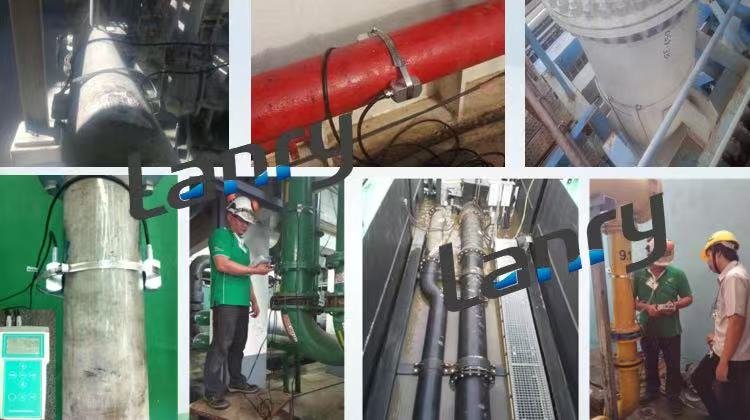
- Clog-Resistant Operation: With no moving parts or intrusive components, Doppler meters avoid the clogging issues that plague mechanical models. They can be installed externally (clamped to the pipe) or with minimal internal components, reducing contact with debris.
- Accuracy in Turbid Fluids: Unlike transit-time meters, Doppler models rely on suspended particles to function—making them highly accurate even in wastewater with high turbidity (e.g., primary treatment effluent or sludge).
- Low Maintenance: Without mechanical parts to wear down or clean, Doppler meters require far less upkeep than traditional options. This reduces downtime and lowers long-term maintenance costs for WWTPs.
Practical Benefits for WWTP Operations
For WWTPs, the advantages of Doppler ultrasonic flowmeters translate to tangible improvements in daily operations:
- Precise Process Control: During aeration (a key step in biological wastewater treatment), accurate flow data ensures that the right amount of air is delivered to microorganisms—optimizing treatment efficiency and reducing energy waste. Similarly, Doppler meters help control chemical dosing by providing real-time flow rates, ensuring that chemicals (e.g., coagulants) are added in the correct proportions to avoid overuse or underuse.
- Regulatory Compliance: Environmental agencies require WWTPs to monitor and report wastewater inflow, outflow, and treatment volumes. Doppler meters provide reliable, auditable data that meets these regulatory standards, reducing the risk of fines or non-compliance.
- Leak and Blockage Detection: Real-time flow monitoring allows operators to spot anomalies—such as sudden drops in flow (indicating a blockage) or unexpected increases (suggesting a leak). This enables quick intervention, preventing process disruptions and minimizing water loss.
Conclusion
In the demanding environment of wastewater treatment plants, Doppler ultrasonic flowmeters address the critical limitations of traditional flow measurement technologies. Their ability to operate accurately in turbid, particle-laden fluids, combined with low maintenance needs and reliable performance, makes them an indispensable tool for enhancing flow monitoring. By ensuring precise process control, regulatory compliance, and proactive issue detection, Doppler ultrasonic flowmeters help WWTPs operate more efficiently, sustainably, and cost-effectively—supporting their mission to protect public health and the environment.
Post time: Sep-10-2025