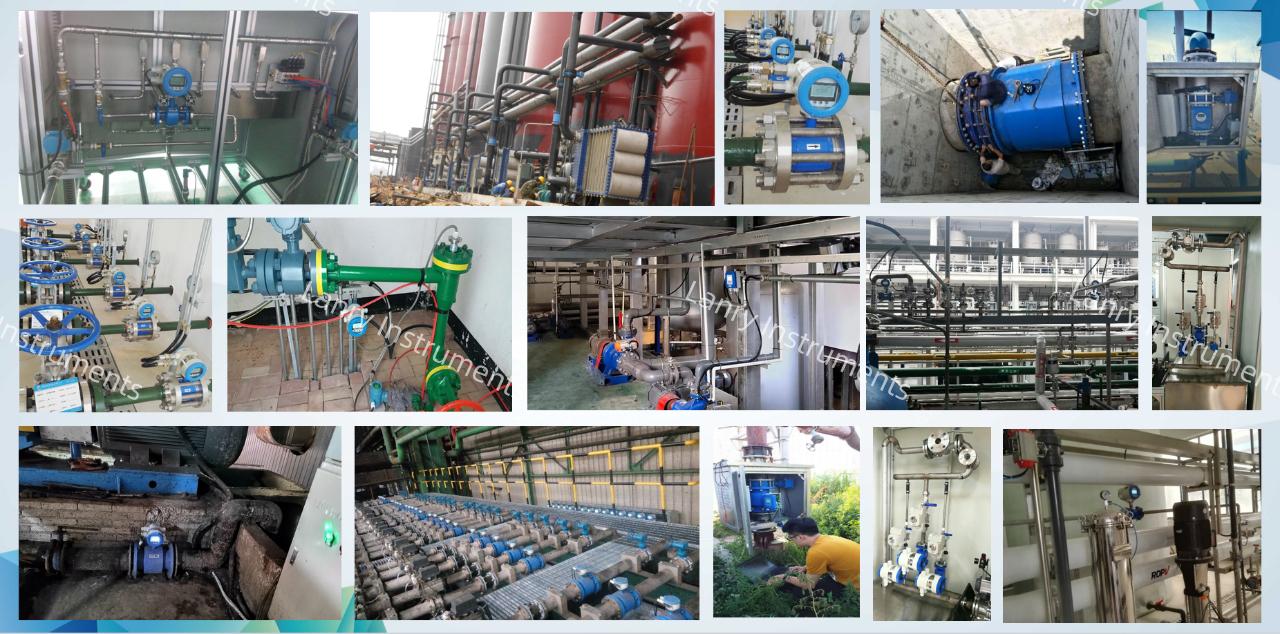
In the era of smart manufacturing, where data-driven decision-making, real-time monitoring, and operational efficiency define industrial success, traditional process control tools are being rapidly replaced by advanced technologies. Among these, electromagnetic flow meters (EMF) have emerged from niche industrial applications to become a cornerstone of modern process control systems. Unlike mechanical flow meters that rely on moving parts to measure fluid flow, EMFs use Faraday’s Law of electromagnetic induction to calculate flow rate— a design that aligns perfectly with the demands of smart factories. As smart manufacturing continues to expand globally (the market is projected to reach $594.2 billion by 2028, according to Grand View Research), EMFs are no longer optional; they have become a must-have for industries aiming to optimize processes, reduce waste, and stay competitive.
1. Compatibility with Smart Factory Data Ecosystems
Smart manufacturing thrives on interconnected systems: sensors, controllers, and cloud platforms work in tandem to collect, analyze, and act on real-time data. Traditional flow meters, such as turbine or positive displacement meters, often operate as “standalone” devices—they require manual reading or basic analog output, making it difficult to integrate them into digital ecosystems. This disconnect creates data gaps that hinder process optimization.
Electromagnetic flow meters solve this problem by design. Most modern EMFs are equipped with digital communication modules (e.g., Modbus, Profinet, or OPC UA)—protocols widely used in smart factories to enable seamless data transfer. These meters can transmit real-time flow data, including flow rate, total volume, and diagnostic alerts, directly to central control systems (like SCADA or MES) or cloud platforms. For example, in a chemical plant, an EMF installed in a reagent pipeline can send continuous flow data to a cloud-based analytics tool. Engineers can then monitor the data remotely, identify deviations from optimal flow rates (e.g., a sudden drop indicating a blockage), and adjust processes in real time—without needing to be on-site. This integration eliminates data silos, allowing factories to build a “digital twin” of their processes (a virtual replica that simulates real-world operations) and make predictive decisions, a key goal of smart manufacturing.
2. High Accuracy and Reliability for Critical Processes
Smart manufacturing prioritizes consistency—even minor deviations in fluid flow can lead to product defects, increased waste, or safety hazards, especially in industries like pharmaceuticals, food and beverage, or oil and gas. Traditional mechanical meters struggle with accuracy over time: moving parts wear down, sediment clogs mechanisms, and high-viscosity fluids (like syrups or lubricants) slow component rotation, leading to undercounting or overcounting.
EMFs, by contrast, have no moving parts, which eliminates mechanical wear and ensures long-term accuracy. They operate by generating a magnetic field across a pipe; when a conductive fluid (e.g., water, chemicals, or slurries) flows through the field, it induces an electric current (per Faraday’s Law). The strength of this current is directly proportional to the flow rate, allowing for precise measurement with an error margin of just ±0.5%—far lower than the ±1-3% error of mechanical meters. This reliability is critical for industries with strict quality standards. For instance, in a pharmaceutical plant, an EMF ensures that exact doses of active ingredients are mixed into medications; even a 1% deviation could render a batch unsafe. In smart manufacturing, where traceability and quality control are non-negotiable, EMFs provide the precision needed to avoid costly mistakes.
3. Adaptability to Diverse and Challenging Fluids
Smart factories handle a wide range of fluids—from corrosive chemicals (e.g., acids in metal processing) to abrasive slurries (e.g., cement in construction) and hygienic liquids (e.g., milk in dairy production). Traditional meters often fail in these harsh conditions: corrosive fluids damage metal components, abrasive slurries wear down impellers, and hygienic applications require frequent disassembly for cleaning (which disrupts processes).
Electromagnetic flow meters are highly adaptable to these challenges. Their measuring tubes can be made from corrosion-resistant materials (e.g., PTFE, ceramic, or Hastelloy), making them suitable for aggressive chemicals. For abrasive slurries, the smooth, non-intrusive design of EMFs prevents particle buildup and wear—unlike mechanical meters, which have crevices where particles can get stuck. In hygienic industries like food and beverage, EMFs meet 3-A Sanitary Standards: their seamless tubes and easy-to-clean surfaces eliminate bacterial growth, and they can be sanitized in place (CIP) without disassembly. This versatility means factories don’t need to invest in multiple types of meters for different fluids—one EMF can handle diverse applications, reducing equipment costs and simplifying maintenance. In smart manufacturing, where flexibility is key to adapting to changing production needs, this adaptability makes EMFs indispensable.
Conclusion
As smart manufacturing transforms industrial operations, electromagnetic flow meters have evolved from specialized tools to essential components of process control. Their ability to integrate with digital ecosystems, deliver high accuracy, and adapt to diverse fluids directly addresses the core demands of modern factories: efficiency, reliability, and flexibility. For manufacturers looking to stay ahead in a competitive landscape, investing in EMFs is not just a technical choice—it’s a strategic one. These meters don’t just measure flow; they enable the data-driven, optimized processes that define smart manufacturing success. As the trend toward industrial digitization accelerates, electromagnetic flow meters will only grow in importance, solidifying their role as a must-have for the factories of the future.