

Introduction
In the intricate web of modern industrial operations, environmental management, and even daily infrastructure, one device works quietly yet critically to prevent chaos: the level meter. Whether tracking the volume of crude oil in a storage tank, monitoring water levels in a municipal reservoir, or ensuring precise liquid doses in pharmaceutical production, level meters are the backbone of "knowing what’s inside." Unlike bulky legacy systems that relied on manual checks or imprecise floats, today’s level meters leverage cutting-edge technologies—from ultrasonic waves to radar and capacitance—to deliver real-time, accurate data. Their ability to adapt to diverse fluids (from corrosive chemicals to food-grade liquids) and harsh environments (high pressure, extreme temperatures) has made them indispensable, turning guesswork into certainty and safeguarding efficiency, safety, and compliance across sectors.
Key Advantages
What elevates modern level meters above traditional monitoring methods is a suite of advantages tailored to solve industry pain points. First is their unmatched accuracy and reliability. Advanced models, such as radar level meters, boast an error margin of less than ±1mm, even when measuring liquids with volatile surfaces (like agitated chemicals in a reactor) or in dusty, high-humidity environments. This precision eliminates the risks of overfilling (which can cause spills and environmental fines) or underfilling (which disrupts production timelines).
Another critical benefit is their non-intrusive or minimally intrusive design. Unlike older float-based meters that require direct contact with the fluid (and risk contamination or mechanical wear), ultrasonic and radar level meters operate from the top of tanks, never touching the liquid. This is a game-changer for industries like food processing or pharmaceuticals, where hygiene is paramount—no parts to clean or replace, reducing downtime and cross-contamination risks. Additionally, modern level meters offer wide compatibility: they work with conductive and non-conductive fluids, viscous liquids (like syrup or oil), and even fluids with suspended solids (such as wastewater or sludge). Many are also built with durable materials like 316L stainless steel or PTFE, ensuring resistance to corrosion, high temperatures (up to 400°C in some models), and pressure (over 100 bar), making them suitable for oil refineries, chemical plants, and power stations.
Real-World Applications
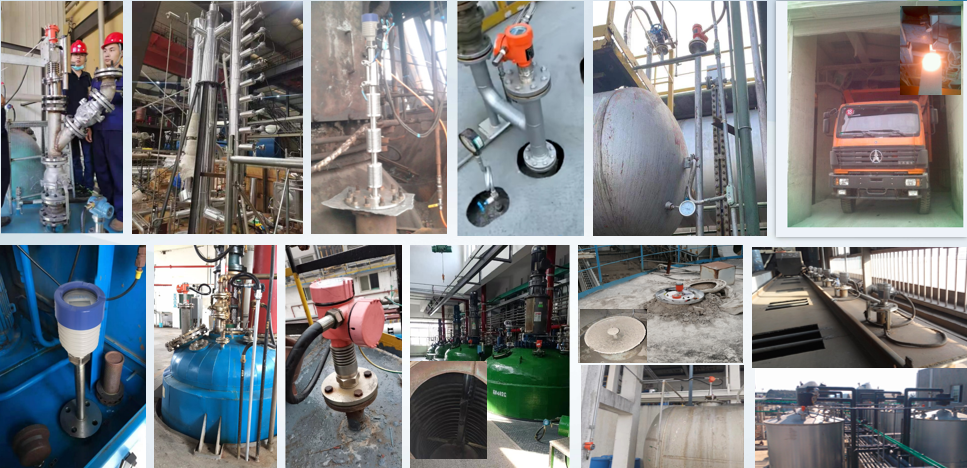
The versatility of level meters translates to a vast array of use cases, spanning industries and public services. In energy and oil & gas, level meters are critical for storing and transporting hydrocarbons. Offshore oil platforms use submersible level meters to monitor crude oil levels in storage tanks, while pipeline terminals rely on radar meters to track fuel volumes, ensuring accurate loading/unloading and preventing leaks. In power plants, they measure water levels in boilers and cooling towers, a task where even small inaccuracies could lead to equipment failure or safety hazards.
In environmental and municipal services, level meters are vital for water management. Municipal wastewater treatment plants use ultrasonic meters to monitor sewage levels in tanks, optimizing treatment processes and preventing overflow. Reservoirs and water treatment facilities depend on them to track freshwater supplies, ensuring cities have enough water for daily use and emergency response. Even in agriculture, level meters play a role—they monitor irrigation tank levels, helping farmers use water efficiently and reduce waste in regions with limited freshwater resources.
The food and pharmaceutical industries benefit from sanitary-grade level meters. In dairy processing, these meters track milk or yogurt levels in mixing tanks, ensuring precise ingredient ratios and meeting strict FDA hygiene standards. Pharmaceutical manufacturers use capacitance level meters to measure liquid drug components, where accuracy is non-negotiable to ensure dosage safety. These specialized meters feature smooth, crevice-free surfaces that are easy to sanitize, aligning with GMP (Good Manufacturing Practices) guidelines.
Specialized Designs for Unique Needs
To address niche industry requirements, level meters are available in specialized configurations. Sanitary level meters are engineered for food, beverage, and pharmaceutical use. They have polished surfaces (Ra < 0.8μm) and use tri-clamp or weld-in fittings for easy disassembly, allowing for thorough cleaning and sterilization—critical for preventing bacterial growth or cross-contamination.
For hazardous environments, explosion-proof level meters are essential. Used in oil refineries, chemical plants, or paint factories, these models have flameproof enclosures and intrinsically safe circuits that prevent sparks from igniting flammable gases, vapors, or dust. They meet global safety standards like ATEX (Europe) and CSA (North America), ensuring compliance in high-risk areas.
Submersible level meters are designed for underwater use, such as monitoring groundwater levels in wells, measuring slurry levels in mining ponds, or tracking water depth in rivers for flood prediction. They are waterproof (IP68 or higher) and built to withstand abrasion from sediments, making them durable in harsh aquatic conditions.
For tight spaces or small tanks, compact level meters (often ultrasonic or capacitive) offer a space-saving solution. These small, lightweight devices are ideal for laboratory settings, where they measure small volumes of chemicals in beakers or test tanks, or for OEM (Original Equipment Manufacturer) integration into small-scale industrial machines.
Installation and Maintenance Tips
While modern level meters are user-friendly, proper installation and maintenance are key to maximizing their lifespan and accuracy. During installation, location selection is critical. For non-intrusive meters (like ultrasonic), avoid placing them near tank inlets/outlets or agitators—turbulent fluid surfaces can distort readings. For intrusive models (like submersible sensors), ensure they are positioned away from tank bottoms (to avoid sediment buildup) and secured tightly to prevent movement. Calibration is another essential step: most manufacturers recommend calibrating level meters before first use and annually thereafter, using reference standards to ensure accuracy.
Maintenance requirements are minimal, but regular checks are still necessary. For ultrasonic meters, clean the transducer (the part that emits/receives waves) periodically to remove dust, oil, or residue—this ensures clear signal transmission. For submersible meters, inspect the cable and seal for damage (e.g., cracks from abrasion) to prevent water ingress. Many modern level meters also include self-diagnostic features, such as alerts for low battery, signal loss, or sensor fouling, allowing operators to address issues before they affect performance. For corrosive environments, check the meter’s housing and sensors for signs of wear (e.g., rust on stainless steel) and replace parts as needed to avoid failure.
Future Trends
As technology evolves, level meters are set to become even more intelligent and integrated. One major trend is IoT connectivity: future level meters will transmit real-time data to cloud-based platforms via Wi-Fi, LoRaWAN, or 5G. This allows for remote monitoring—operators can check tank levels from a smartphone or computer, even for tanks in remote locations (like offshore platforms or rural water wells). AI-powered analytics will also play a role: by analyzing historical level data, these systems can predict future usage patterns (e.g., when a water tank will need refilling) or detect anomalies (e.g., a sudden drop in oil level indicating a leak), enabling proactive decision-making.
Another trend is miniaturization and portability. Compact, battery-powered level meters will become more common for field use—for example, environmental scientists measuring water levels in remote lakes, or technicians inspecting small tanks in factories without permanent monitoring systems. These devices will be lightweight, easy to calibrate, and capable of storing data for later analysis.
Finally, enhanced compatibility with smart factories will be a focus. Level meters will integrate seamlessly with Industry 4.0 systems, sharing data with PLCs (Programmable Logic Controllers) and SCADA (Supervisory Control and Data Acquisition) software. This integration will automate processes—for example, triggering a pump to refill a tank when levels drop below a threshold—reducing human intervention and improving efficiency.
Conclusion
Level meters may not be the most visible technology in industrial settings, but their impact is undeniable. From ensuring the safe storage of hazardous chemicals to optimizing water use in cities, they are essential for maintaining order, efficiency, and safety. Their diverse designs—from sanitary models for food production to explosion-proof versions for oil refineries—mean they can adapt to nearly any challenge, while ongoing advancements in IoT and AI are set to make them even more powerful. As industries continue to prioritize sustainability, accuracy, and automation, level meters will remain a critical tool, quietly supporting progress and innovation across sectors. In a world where "knowing the level" is synonymous with "controlling the outcome," the level meter is truly an unsung hero.
Post time: Oct-15-2025