

Wastewater treatment plants (WWTPs) operate on a delicate balance of controlled processes—from screening and grit removal to aeration, sedimentation, and disinfection. At every stage, precise liquid level control is non-negotiable: too high a level risks overflow (leading to environmental contamination and regulatory fines), while too low a level disrupts treatment processes (wasting energy and reducing efficiency). This is where level meters become indispensable. Designed to monitor and measure liquid levels in tanks, basins, and channels, these devices provide the real-time data WWTPs need to maintain optimal operations, minimize waste, and meet strict treatment standards.
Why Accurate Level Control Matters in WWTPs
Wastewater treatment is a sequential process, and each step relies on consistent liquid levels to function effectively. Consider two critical stages:
- Sedimentation Basins: These tanks allow solids (like sludge) to settle at the bottom. If the liquid level is too high, the basin overflows, sending untreated solids into downstream processes or even local waterways. If levels are too low, the settling time is reduced, and solids remain suspended—compromising the quality of treated water.
- Aeration Tanks: Here, microorganisms break down organic matter with the help of oxygen. The liquid level must stay within a narrow range to ensure air diffusers are fully submerged (maximizing oxygen transfer) and to prevent the tank from running dry (which damages pumps and disrupts the microbial ecosystem).
Without accurate level monitoring, WWTPs rely on manual checks— a slow, error-prone process that can’t keep up with dynamic flow changes (e.g., heavy rain increasing wastewater inflow). Level meters eliminate this guesswork, turning reactive adjustments into proactive control.
Key Level Meter Technologies for WWTP Environments
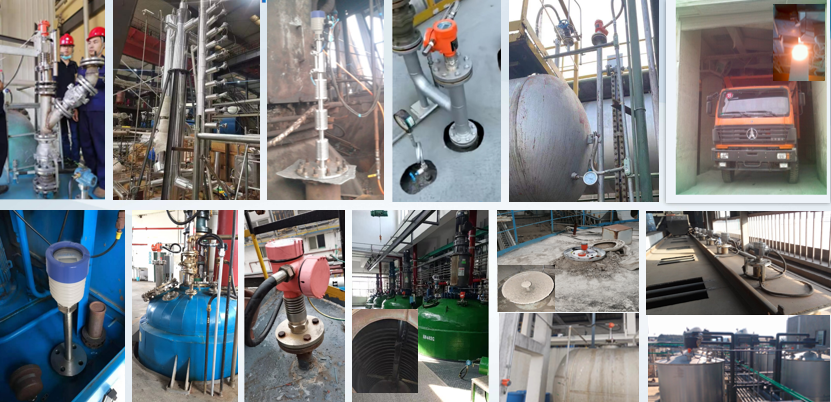
WWTPs present unique challenges for level meters: wastewater is often corrosive, contains solids or bubbles, and tanks may be large or hard to access. The most effective technologies are tailored to these conditions:
- Ultrasonic Level Meters: Non-contact devices that emit sound waves to measure distance from the sensor to the liquid surface. They work well in open tanks (e.g., sedimentation basins) and avoid contact with corrosive or solids-laden wastewater, reducing maintenance needs.
- Radar Level Meters: Use microwave signals to detect liquid levels, offering high accuracy even in harsh conditions (e.g., high humidity, foam, or dust). They’re ideal for closed tanks (e.g., chemical storage for disinfection) or tanks with turbulent surfaces.
- Submersible Pressure Transmitters: Installed directly in wastewater, these meters measure pressure (which correlates to liquid depth). They’re durable for long-term use in grit chambers or sludge tanks, where solids are abundant.
Each technology addresses specific WWTP needs—for example, ultrasonic meters avoid clogging in basins with floating debris, while radar meters cut through foam in aeration tanks to deliver reliable readings.
How Level Meters Boost Process Efficiency
Accurate level data doesn’t just prevent errors—it actively improves WWTP efficiency in three key ways:
- Optimized Energy Use: Pumps and aerators are among the biggest energy users in WWTPs. Level meters adjust these systems in real time: if a tank’s level drops, the meter signals to reduce pump speed (saving energy), and if levels rise, it increases aeration to match demand. Studies show this can cut energy costs by 10–15%.
- Reduced Maintenance Downtime: Manual level checks require staff to access confined or hazardous spaces (e.g., tank tops), increasing safety risks and labor time. Level meters send data remotely to control rooms, eliminating the need for frequent on-site checks. They also trigger alerts for anomalies (e.g., a sudden level spike), allowing teams to fix issues (like a blocked pipe) before they cause downtime.
- Compliance with Regulatory Standards: Environmental agencies require WWTPs to track and report treatment process data—including liquid levels. Level meters store historical data (e.g., daily level trends) that can be easily shared during inspections, reducing the risk of non-compliance fines.
Real-World Example: A Municipal WWTP’s Success
A mid-sized municipal WWTP in Europe recently upgraded its manual level checks to ultrasonic and radar level meters across 12 key tanks. Within six months, the plant saw:
- A 23% reduction in overflow incidents (down from 11 to 3 per month).
- A 12% drop in energy use for pumps and aerators, saving over €20,000 annually.
- Faster response to issues: a blocked grit chamber was detected within 15 minutes (vs. 2 hours with manual checks), preventing a process shutdown.
Conclusion
Level meters are the unsung heroes of efficient wastewater treatment. By providing accurate, real-time liquid level data, they ensure every stage of treatment runs smoothly—from preventing overflows to optimizing energy use. In an era where WWTPs face growing pressure to reduce costs, cut emissions, and meet stricter environmental standards, level meters are no longer optional: they’re a critical tool for building sustainable, efficient wastewater management systems. As technology advances (e.g., IoT-integrated meters that share data across plant systems), their role in driving WWTP efficiency will only grow.
Post time: Sep-10-2025