

In the realm of fluid dynamics, measuring the flow of liquids in unconfined channels—such as rivers, canals, drainage ditches, or industrial effluent streams—presents unique challenges. Unlike closed pipes, where flow is contained and pressure-driven, open channels rely on gravity, with flow rates influenced by factors like channel slope, cross-sectional area, and surface roughness. Enter open channel flow meters: specialized devices designed to accurately quantify flow in these unconfined environments, playing a critical role in water resource management, environmental monitoring, and industrial process control.
How Open Channel Flow Meters Work
Open channel flow meters operate on the principle that flow rate (Q) is determined by two key variables: the cross-sectional area of the flowing liquid (A) and its average velocity (V), following the basic equation Q = A × V. However, directly measuring velocity and area in large or irregular channels is often impractical. Instead, most meters use a primary device to create a controlled constriction in the channel, which simplifies flow measurement by converting velocity into a measurable water level (head).
Common primary devices include:
- Weirs: Structures (e.g., V-notch, rectangular, or trapezoidal) that raise the water level upstream, creating a predictable relationship between the depth of water above the weir (head) and flow rate.
- Flumes: Shaped channels (e.g., Parshall, Palmer-Bowlus) that accelerate flow through a narrowed section, with head measurements at specific points correlating to flow rate.
The flow meter itself then uses sensors (such as ultrasonic transducers, pressure transducers, or radar sensors) to measure the head upstream of the primary device. Using pre-calibrated formulas or tables specific to the primary device, the meter converts this head measurement into a real-time flow rate.
Key Advantages for Unconfined Flow
Open channel flow meters offer distinct benefits tailored to their unique application environment:
- Adaptability to Large or Irregular Channels: They work effectively in wide rivers, narrow ditches, or channels with uneven beds—settings where closed-pipe meters would be impractical or impossible to install.
- Low Maintenance: Primary devices like weirs and flumes have no moving parts, reducing wear and the need for frequent repairs. Sensors (often non-contact) are also less prone to damage from debris or sediment.
- Cost-Effectiveness: For large-scale applications (e.g., municipal water systems, irrigation canals), installing a weir or flume with a simple level sensor is far more economical than retrofitting with closed-pipe infrastructure.
- Environmental Compatibility: Non-invasive sensor options (e.g., ultrasonic or radar) avoid disrupting aquatic ecosystems, making them ideal for environmental monitoring of natural waterways.
Applications Across Sectors
Open channel flow meters are indispensable in diverse fields where unconfined flow measurement is critical:
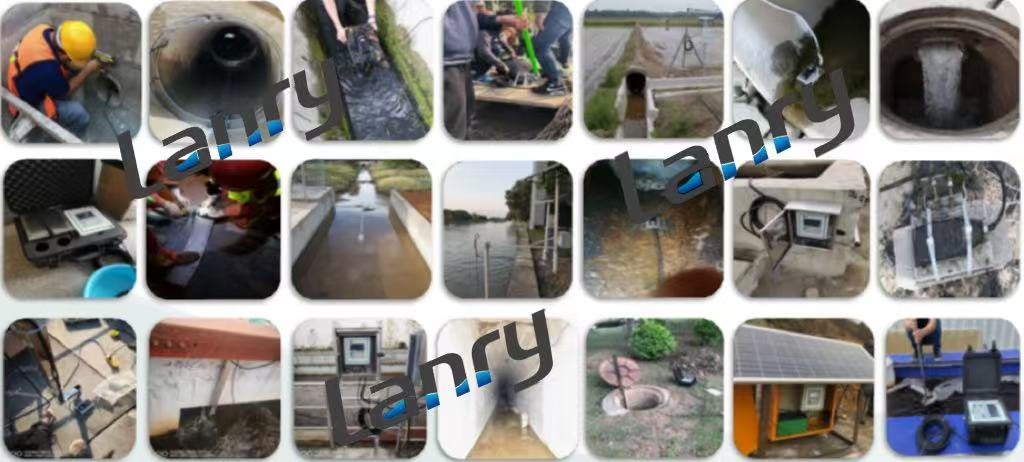
- Water Resource Management: Monitoring river discharge, reservoir inflow/outflow, or irrigation canal flow to optimize water distribution and prevent shortages.
- Wastewater Treatment: Measuring the flow of effluent in plant channels to ensure compliance with regulatory discharge limits and optimize treatment processes.
- Agriculture: Managing irrigation systems by tracking water usage in canals, ensuring efficient distribution to crops.
- Flood Control: Monitoring stormwater runoff in drainage channels to predict and mitigate flood risks in urban or rural areas.
- Environmental Monitoring: Assessing the impact of industrial activities on natural waterways by measuring flow rates alongside pollutant levels.
Challenges and Considerations
While reliable, open channel flow meters require careful planning to ensure accuracy:
- Primary Device Placement: Weirs and flumes must be installed in straight, uniform channel sections to avoid flow disturbances (e.g., eddies, turbulence) that skew head measurements.
- Sediment and Debris: Accumulated sediment can alter a channel’s cross-section, while debris (e.g., leaves, branches) can block weirs or flumes, requiring regular cleaning.
- Variable Flow Conditions: Extreme weather (e.g., heavy rain) or seasonal changes can cause sudden shifts in flow rate, demanding meters with high dynamic range and rapid response times.
Modern meters address these challenges with features like self-cleaning sensors, remote monitoring (via IoT connectivity), and advanced algorithms to filter out noise from turbulent flow.
Innovations in Open Channel Metering
Advancements in sensor technology and data processing are enhancing performance:
- Non-Contact Sensing: Ultrasonic and radar sensors now offer higher precision, even in frosty or foggy conditions, by emitting waves that penetrate environmental interference.
- Real-Time Data Integration: Meters with wireless connectivity feed flow data into cloud-based platforms, enabling utilities or researchers to monitor trends, set alerts for abnormal flow, and make data-driven decisions.
- Smart Calibration: Some models automatically adjust for changes in channel conditions (e.g., sediment buildup) using machine learning, reducing the need for manual recalibration.
Conclusion
Open channel flow meters bridge the gap in measuring unconfined fluid flow, providing accurate, cost-effective, and adaptable solutions for critical applications in water management, agriculture, and environmental protection. By combining simple yet robust primary devices with advanced sensing technology, they ensure that even the most challenging flow environments—from raging rivers to quiet irrigation ditches—can be monitored with precision. As global demand for water sustainability grows, these meters will remain vital tools in balancing resource use, environmental stewardship, and industrial efficiency.
Post time: Aug-14-2025