

In industrial processes where accurate level measurement of liquids, solids, or slurries is critical, radar level meters have emerged as a cornerstone technology. Leveraging radio frequency (RF) waves to determine the distance between the sensor and the surface of a substance, these devices offer unparalleled precision, versatility, and resilience across diverse environments—from chemical tanks and wastewater treatment plants to silos and oil refineries.
At the heart of a radar level meter lies a straightforward yet powerful principle: the emission and reflection of electromagnetic waves. The device transmits a high-frequency radar signal (typically in the microwave range) toward the target substance. When the signal encounters the surface, a portion of it reflects back to the sensor. By calculating the time difference between the transmitted and reflected signals (time-of-flight), or analyzing frequency shifts (in the case of Doppler radar), the meter accurately computes the distance to the surface. This distance is then converted into a level reading, providing real-time data on the substance’s fill height.
One of the defining advantages of radar level meters is their non-contact operation. Unlike mechanical devices such as float switches or pressure transducers, they do not come into direct contact with the measured medium. This eliminates issues like wear and tear, corrosion, or contamination—common pitfalls in harsh industrial settings. For example, in chemical processing, where aggressive fluids or high temperatures prevail, non-contact radar meters remain unaffected, ensuring long-term reliability and reducing maintenance costs.
Radar level meters also excel in handling challenging conditions that might confound other technologies. They perform consistently regardless of factors like dust, vapor, foam, or varying temperatures and pressures. In bulk solids storage, for instance, where dust clouds are prevalent, radar signals penetrate easily, delivering accurate readings even in turbulent environments. Similarly, in oil and gas applications, where vapors or volatile compounds are present, radar technology maintains precision without interference.
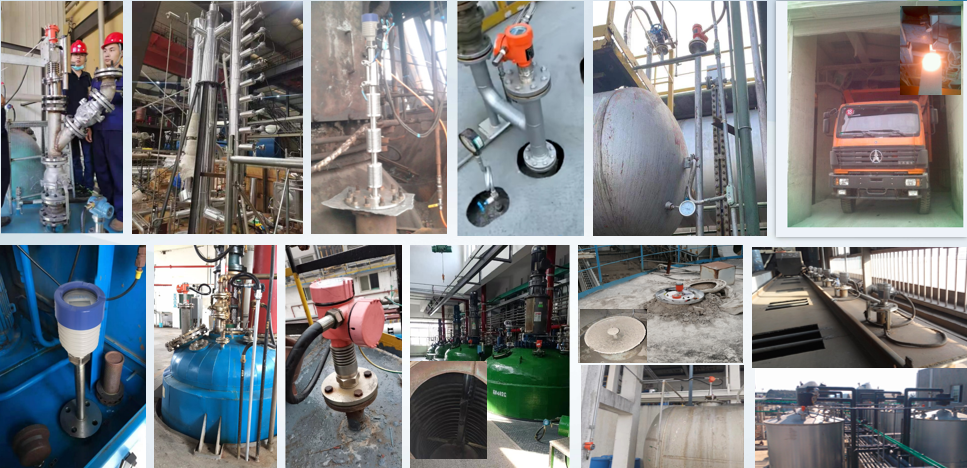
Two primary types of radar level meters dominate the market: guided wave radar (GWR) and non-guided (free-space) radar. Guided wave radar uses a probe (such as a rod or cable) to direct the radar signal along a fixed path, making it ideal for measuring high-viscosity liquids, slurries, or substances with irregular surfaces. It is particularly effective in narrow or tall tanks where signal dispersion might be an issue. Non-guided radar, by contrast, emits signals through open space, making it suitable for large tanks, reservoirs, or applications where a probe could obstruct flow or become clogged. This versatility allows industries to select the optimal technology for their specific needs.
In addition to accuracy and durability, modern radar level meters integrate seamlessly with industrial automation systems. Many models feature digital outputs (such as 4-20 mA, HART, or Profibus) that enable real-time data transmission to control rooms or SCADA systems. This connectivity facilitates remote monitoring, predictive maintenance, and process optimization. For example, in water treatment plants, radar meters can trigger alerts when tank levels reach critical thresholds, ensuring timely refills or preventing overflows.
While the initial investment in radar level meters may be higher than that of traditional devices, their long-term benefits—including reduced downtime, lower maintenance, and enhanced measurement accuracy—make them a cost-effective choice. Industries ranging from food and beverage (where hygiene and precision are paramount) to mining (where ruggedness is essential) rely on radar technology to streamline operations and ensure compliance with safety and quality standards.
As industrial processes grow more complex and the demand for data-driven decision-making increases, radar level meters continue to evolve. Advancements in signal processing, miniaturization, and IoT integration are expanding their capabilities, enabling even greater precision and adaptability. Whether in a small-scale manufacturing facility or a large-scale industrial plant, these devices stand as a testament to how technology can transform essential measurements into a foundation for efficiency and reliability.
In essence, radar level meters are more than just instruments—they are critical tools that empower industries to measure with confidence, operate efficiently, and adapt to the ever-changing demands of modern production.
Post time: Aug-14-2025