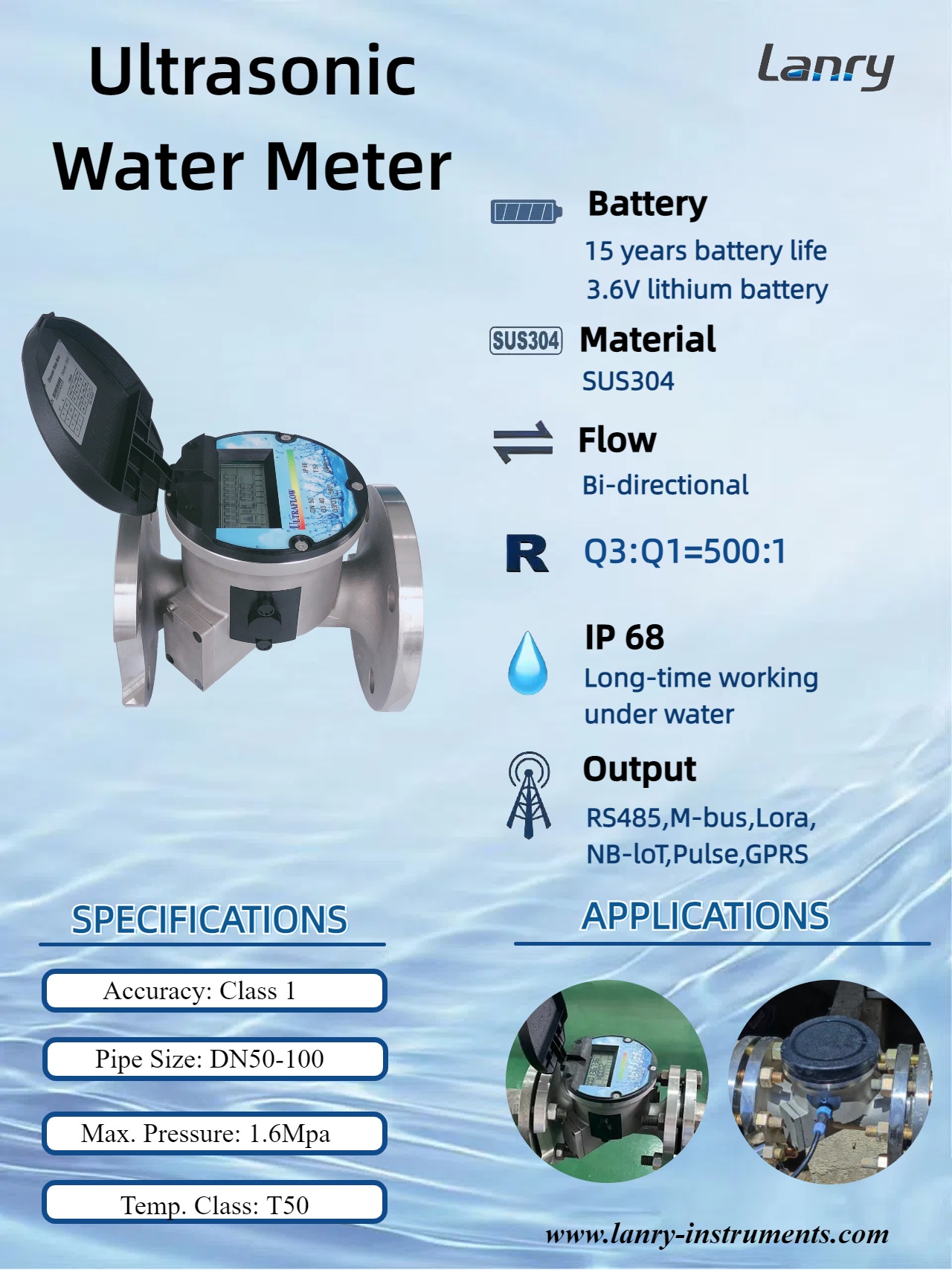
Ultrasonic Flow Meters

20+ Years Manufacturing Experience

Smart Ultrasonic Water Meters: Enabling Remote Monitoring for Industrial Water Management

Industrial water management is undergoing a digital transformation, driven by the need for greater efficiency, cost reduction, and sustainability. Among the technologies leading this shift, smart ultrasonic water meters have emerged as a game-changer—combining the precision of ultrasonic measurement with remote monitoring capabilities to address the unique challenges of industrial water use. Unlike traditional mechanical meters or basic ultrasonic models, these smart devices provide real-time data, actionable insights, and seamless integration with industrial control systems, making them indispensable for sectors ranging from manufacturing and energy to food processing and chemical production. This article explores how smart ultrasonic water meters revolutionize remote monitoring in industrial water management and the key benefits they deliver.

The Technical Foundation: How Smart Ultrasonic Water Meters Work

At their core, smart ultrasonic water meters rely on the transit-time ultrasonic principle to measure flow—two transducers send and receive ultrasonic signals through the water, with the time difference between signals calculating flow rate. Unlike mechanical meters with moving parts (e.g., turbines or pistons), this design eliminates wear and tear, ensuring long-term accuracy and minimal maintenance. What sets “smart” models apart is their integration of IoT (Internet of Things) technology, which enables remote monitoring:
  • Built-in sensors: Beyond flow rate, advanced models track pressure, temperature, and even water quality parameters (e.g., turbidity), providing a holistic view of water systems.
  • Wireless connectivity: Most smart ultrasonic meters support protocols like LoRaWAN, NB-IoT, or cellular (4G/5G), allowing data transmission to cloud-based platforms or on-site SCADA (Supervisory Control and Data Acquisition) systems without physical wiring.
  • Data storage and analytics: Collected data is stored locally (via internal memory) and in the cloud, where analytics tools identify patterns (e.g., peak usage times) or anomalies (e.g., sudden flow spikes indicating leaks).
This technical setup means industrial operators can monitor water use from anywhere, at any time—eliminating the need for manual meter reading, which is time-consuming, error-prone, and impractical for large industrial facilities with scattered pipelines.

Addressing Industrial Water Management Challenges

Industrial water use is complex: facilities often manage multiple water sources (e.g., municipal supply, groundwater, recycled water), high flow rates, and varying operational demands—all while complying with strict environmental regulations. Smart ultrasonic water meters with remote monitoring directly solve these pain points:

1. Real-Time Leak Detection and Loss Prevention

Water leaks in industrial pipelines are costly—they waste resources, increase utility bills, and can cause equipment damage or production downtime. Traditional meters only reveal leaks during manual checks, allowing small issues to escalate into major problems. Smart ultrasonic meters, however, use remote monitoring to detect anomalies in real time:
  • If flow rate suddenly increases when equipment is idle, or if pressure drops unexpectedly, the meter sends instant alerts to operators via email, SMS, or SCADA dashboards.
  • For example, a chemical plant using smart meters might receive an alert about a leak in a cooling water pipeline within minutes of its occurrence, enabling technicians to shut off the line and repair it before it disrupts production or contaminates surrounding areas.

    Studies show that smart ultrasonic meters reduce water loss in industrial settings by 15–30%, translating to significant cost savings over time.

2. Optimizing Water Allocation and Efficiency

Industrial facilities often allocate water to multiple processes (e.g., cleaning, cooling, production), but without granular data, it’s hard to identify inefficiencies. Remote monitoring from smart ultrasonic meters provides process-level visibility:
  • Operators can track water use per machine, per shift, or per product line, identifying which processes are overusing water.
  • For instance, a food processing plant might use this data to adjust water flow in its washing stations—reducing consumption during off-peak hours or optimizing pressure to avoid waste without compromising hygiene.

    This level of control not only cuts water costs but also supports sustainability goals, such as reducing a facility’s carbon footprint (since treating and pumping water requires energy).

3. Simplifying Regulatory Compliance and Reporting

Industrial facilities face strict regulations on water use and discharge (e.g., the U.S. Clean Water Act, EU Industrial Emissions Directive), which require accurate, auditable data. Manual reporting is labor-intensive and risky—errors can lead to fines or legal penalties. Smart ultrasonic water meters streamline compliance through:
  • Automated data logging: All flow, pressure, and quality data is timestamped and stored securely, creating an immutable record for regulators.
  • Customizable reports: Operators can generate compliance reports (e.g., monthly water use summaries, discharge volume logs) in minutes, rather than days, by pulling data directly from the meter’s cloud platform.

    This not only reduces administrative burden but also ensures data accuracy, minimizing the risk of non-compliance.

Key Considerations for Industrial Adoption

While smart ultrasonic water meters offer clear benefits, industrial facilities must consider several factors to maximize their value:

1. Compatibility with Existing Systems

Ensure the meter’s communication protocols (e.g., LoRaWAN, Modbus) integrate with the facility’s existing SCADA, ERP (Enterprise Resource Planning), or sustainability management software. This avoids data silos and ensures seamless workflow integration.

2. Durability for Industrial Environments

Industrial settings are harsh—exposure to dust, moisture, extreme temperatures, or corrosive chemicals can damage delicate equipment. Choose smart ultrasonic meters with rugged enclosures (IP67 or IP68 ratings) and wetted parts made of corrosion-resistant materials (e.g., 316L stainless steel, PTFE) to withstand these conditions.

3. Power Management

Many industrial pipelines are in remote areas without access to grid power. Opt for battery-powered smart meters with long lifespans (5–10 years) or models that support solar charging, ensuring continuous operation without frequent battery replacements.

4. Cybersecurity

Since smart meters connect to the internet, they pose cybersecurity risks. Select meters with built-in encryption (e.g., TLS 1.3) and regular firmware updates to protect data from hacking or unauthorized access—critical for facilities handling sensitive information (e.g., water quality data for pharmaceutical production).

Conclusion

Smart ultrasonic water meters are more than just measurement tools—they are the backbone of modern industrial water management, enabling remote monitoring that drives efficiency, sustainability, and compliance. By providing real-time data, instant alerts, and actionable insights, these devices help industrial facilities reduce water loss, optimize resource allocation, and simplify regulatory reporting—all while cutting costs and supporting environmental goals. As industries continue to prioritize digitalization and sustainability, smart ultrasonic water meters will become an essential investment, transforming how facilities manage one of their most critical resources: water. For industrial operators looking to stay ahead in a competitive, resource-constrained world, adopting these smart meters is not just a choice—it’s a necessity.
超声波水表

Post time: Oct-11-2025

Send your message to us: