

As the global focus on water resource management and energy conservation intensifies, ultrasonic water meters have emerged as a advanced solution in the field of water measurement, gradually replacing traditional mechanical water meters with their superior performance and intelligent features. Unlike mechanical meters that rely on moving parts to measure water flow, ultrasonic water meters adopt non-contact measurement technology, offering higher accuracy, longer service life, and better adaptability to complex water quality conditions. This article explores the core advantages, diverse applications, key selection criteria, and future development trends of ultrasonic water meters, highlighting their pivotal role in promoting efficient water use and smart water management.
One of the most prominent advantages of ultrasonic water meters is their exceptional measurement accuracy and reliability. These meters utilize the principle of ultrasonic wave propagation in water—by calculating the time difference or frequency shift of ultrasonic signals transmitted upstream and downstream, they can accurately measure water flow rates with an error margin as low as ±0.5% or even ±0.2%. Unlike mechanical meters, which are prone to wear and tear of internal components (leading to reduced accuracy over time), ultrasonic water meters have no moving parts, eliminating mechanical friction and wear. This structural advantage ensures long-term stable measurement performance, with a service life of up to 15-20 years, significantly reducing replacement and maintenance costs for users.
Another key benefit of ultrasonic water meters is their strong adaptability to diverse water quality and working conditions. They can effectively measure water containing suspended particles, sediment, or other impurities, which often cause clogging or damage to mechanical meters. Additionally, ultrasonic water meters perform well in a wide range of temperature and pressure conditions, making them suitable for both cold water and hot water measurement scenarios, from residential water supply to industrial process water monitoring. Their low pressure loss characteristic is also noteworthy—compared to mechanical meters, they impose minimal resistance to water flow, reducing energy consumption for water supply systems and improving overall operational efficiency.
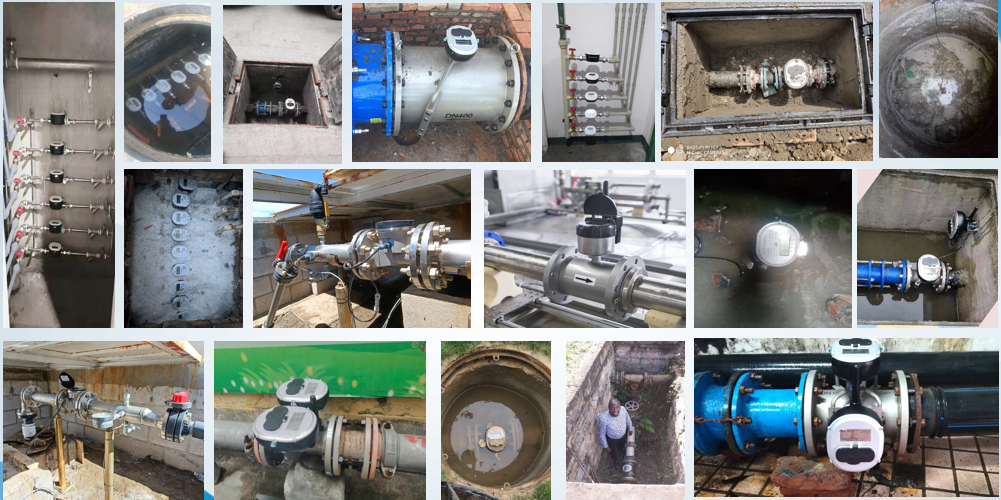
The application scope of ultrasonic water meters covers residential, commercial, industrial, and municipal sectors. In residential buildings, smart ultrasonic water meters equipped with wireless communication functions enable remote meter reading, eliminating the need for on-site manual inspection and reducing labor costs for water supply companies. They also support real-time water consumption monitoring and leak detection, helping residents and property management identify abnormal water use and avoid water waste. In commercial and public facilities such as hotels, hospitals, and shopping malls, ultrasonic water meters with multi-zone measurement capabilities facilitate accurate water cost allocation and energy conservation management.
In industrial settings, ultrasonic water meters are widely used in water-intensive industries such as power generation, chemical engineering, and textile manufacturing. They provide precise measurement of process water, cooling water, and wastewater, supporting process optimization and compliance with environmental discharge standards. For example, in thermal power plants, ultrasonic water meters monitor the flow of cooling water in real time, ensuring the stable operation of power generation units and efficient use of water resources. In municipal water management, large-diameter ultrasonic water meters are installed in water supply pipelines, reservoirs, and sewage treatment plants to monitor water distribution and treatment process flows, providing critical data for smart water network scheduling and resource allocation.
Selecting the right ultrasonic water meter requires careful consideration of several key factors. First, the measurement range should match the actual water flow conditions—ultrasonic water meters have a wide turndown ratio (often 100:1 or higher), but it is still essential to select a model that covers the minimum and maximum expected flow rates to ensure measurement accuracy. Second, communication protocol compatibility is crucial for smart applications—common protocols such as M-Bus, LoRa, and NB-IoT enable seamless integration with smart water management systems, supporting remote monitoring and data analysis. Additionally, material selection should be based on water quality and environmental conditions; for example, meters with corrosion-resistant materials (such as stainless steel or PTFE) are recommended for measuring corrosive industrial wastewater.
The future development of ultrasonic water meters is closely tied to the advancement of digital and intelligent technologies. The integration of IoT (Internet of Things) and cloud computing enables real-time data transmission, remote diagnostics, and predictive maintenance of water meters. Advanced models are also incorporating AI algorithms to analyze water consumption patterns, predict potential leaks, and optimize water supply scheduling. Furthermore, the development of low-power consumption technologies extends the battery life of wireless ultrasonic water meters, making them more suitable for remote and inaccessible areas. As smart city construction accelerates, ultrasonic water meters will play an increasingly important role in building efficient, sustainable, and intelligent water management systems.
In conclusion, ultrasonic water meters represent a significant advancement in water measurement technology, offering superior accuracy, reliability, and adaptability compared to traditional meters. Their wide application across various sectors underscores their practical value in promoting water conservation, improving management efficiency, and supporting sustainable water resource development. With continuous technological innovation, ultrasonic water meters will continue to evolve, providing more intelligent and efficient solutions for global water management challenges.
Post time: Jan-08-2026