

In the field of industrial level measurement, radar level transmitters have emerged as a core monitoring tool, favored for their high accuracy, strong environmental adaptability, and stable performance. Unlike traditional level measurement devices such as pressure transmitters or ultrasonic sensors, radar level transmitters utilize radio wave propagation to achieve non-contact measurement, eliminating the impact of factors like fluid viscosity, density, and temperature changes. This article explores the key advantages, diverse industrial applications, critical selection criteria, and intelligent evolution of radar level transmitters, highlighting their pivotal role in optimizing industrial processes and ensuring operational safety.
One of the most notable advantages of radar level transmitters is their excellent measurement reliability and environmental robustness. These devices operate based on the time-of-flight principle of radio waves, which are unaffected by external conditions such as dust, vapor, or extreme temperatures. Whether in high-temperature industrial furnaces, low-temperature refrigeration warehouses, or dusty cement silos, radar level transmitters can maintain measurement accuracy within ±0.1% to ±0.5% of the full scale. Their non-contact measurement mode avoids direct contact with the measured medium, preventing issues such as corrosion, wear, and clogging that often plague contact-type sensors. This makes them particularly suitable for measuring corrosive fluids, viscous materials, or media containing solid particles, such as chemical reagents, crude oil, and coal ash.
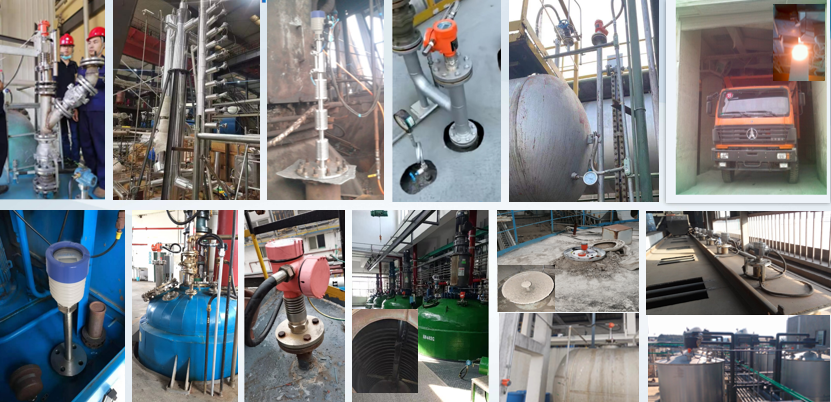
The application scope of radar level transmitters spans a wide range of industries, reflecting their versatility and practicality. In the oil and gas industry, they are widely used in oil storage tanks, crude oil separators, and natural gas storage facilities to monitor liquid and gas levels in real time. High-precision radar level transmitters ensure accurate inventory management and prevent overfilling or leakage, which is critical for ensuring operational safety and complying with environmental regulations. In the chemical industry, radar level transmitters with corrosion-resistant antenna designs and explosion-proof certifications (such as ATEX and IECEx) safely measure the level of hazardous chemicals, including acids, alkalis, and flammable solvents, even in harsh and dangerous operating environments.
In municipal engineering and water treatment, radar level transmitters play an important role in water supply reservoirs, sewage treatment tanks, and rainwater collection systems. They provide continuous and accurate level data, enabling efficient regulation of water supply and drainage processes and improving the overall efficiency of water resource management. The food and beverage industry also benefits from radar level transmitters—sanitary-grade models with smooth, easy-to-clean antennas meet strict hygiene standards, making them ideal for measuring the level of edible oils, dairy products, and fruit juices in storage tanks and processing equipment. Additionally, in the power generation industry, they monitor the level of boiler water, cooling water, and coal bunkers, ensuring the stable operation of power generation units.
Selecting the appropriate radar level transmitter requires careful consideration of several key factors to ensure optimal performance. First, the type of radar technology—pulse radar and guided wave radar are the two main categories. Pulse radar is suitable for long-distance measurement (up to 120 meters) in large tanks and silos, while guided wave radar offers higher accuracy for small tanks, narrow spaces, or media with complex surface conditions (such as foamy liquids). Second, antenna selection is critical: horn antennas are suitable for high-temperature, high-pressure, and dusty environments, while parabolic antennas provide stronger anti-interference capabilities for long-distance measurement. The material of the antenna, such as stainless steel or PTFE, should also be compatible with the chemical properties of the measured medium.
With the advancement of industrial digitalization, radar level transmitters are evolving toward intelligence and networking. Modern radar level transmitters are equipped with various communication interfaces, including RS485, HART, and Ethernet, enabling seamless integration with SCADA systems and cloud platforms. This allows for real-time remote monitoring, data analysis, and remote parameter setting, reducing on-site operation and maintenance costs. Advanced models also feature self-diagnostic functions that can detect issues such as antenna fouling, signal interference, and device malfunctions, issuing timely alerts to help maintenance personnel address problems proactively. Some high-end devices even integrate artificial intelligence algorithms to optimize measurement accuracy and predict potential failures, further enhancing operational efficiency.
In conclusion, radar level transmitters have become an indispensable part of modern industrial measurement systems, thanks to their high accuracy, strong environmental adaptability, and non-contact measurement advantages. Their wide application across various industries underscores their practical value in improving process efficiency, ensuring operational safety, and promoting environmental compliance. As industrial automation and digitalization continue to deepen, radar level transmitters will continue to integrate advanced technologies, providing more reliable and intelligent measurement solutions for the evolving needs of the industrial sector.
Post time: Jan-08-2026