

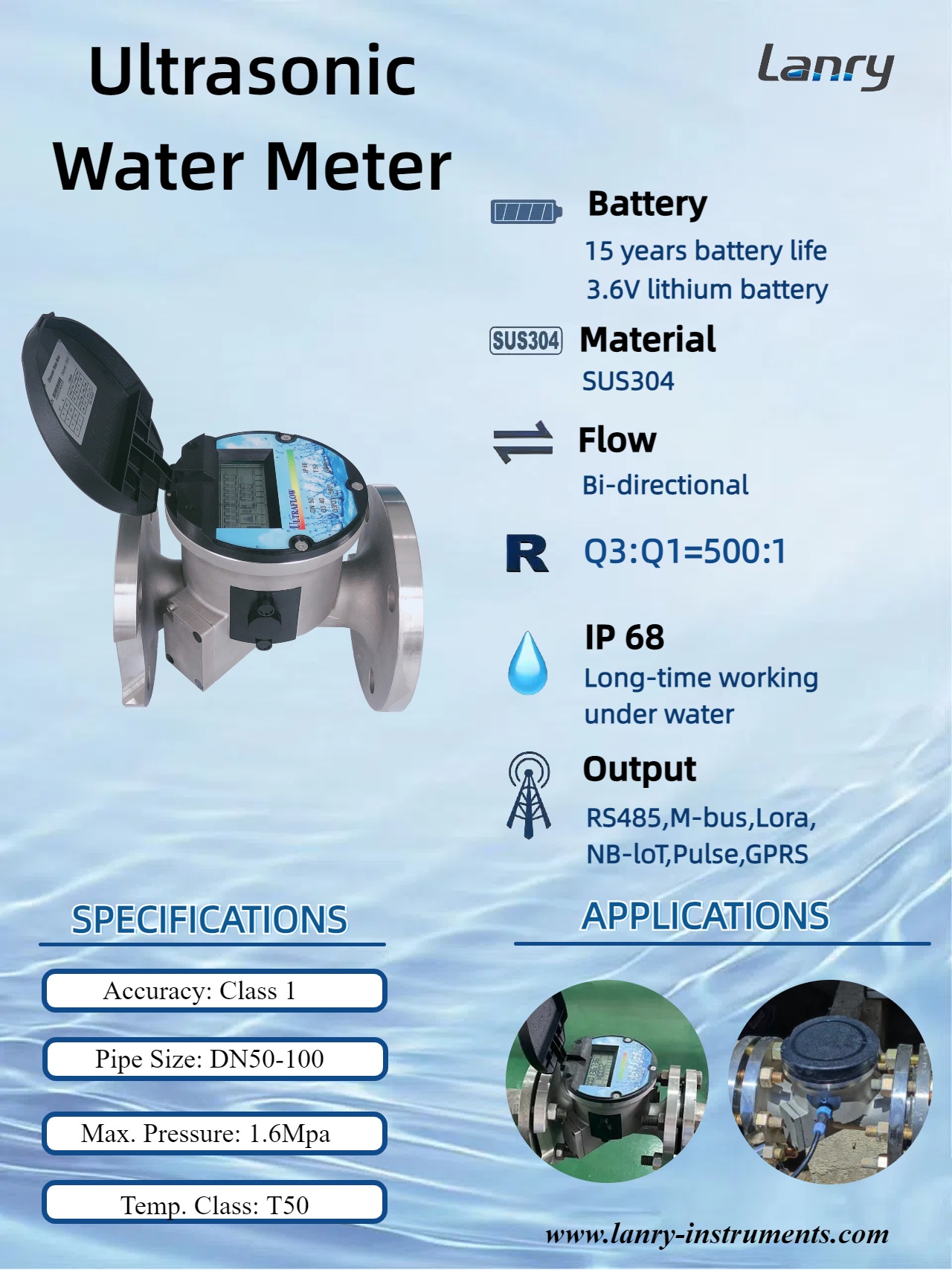
In the realm of water measurement, ultrasonic water meters are emerging as a revolutionary alternative to traditional mechanical water meters. As technology continues to evolve, the advantages of ultrasonic water meters are becoming increasingly apparent, indicating a significant shift in the future of water metering.
1. Superior Accuracy
One of the most prominent advantages of ultrasonic water meters over mechanical ones is their higher accuracy. Mechanical water meters rely on moving parts such as gears and vanes to measure water flow. Over time, these moving parts are subject to wear and tear due to friction and the impact of water flow. This wear can lead to a decrease in measurement accuracy. For example, in a high - flow industrial setting, the continuous movement of mechanical components in a mechanical water meter can cause them to degrade more quickly, resulting in inaccurate readings.
In contrast, ultrasonic water meters use ultrasonic waves to measure water flow velocity. By calculating the time difference of ultrasonic waves traveling upstream and downstream in the water, they can precisely determine the flow rate. Since there are no moving parts involved in the measurement process, ultrasonic water meters are not affected by mechanical wear. They can maintain high - level accuracy throughout their service life, even in challenging environments with varying water quality and flow conditions. This high accuracy is crucial for both consumers, who want to be billed accurately for their water usage, and water utilities, which need precise data for efficient water resource management.
2. Extended Lifespan
Mechanical water meters typically have a relatively shorter lifespan due to the wear of their moving parts. In addition to the wear caused by normal operation, mechanical components can also be damaged by impurities in the water, such as sand and small debris. These impurities can clog or jam the moving parts, leading to malfunctions and a shortened lifespan. In some cases, mechanical water meters may need to be replaced every 5 - 10 years, depending on the usage environment.
Ultrasonic water meters, on the other hand, have a significantly longer lifespan. Without the need for moving parts, they are not prone to the same types of mechanical failures. They can withstand harsh water conditions, including water with a certain amount of sediment, without experiencing a significant impact on their performance. With proper installation and maintenance, ultrasonic water meters can operate reliably for 15 - 20 years or even longer. This extended lifespan not only reduces the frequency of meter replacements for water utilities but also lowers the overall cost of ownership.
3. Enhanced Sensitivity to Low - Flow Rates
Mechanical water meters often struggle to accurately measure low - flow rates. Their design and mechanical mechanisms are more optimized for measuring medium to high - flow rates. When water flow is very low, such as a slow drip from a faucet, mechanical water meters may not register the flow at all or provide inaccurate readings. This can lead to undetected water leaks in residential and commercial buildings, resulting in water waste.
Ultrasonic water meters, however, are highly sensitive to low - flow rates. They can detect and accurately measure even the smallest water flows. This sensitivity is particularly important for leak detection. In a residential setting, a small leak in a pipe that causes a slow but continuous water flow can be easily detected by an ultrasonic water meter. By promptly identifying such leaks, water utilities and consumers can take measures to repair them, reducing water loss and saving costs.
4. Remote Reading and Smart Metering Capabilities
In the era of the Internet of Things (IoT), the ability to remotely read water meters and integrate them into smart metering systems is becoming increasingly important. Mechanical water meters require manual reading, which is a time - consuming and labor - intensive process. Meter readers need to visit each location where a mechanical water meter is installed, record the reading, and then manually enter the data into a system. This process is not only inefficient but also prone to human error.
Ultrasonic water meters, on the other hand, are well - equipped for remote reading and smart metering. They can be integrated with IoT technology, allowing water utilities to remotely collect water consumption data in real - time. This real - time data collection enables more efficient water management. For example, water utilities can monitor water usage patterns throughout the day, identify peak consumption periods, and adjust water supply accordingly. In addition, ultrasonic water meters can be connected to smart home systems, providing consumers with detailed information about their water usage and allowing them to better manage their water consumption.
5. Lower Maintenance Requirements
Mechanical water meters require regular maintenance to ensure accurate operation. Maintenance tasks include checking for wear and tear of moving parts, cleaning the meter to remove impurities, and calibrating the meter to maintain accuracy. These maintenance activities not only require time and labor but also involve costs for water utilities.
Ultrasonic water meters, with their lack of moving parts, have significantly lower maintenance requirements. There are no parts to lubricate, clean due to mechanical wear, or replace due to breakage. Periodic checks are mainly focused on ensuring the proper functioning of the ultrasonic sensors and the communication module (if applicable). This reduced maintenance need allows water utilities to allocate their resources more effectively, focusing on other important aspects of water management rather than spending excessive time and money on meter maintenance.
6. Adaptability to Different Installation Environments
Mechanical water meters often have specific installation requirements. They typically need to be installed in a horizontal position to ensure accurate measurement. Deviations from the proper installation angle can affect the movement of the mechanical components and lead to inaccurate readings.
Ultrasonic water meters, on the contrary, offer greater flexibility in installation. They can be installed in various orientations, including horizontally, vertically, or at an angle. This adaptability makes them suitable for a wider range of installation environments, such as in pipes located in tight spaces or in complex plumbing systems where it may be difficult to install a meter in a strictly horizontal position.
In conclusion, the future of water metering is likely to be dominated by ultrasonic water meters. Their numerous advantages over mechanical water meters, including higher accuracy, extended lifespan, enhanced low - flow sensitivity, remote reading capabilities, lower maintenance requirements, and greater installation flexibility, make them a more attractive option for both water utilities and consumers. As technology continues to improve, ultrasonic water meters are expected to become even more sophisticated, further optimizing water management and contributing to more sustainable use of water resources.

Post time: Jun-05-2025