

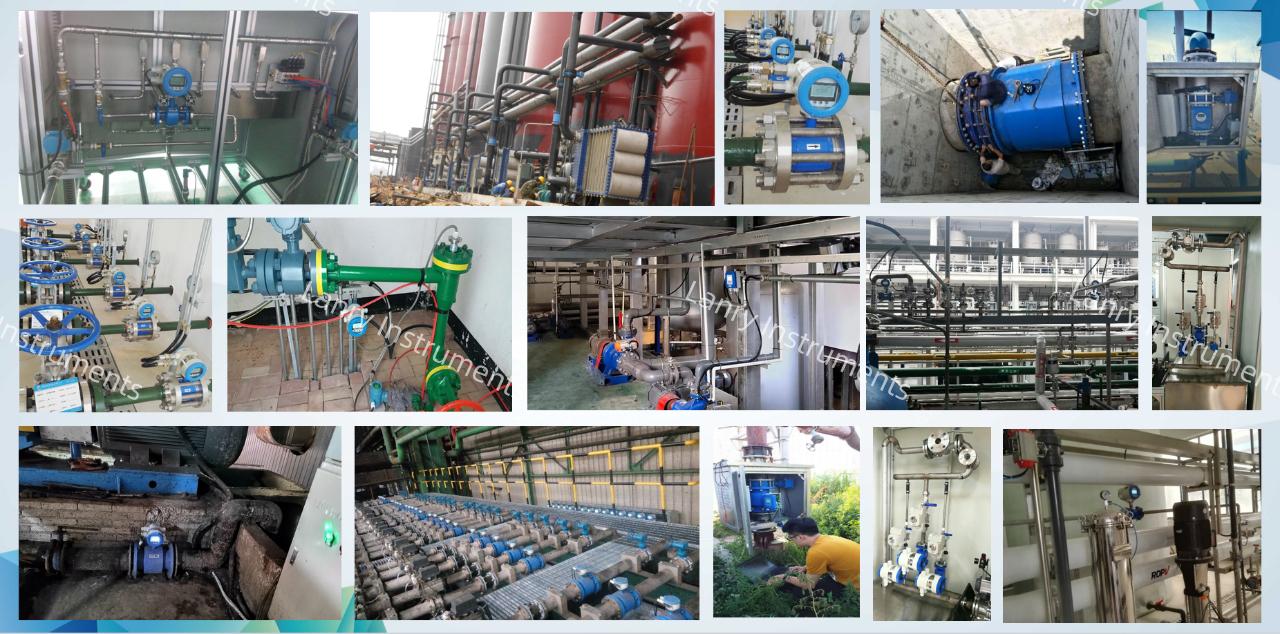
In industrial, municipal, and environmental settings, the accurate measurement of conductive fluids—from wastewater and slurries to chemical solutions— is critical for operational efficiency, regulatory compliance, and resource management. Electromagnetic flowmeters (EMFs), leveraging Faraday’s law of electromagnetic induction, have emerged as indispensable tools in this domain, offering unique advantages that make them irreplaceable for conductive fluid applications.
Unmatched Accuracy in Conductive Environments
At the core of an EMF’s functionality is a magnetic field generated within a non-magnetic pipe. When a conductive fluid flows through this field, it induces a voltage proportional to its velocity—measured by electrodes embedded in the pipe wall. This design eliminates the need for moving parts or intrusive elements, which can disrupt flow or degrade over time. For conductive fluids with conductivity as low as 5 µS/cm (a threshold easily met by most industrial liquids, wastewater, and even many beverages), EMFs deliver exceptional accuracy, typically within ±0.5% of the measured value.
Consider municipal wastewater treatment plants: raw sewage, rich in dissolved solids and organic matter, is highly conductive. Traditional mechanical meters struggle here due to clogging or wear from abrasive particles, leading to errors as high as 5–10%. EMFs, by contrast, remain unaffected. A 2023 study by the Water Environment Federation found that EMFs installed in wastewater lines maintained accuracy within ±0.3% over a 12-month period, even with fluctuating flow rates and particle concentrations. This precision ensures treatment facilities can accurately track inflow volumes, optimize chemical dosing, and report compliance data with confidence.
Versatility Across Diverse Conductive Fluids
Conductive fluids span a vast range of viscosities, temperatures, and chemical compositions, from viscous oil-in-water emulsions in the food industry to corrosive acid solutions in chemical processing. EMFs excel across this spectrum. Their non-intrusive design resists corrosion when paired with compatible materials (e.g., PTFE liners for acids or stainless-steel electrodes for caustic solutions), making them suitable for fluids that would destroy mechanical meters.
In the mining sector, slurry— a mixture of water and mineral particles with high conductivity— is a challenging fluid to measure. EMFs, however, handle slurries with solids content up to 70% without performance loss. A copper mine in Chile reported that switching to EMFs reduced unplanned maintenance by 80% compared to paddlewheel meters, which required weekly cleaning due to slurry buildup. The EMFs also provided real-time flow data, enabling the mine to adjust pump speeds and reduce energy consumption by 12% annually.
Adaptability to Dynamic Flow Conditions
Conductive fluids often exhibit variable flow rates, from low velocities in agricultural irrigation to high-speed flows in industrial pipelines. EMFs maintain accuracy across a wide turndown ratio—typically 100:1 (e.g., measuring flows from 0.1 to 10 m/s)—far exceeding the 10:1 ratio of many mechanical meters. This flexibility is critical in applications like pulp and paper manufacturing, where pulp suspensions (conductive due to water content) experience rapid flow fluctuations during production cycles.
A paper mill in Finland utilized EMFs to monitor pulp flow in its bleaching process. The meters accurately tracked flow rates as they spiked from 2 m/s to 8 m/s during batch operations, ensuring precise dosing of hydrogen peroxide. This control reduced chemical waste by 15% and improved paper quality consistency, as verified by reduced variation in brightness measurements.
Environmental and Economic Benefits
Beyond accuracy and versatility, EMFs contribute to sustainability and cost savings. Their energy-efficient operation (consuming as little as 10 watts) contrasts with pressure-drop-inducing mechanical meters, which waste energy by restricting flow. In a large-scale chemical plant in Germany, replacing mechanical meters with EMFs in a 12-inch pipeline carrying conductive solvent reduced pumping energy costs by approximately €4,000 annually, according to a 2024 case study.
Additionally, EMFs facilitate leak detection in conductive fluid networks. By continuously monitoring flow differentials between inflow and outflow points, operators can identify anomalies indicative of leaks—critical for preventing environmental contamination. A petroleum refinery in Texas used EMFs to detect a small leak in a crude oil pipeline (conductive due to dissolved salts) before it escalated, avoiding an estimated $500,000 in cleanup costs and regulatory fines.
Conclusion
Electromagnetic flowmeters have redefined how conductive fluids are measured, offering unparalleled accuracy, versatility, and reliability in environments where traditional meters fail. From wastewater treatment to mining and chemical processing, their ability to handle the unique challenges of conductive fluids—abrasiveness, corrosion, and variable flow—makes them essential for modern industrial and municipal operations. As industries increasingly prioritize efficiency and sustainability, the role of EMFs in ensuring precise, cost-effective, and compliant conductive fluid measurement will only grow more pivotal.
Post time: Jul-24-2025