

In the realm of water management—whether for municipal water supply, industrial process control, or commercial consumption tracking—accuracy, reliability, and efficiency are non-negotiable. Electromagnetic water meters (EM meters) have emerged as a game-changing solution, outperforming traditional mechanical meters in numerous critical aspects. Their unique operating principle, based on Faraday’s Law of electromagnetic induction, eliminates many of the limitations of conventional devices, making them a preferred choice for modern water monitoring systems. Below are the key advantages that set electromagnetic water meters apart.
First and foremost, electromagnetic water meters deliver unmatched measurement accuracy, even across a wide range of flow rates. Unlike mechanical meters, which rely on moving parts (such as impellers or pistons) that can wear down over time, EM meters have no internal mechanical components in contact with the flowing water. This absence of friction or mechanical degradation means their accuracy remains consistent for years—often maintaining precision within ±0.2% to ±1% of the actual flow rate, depending on the model. They also excel in handling both high and low flow rates: mechanical meters often struggle with low flows (resulting in undercounting) or high flows (risking damage), but EM meters adapt seamlessly, ensuring no water usage goes unrecorded. This accuracy is invaluable for utilities aiming to reduce revenue loss from unaccounted-for water and for industries requiring precise flow control to optimize processes.
Another standout advantage is their compatibility with diverse water types and conditions. Traditional meters can be easily clogged or damaged by water containing sediments, suspended solids, or even viscous fluids—common in industrial settings like wastewater treatment, mining, or food processing. Electromagnetic meters, however, feature a smooth, unobstructed flow tube (typically made of corrosion-resistant materials like stainless steel or PTFE-lined carbon steel). This design allows them to handle water with high turbidity, particles, or chemicals without clogging or compromising performance. They also work effectively with non-conductive fluids when paired with appropriate liners, expanding their utility beyond just water to other industrial liquids. For municipal systems dealing with variable water quality or industrial facilities with harsh fluid conditions, this versatility eliminates the need for frequent meter replacements or maintenance.
Low maintenance requirements and long service life further solidify the appeal of electromagnetic water meters. Mechanical meters demand regular upkeep: moving parts need lubrication, sediment buildup must be cleared, and worn components (like gaskets or impellers) require replacement to preserve accuracy. These tasks not only incur labor and material costs but also lead to downtime during maintenance. EM meters, by contrast, have no moving parts to service. Routine maintenance typically involves only periodic calibration (far less frequent than mechanical meter overhauls) and visual inspections of the flow tube and sensors. This translates to significantly lower lifecycle costs—utilities and businesses save on maintenance expenses, reduce operational disruptions, and extend the meter’s service life to 10–20 years, compared to 5–8 years for many mechanical alternatives.
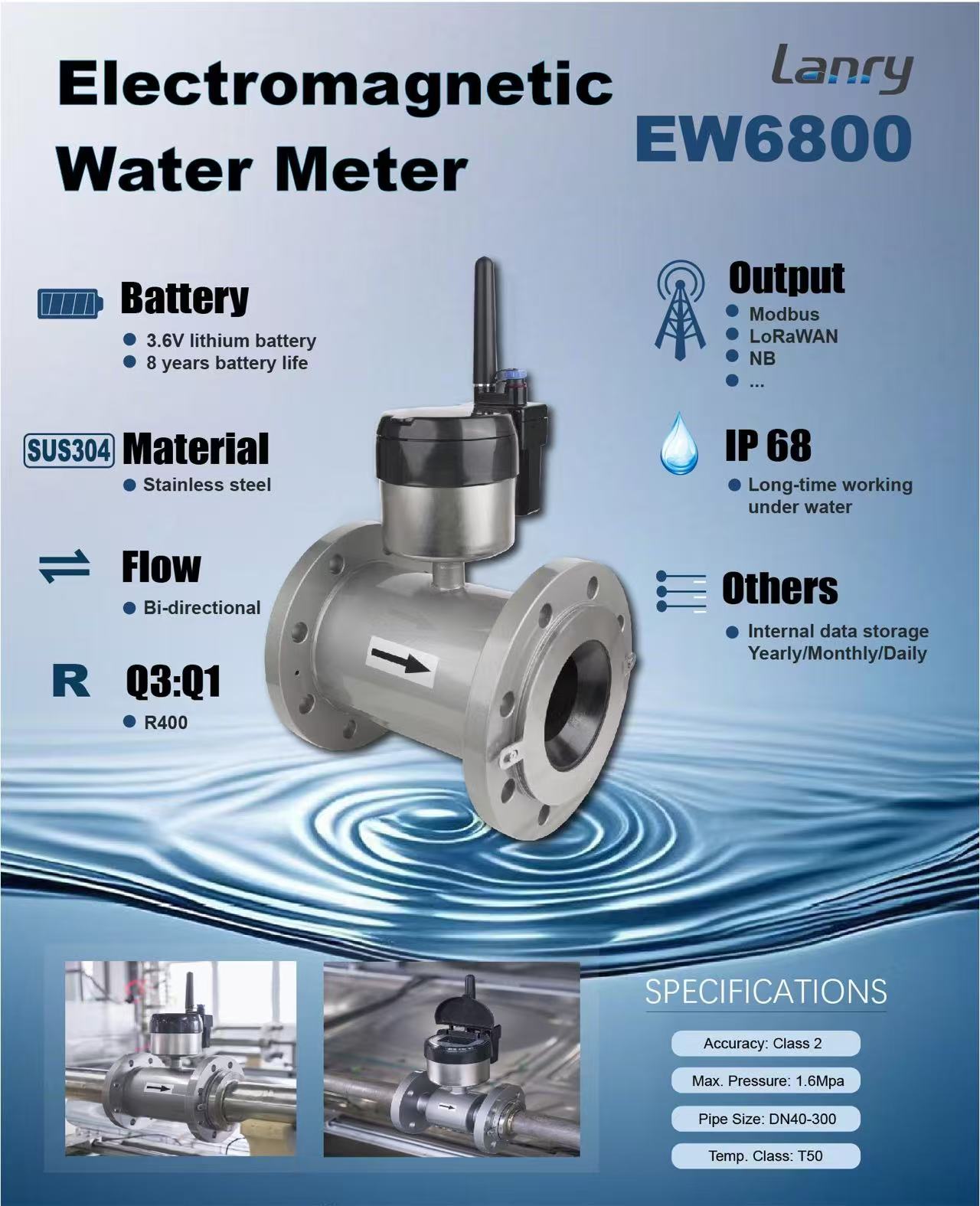
Electromagnetic water meters also offer superior data integration and smart monitoring capabilities, aligning with the shift toward smart water networks. Most modern EM meters are equipped with digital outputs (such as RS485, Modbus, or LoRaWAN) that enable seamless connection to centralized monitoring systems, SCADA (Supervisory Control and Data Acquisition) platforms, or cloud-based water management software. This allows for real-time flow rate tracking, remote data collection, and automated alerts for anomalies (such as sudden flow spikes or drops, which may indicate leaks or equipment malfunctions). Unlike mechanical meters, which require manual reading (a time-consuming and error-prone process), EM meters enable utilities to collect accurate, real-time data without sending personnel to on-site locations. This not only improves operational efficiency but also empowers proactive water management—for example, identifying and addressing leaks early to minimize water waste and infrastructure damage.
Finally, electromagnetic water meters contribute to energy efficiency and environmental sustainability. Mechanical meters rely on the force of flowing water to turn their moving parts, creating a small but measurable pressure drop in the water system. Over time, this pressure drop forces water pumps to work harder, increasing energy consumption. EM meters, with their unobstructed flow design, create virtually no pressure loss. This reduces the energy demand on water distribution systems, lowering carbon footprints and energy costs for utilities. Additionally, their long service life and minimal need for replacement reduce the environmental impact of manufacturing and disposing of old meters—aligning with global efforts to promote sustainable resource management.
In conclusion, electromagnetic water meters represent a significant advancement in water measurement technology. Their combination of exceptional accuracy, versatility across harsh conditions, low maintenance needs, smart monitoring integration, and energy efficiency addresses the most pressing challenges of modern water management. For utilities, industries, and commercial entities seeking a reliable, cost-effective, and future-proof solution, electromagnetic water meters stand as an indispensable tool in optimizing water usage, reducing waste, and building more sustainable water systems.
Post time: Sep-02-2025