

In the realm of industrial fluid measurement and control, electromagnetic flowmeters (EMFs) have established themselves as indispensable tools, renowned for their reliability, versatility, and adaptability to complex operating conditions. Unlike traditional flow measurement devices, these instruments offer unique advantages that make them suitable for a wide range of industries, from municipal water management to heavy chemical processing. This article explores the core benefits, practical applications, key selection criteria, and intelligent development trends of electromagnetic flowmeters, highlighting their critical role in driving operational efficiency and process optimization.
One of the most prominent advantages of electromagnetic flowmeters is their exceptional measurement performance and adaptability to diverse fluid types. These devices deliver high accuracy, typically within ±0.2% to ±0.5% of the measured value, and maintain stability regardless of changes in fluid density, viscosity, temperature, or pressure. Their wide turndown ratio, often reaching 1000:1, allows them to accurately measure both high and low flow rates, making them ideal for applications with significant flow fluctuations, such as wastewater treatment plants or chemical reaction processes. Additionally, the absence of internal flow-obstructing components eliminates pressure loss, reduces energy consumption, and prevents clogging— a crucial benefit when measuring fluids containing solid particles, fibers, or viscous substances like slurry, pulp, or sewage.
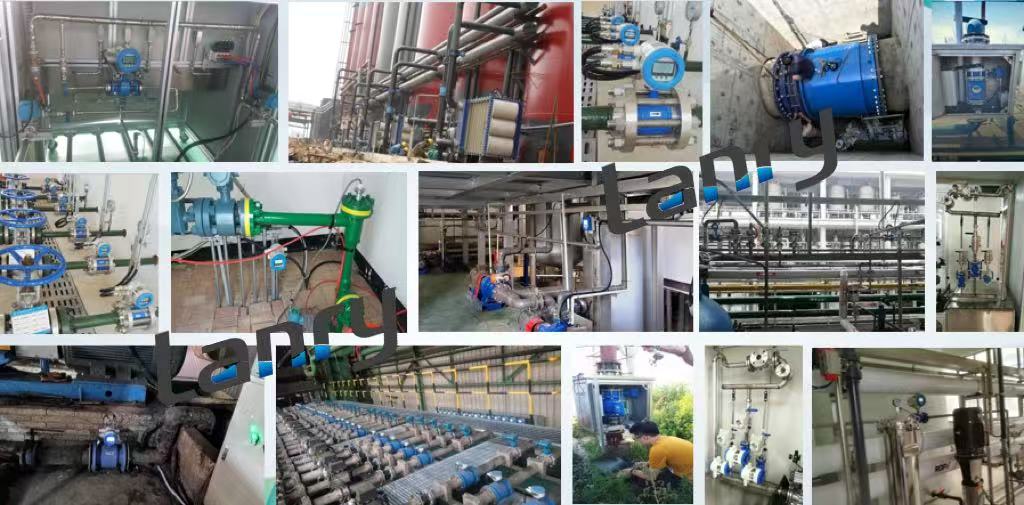
The application scope of electromagnetic flowmeters spans numerous industries, reflecting their versatility and robustness. In municipal water management, large-diameter EMFs are widely used in water supply networks and sewage treatment facilities to monitor water distribution and treatment process flows, providing critical data for resource allocation and environmental compliance. For example, in wastewater treatment plants, they ensure precise measurement of influent and effluent flows, enabling optimal dosing of treatment chemicals and efficient operation of processing units. In the petrochemical and chemical industries, EMFs equipped with corrosion-resistant linings and electrode materials (such as PTFE liners and Hastelloy electrodes) safely handle aggressive fluids like acids, alkalis, and chemical solvents, ensuring reliable measurement in high-temperature and high-pressure environments.
The food and beverage, pharmaceutical, and mining industries also benefit significantly from electromagnetic flowmeters. In food processing, sanitary-grade EMFs with smooth, easy-to-clean surfaces meet strict hygiene standards, accurately measuring fluids like fruit juices, dairy products, and edible oils. In mining operations, wear-resistant models with ceramic linings effectively measure mineral slurries containing abrasive particles, maintaining measurement accuracy even in harsh conditions. Additionally, in power generation facilities, these flowmeters monitor cooling water flows in thermal power plants and nuclear reactors, contributing to safe and efficient energy production.
Selecting the right electromagnetic flowmeter requires careful consideration of several key factors to ensure optimal performance. First, fluid conductivity is a fundamental requirement—EMFs typically require a minimum conductivity of 5 μS/cm, making them suitable for aqueous solutions but not for non-conductive fluids like oils or pure water. Second, material selection is critical: lining materials should be compatible with the fluid's chemical properties (e.g., rubber for general water, PTFE for strong acids), while electrode materials (316L stainless steel, Hastelloy, or titanium) must resist corrosion. Environmental conditions also influence selection, with protection ratings such as IP67 or IP68 recommended for outdoor or submerged installations, and explosion-proof certifications (ATEX, IECEx) necessary for hazardous areas with flammable gases or vapors.
Recent years have witnessed a trend toward intelligent upgrading of electromagnetic flowmeters, driven by the integration of IoT and digital technologies. Modern EMFs are equipped with communication interfaces such as RS485, Ethernet, or 4G modules, enabling real-time data transmission to cloud platforms or SCADA systems for remote monitoring and analysis. Advanced models also feature self-diagnostic functions that can detect electrode fouling, lining damage, or signal interference, issuing timely alerts to minimize unplanned downtime. Some high-end devices even integrate edge computing capabilities, allowing local data processing and predictive maintenance, which further enhances operational efficiency and reduces maintenance costs.
In conclusion, electromagnetic flowmeters have become a cornerstone of industrial fluid measurement, offering unparalleled adaptability, accuracy, and reliability across diverse sectors. Their ability to handle complex fluids, minimize energy loss, and integrate with intelligent systems makes them essential for modern industrial processes focused on efficiency, sustainability, and compliance. As industrial digitalization continues to advance, electromagnetic flowmeters will undoubtedly evolve further, incorporating more advanced technologies to meet the growing demands of complex industrial environments and contributing to the ongoing transformation of global manufacturing and resource management.
Post time: Jan-08-2026