

In industrial, environmental, and municipal settings where fluid monitoring demands reliability, flexibility, and resistance to harsh conditions, Doppler flow meters have emerged as a game-changing solution. Unlike traditional flow measurement tools that struggle with complex fluids or challenging installation environments, Doppler flow meters are designed to adapt to real-world demands—making them indispensable for sectors ranging from wastewater treatment to mining, and from oil & gas to agriculture. By focusing on practical performance rather than intricate mechanics, these meters address critical operational pain points, deliver actionable data, and drive efficiency across diverse applications.
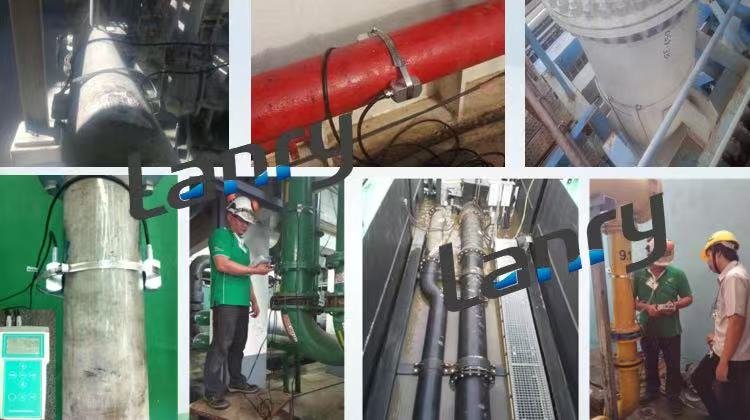
One of the most compelling strengths of Doppler flow meters is their ability to handle turbid, particle-laden fluids—a common challenge that renders many other meters ineffective. In wastewater treatment plants, for example, influent and effluent streams often contain high levels of suspended solids, organic matter, and debris. Traditional closed-pipe meters with internal sensors quickly foul or clog under these conditions, leading to frequent maintenance shutdowns and inaccurate readings. Doppler flow meters, however, thrive here: their sensor designs minimize direct contact with the most contaminated parts of the fluid, reducing fouling and extending operational life. A wastewater plant in Chicago replaced its mechanical flow meters with Doppler models and reported a 60% reduction in maintenance calls, as well as a 15% improvement in data accuracy. This reliability is critical for plant operators, who rely on precise flow data to optimize treatment processes, meet regulatory discharge limits, and avoid costly fines. For municipal wastewater systems, Doppler meters also simplify installation in existing pipes—many models can be mounted externally or with minimal pipe modification, eliminating the need for disruptive shutdowns during setup.
In the mining industry, where fluid monitoring involves abrasive, mineral-rich streams (such as process water, tailings, or leachate), Doppler flow meters offer unmatched durability. Mining fluids often contain sand, gravel, or metal particles that wear down mechanical meter components, leading to frequent replacements and operational downtime. Doppler meters, constructed with rugged materials like stainless steel or ceramic, resist abrasion and corrosion—even in fluids with high pH levels or extreme temperatures. A copper mine in Arizona, for instance, uses Doppler flow meters to monitor the flow of tailings (mineral waste mixed with water) in open channels and closed pipes. Prior to adopting Doppler technology, the mine replaced mechanical meters every 6–8 months; now, Doppler meters operate reliably for 3–4 years, cutting replacement costs by 70%. The meters also provide real-time flow data that helps the mine manage water usage—critical in arid regions where water conservation is both an environmental and operational priority.
The oil & gas sector benefits from Doppler flow meters’ ability to handle multiphase fluids—mixtures of oil, gas, and water that are common in production and processing. Traditional meters often struggle to measure these complex streams accurately, as gas bubbles or oil droplets disrupt flow patterns. Doppler meters, however, can distinguish between phases and calculate total flow rate with consistent precision, even when fluid composition changes. A shale oil operation in Texas uses Doppler flow meters to monitor wellhead production, where fluids alternate between oil-dominant and water-dominant phases. The meters’ ability to adapt to these fluctuations has improved production tracking accuracy by 25%, allowing the operation to optimize well performance and reduce waste. Additionally, Doppler meters are suitable for hazardous environments: many models are certified for explosive atmospheres (ATEX or IECEx compliance), making them safe for use in oil rigs or refineries.
In agricultural irrigation, Doppler flow meters simplify water management for large-scale farms and ranches. Irrigation water often contains sediment, algae, or fertilizer residues that can clog traditional meters, especially in drip or sprinkler systems. Doppler meters, with their low-maintenance design, avoid these issues while providing accurate flow data to help farmers optimize water usage. A wheat farm in Nebraska installed Doppler meters in its pivot irrigation systems and used the data to adjust watering schedules based on soil moisture levels. The result was a 20% reduction in water consumption and a 10% increase in crop yield—proof that Doppler technology not only improves efficiency but also supports sustainable agriculture. For farmers facing increasing pressure to conserve water and reduce environmental impact, Doppler meters offer a practical tool to balance productivity with stewardship.
Beyond industry-specific benefits, Doppler flow meters also excel in remote and hard-to-access locations. Many models are equipped with IoT connectivity, allowing operators to monitor flow data remotely via cloud platforms—eliminating the need for on-site visits to remote wells, pipelines, or irrigation ditches. This feature is particularly valuable for large-scale operations, such as municipal water networks or cross-country oil pipelines, where manual monitoring is time-consuming and costly. A water utility in California, for example, uses Doppler meters with remote data transmission to monitor flow in rural pipelines; the system alerts operators to leaks or pressure drops in real time, reducing water loss by 28% and saving thousands in repair costs.
While Doppler flow meters may have a higher upfront cost than basic mechanical alternatives, their long-term value is undeniable. Reduced maintenance, longer lifespan, improved accuracy, and adaptability to harsh conditions translate to a typical return on investment within 2–3 years across industries. For operations seeking to enhance efficiency, comply with regulations, and embrace sustainability, Doppler flow meters are more than a measurement tool—they are a strategic asset.
As industries evolve to meet stricter environmental standards and growing operational demands, Doppler flow meters continue to prove their versatility. From wastewater treatment to mining, oil & gas to agriculture, these meters deliver reliable performance where other tools fail. By focusing on real-world needs rather than complex mechanics, Doppler flow meters are transforming fluid monitoring—one accurate, durable, and adaptable solution at a time.
Post time: Oct-20-2025