

Doppler ultrasonic flowmeters have emerged as versatile and reliable tools in various industries, thanks to their unique working principle and adaptability. Let's explore their wide-ranging applications.
In the water and wastewater treatment sector, these flowmeters play a crucial role. They can accurately measure the flow of raw water, which often contains suspended solids, sediments, or other particles. Unlike some traditional meters that may get clogged or affected by such contaminants, Doppler ultrasonic flowmeters thrive in these conditions. For instance, in sewage treatment plants, they monitor the flow of wastewater through different processing stages, ensuring efficient operation and helping operators adjust treatment processes as needed.
The oil and gas industry also benefits significantly. When it comes to measuring the flow of crude oil, which frequently contains gas bubbles or solid particles like sand, Doppler ultrasonic flowmeters are up to the task. They can handle the multiphase flow characteristics, providing real-time data on the flow rate. This is essential for optimizing production, managing pipeline operations, and ensuring accurate custody transfer of oil and gas.
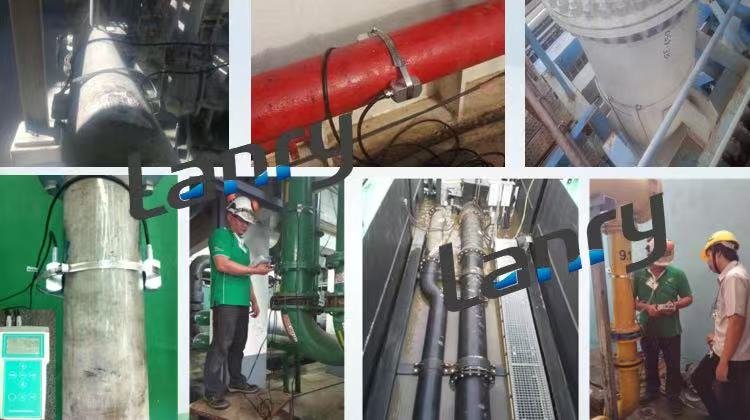
In industrial processes, such as chemical manufacturing, Doppler ultrasonic flowmeters find extensive use. Many chemical fluids are viscous, contain additives, or have suspended particles. These flowmeters can be installed externally on pipes, eliminating the need for cutting into the pipeline or coming into direct contact with the fluid. This non-intrusive feature is particularly valuable when dealing with corrosive, toxic, or high-pressure chemicals, as it reduces the risk of leaks and contamination, while also minimizing downtime during installation and maintenance.
The agricultural sector utilizes Doppler ultrasonic flowmeters for irrigation management. Farmers need to monitor the flow of water in irrigation channels or pipes to ensure that crops receive the right amount of water. These flowmeters can accurately measure the flow even when the water contains dirt, algae, or other organic matter, which is common in agricultural settings. By providing precise flow data, they help optimize water usage, conserve resources, and improve crop yields.
Another area of application is mining. Mine dewatering involves pumping large volumes of water that may contain grit, ore particles, and other sediments. Doppler ultrasonic flowmeters can reliably measure the flow of this dirty water, allowing mining operations to track water usage, manage pump systems efficiently, and comply with environmental regulations regarding water discharge.
In summary, Doppler ultrasonic flowmeters have proven their worth across a diverse range of industries. Their ability to handle fluids with particles, bubbles, or high viscosity, combined with their non-intrusive installation and low maintenance requirements, makes them an indispensable tool for accurate and efficient flow measurement. As technology continues to advance, their applications are likely to expand even further, contributing to improved process control and resource management in various fields.
Post time: Jul-30-2025