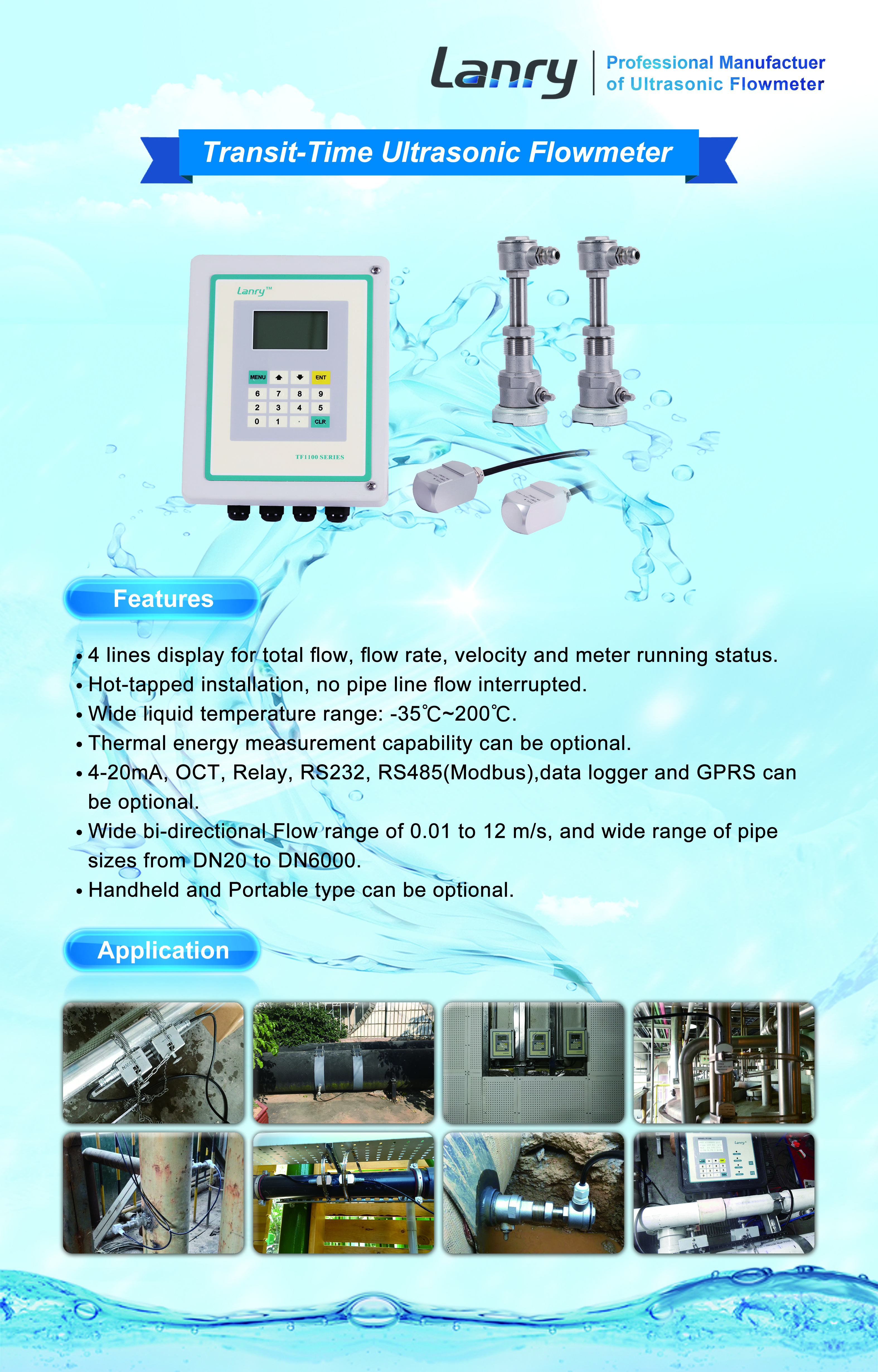
In industries spanning water treatment, oil and gas, and manufacturing, accurate fluid flow measurement is the backbone of operational efficiency, cost control, and regulatory compliance. For decades, mechanical flowmeters—such as turbine or positive displacement models—were the go-to choice, but their reliance on moving parts left them vulnerable to wear, clogging, and inaccuracies in harsh conditions. Today, ultrasonic flowmeters have emerged as a transformative alternative, leveraging sound wave technology to deliver non-intrusive, high-precision measurements across liquids and gases. Their ability to adapt to diverse fluids, resist environmental stressors, and integrate with smart systems has made them indispensable for modern operations, addressing the limitations of traditional meters while unlocking new possibilities for data-driven fluid management.
At the core of ultrasonic flowmeters lies two complementary scientific principles: the time-of-flight (TOF) method and the Doppler effect—each tailored to specific fluid types and conditions. TOF-based ultrasonic flowmeters, the most common for clean liquids (e.g., water, pharmaceuticals), work by transmitting high-frequency sound waves (1–20 MHz) through the fluid in two opposite directions: one aligned with the flow (downstream) and the other against it (upstream). As the fluid moves, it carries the downstream sound wave forward, shortening its travel time; conversely, the upstream wave faces resistance, lengthening its journey. The meter’s internal microprocessor calculates the difference between these two travel times, then uses this data to compute fluid velocity and, ultimately, volumetric flow rate. For fluids with suspended particles or bubbles—such as wastewater, slurries, or gases with moisture—the Doppler effect is preferred. In this approach, the meter emits sound waves that bounce off moving particles in the fluid; the shift in the wave’s frequency (the Doppler effect) directly correlates to particle velocity, which the meter uses to infer fluid flow rate. Critically, neither method requires moving parts, eliminating friction, mechanical degradation, and the need for frequent repairs.
The advantages of ultrasonic flowmeters over traditional mechanical models are both practical and impactful, starting with non-intrusive and non-invasive operation. Unlike turbine meters, which require the fluid to pass through rotating components, or orifice plates, which create pressure drops that waste energy, ultrasonic flowmeters can be installed externally (clamped onto pipes) or inline without disrupting flow. This non-intrusive design is a game-changer for sensitive applications: in the food and beverage industry, it prevents cross-contamination of edible fluids; in the oil and gas sector, it avoids leaks or spills from pipe modifications; and in water distribution systems, it eliminates pressure loss that would reduce delivery efficiency. For example, a municipal water utility in Canada replaced 500 mechanical inline meters with clamp-on ultrasonic models and reported a 30% reduction in unplanned downtime, as there was no need to shut off water service for installation or maintenance.
Another key benefit is superior accuracy and long-term reliability. Mechanical meters lose precision over time as gears wear down or sediment clogs components—often deviating by 5–10% after 5 years of use. Ultrasonic flowmeters, by contrast, maintain an accuracy rate of ±0.5% to ±1% over their 10–20 year lifespan, even in challenging conditions. This precision is critical for cost control: in chemical manufacturing, where precise flow rates ensure consistent product quality, ultrasonic meters reduce waste from over-dosing of raw materials. In energy production, they optimize the flow of coolants in power plants, preventing equipment overheating and extending asset life. A 2024 study by the International Society of Automation found that factories using ultrasonic flowmeters for coolant monitoring reduced maintenance costs by 22% due to fewer equipment failures.
Ultrasonic flowmeters also excel in versatility across fluids and environments. They measure everything from clean water and viscous oils to corrosive chemicals and compressed gases, with models rated for extreme temperatures (-40°C to 200°C) and pressures (up to 1,000 bar) to suit industrial needs. Unlike electromagnetic flowmeters, which only work with conductive fluids, ultrasonic meters have no such restriction—making them ideal for non-conductive liquids like diesel or ethanol. Their resistance to fouling (from sediment or scale) further expands their utility: in wastewater treatment plants, they maintain accuracy even in fluids with high solids content, whereas mechanical meters would require weekly cleaning to avoid jamming.
Integration with smart industrial systems is another defining strength of modern ultrasonic flowmeters. Most models feature communication modules (e.g., Modbus, LoRaWAN, or 4G) that transmit real-time flow data to cloud-based platforms or SCADA (Supervisory Control and Data Acquisition) systems. This eliminates manual data logging, reducing human error and labor costs, while enabling remote monitoring. For operators, this means instant access to flow trends, leak alerts, and performance reports via mobile apps or dashboards. In the oil and gas industry, for instance, pipeline operators use ultrasonic flowmeters with IoT connectivity to detect sudden flow drops—indicating leaks—and trigger emergency shutdowns within minutes, preventing environmental damage and financial losses. In water utilities, smart ultrasonic meters help identify hidden leaks in distribution networks, which can waste up to 30% of treated water annually.
Despite their advantages, ultrasonic flowmeters face a few considerations for widespread adoption. One challenge is pipe material and condition: clamp-on models require pipes to be made of non-metallic or thin-walled metallic materials (e.g., PVC, copper) to ensure sound waves penetrate effectively; thick-walled steel pipes may require inline installation instead. To address this, manufacturers offer specialized transducers for thick-walled pipes, expanding compatibility. Another consideration is upfront cost: ultrasonic flowmeters typically cost 2–3 times more than basic mechanical models, though their long-term savings—from reduced maintenance, lower energy waste, and fewer replacements—often offset this investment within 2–3 years. A 2023 cost-benefit analysis by the U.S. Department of Energy found that industrial facilities using ultrasonic flowmeters recouped their initial costs 40% faster than those using mechanical meters.
In conclusion, ultrasonic flowmeters have redefined fluid measurement by combining precision, durability, and smart capabilities—meeting the evolving needs of industries and environmental initiatives alike. As global demand for efficiency, sustainability, and regulatory compliance grows, these devices are no longer a niche solution but a standard for operations of all sizes. Looking ahead, advancements in AI and sensor technology will further enhance their potential: future models may use machine learning to predict maintenance needs, or integrate with renewable energy systems to reduce carbon footprints. For anyone tasked with managing fluids—whether in a small water treatment plant or a large oil refinery—ultrasonic flowmeters are a critical tool, ensuring operational continuity, reducing waste, and paving the way for smarter, more sustainable fluid management.