

In industrial process control, environmental monitoring, and municipal management, accurate liquid or solid level measurement is critical for operational safety, efficiency, and cost control. Among the various level-measuring technologies, ultrasonic level meters have become a go-to choice for their non-contact design, reliability, and adaptability. This article explores how these devices work, their key advantages, and their wide-ranging industrial applications.
Core Working Principle
Ultrasonic level meters operate on the time-of-flight (ToF) principle, a simple yet effective mechanism that avoids direct contact with the measured medium. The device consists of a transducer (sensor) that emits high-frequency ultrasonic waves (typically 20 kHz to 200 kHz, beyond human hearing) toward the surface of the liquid or solid (e.g., grain, powder). When these waves hit the medium’s surface, they reflect back to the transducer.
The meter calculates the time elapsed between the emission and reception of the waves. Using the known speed of sound in air (or the surrounding gas), it then computes the distance to the medium’s surface with the formula: Distance = (Speed of Sound × Time Elapsed) / 2 (divided by 2 because the waves travel to the surface and back). By subtracting this distance from the total height of the tank or vessel, the meter determines the exact level of the medium.
Modern models often include temperature compensation features, as the speed of sound varies with temperature. This adjustment ensures measurement accuracy even in environments with fluctuating temperatures.
Key Advantages of Ultrasonic Level Meters
What sets ultrasonic level meters apart from traditional contact-based technologies (e.g., float switches, pressure transmitters) is their unique set of benefits:
- Non-contact Measurement: Since the transducer never touches the medium, the meter avoids issues like corrosion, fouling, or mechanical wear—common problems with contact devices when measuring aggressive liquids (e.g., acids) or sticky solids (e.g., sludge). This also eliminates contamination risks, making them ideal for food, pharmaceutical, and drinking water applications.
- Easy Installation & Low Maintenance: Most ultrasonic meters mount on top of tanks or vessels, requiring no modification to the container or interruption of operations. Without moving parts, they have minimal maintenance needs—only occasional cleaning of the transducer to remove dust or debris, reducing downtime and operational costs.
- Wide Measurement Range & Accuracy: They handle a broad range of levels, from a few centimeters (for small tanks) to over 30 meters (for large industrial vessels). With advanced signal processing, typical accuracy ranges from ±0.2% to ±1% of the measured range, meeting the demands of most industrial processes.
- Adaptability to Diverse Media: Unlike some technologies (e.g., radar meters, which struggle with low-density solids), ultrasonic meters work with both liquids (water, oils, chemicals) and solids (grains, coal, plastic pellets). They also perform well in environments with dust, vapor, or mild turbulence, thanks to built-in signal filtering.
Industrial Applications
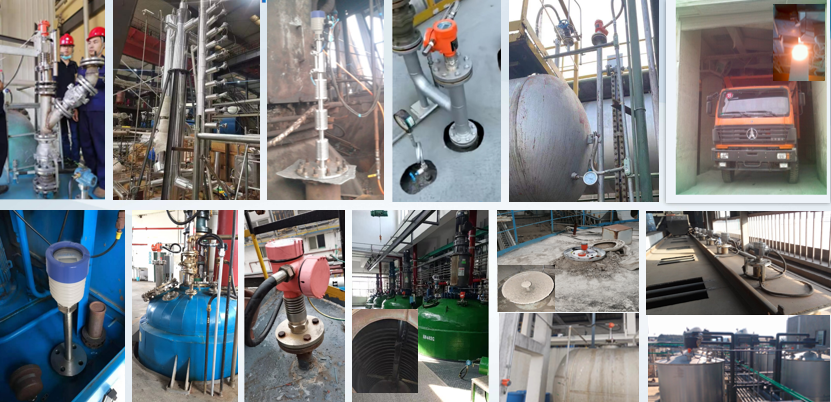
Ultrasonic level meters are versatile, finding use across multiple sectors:
- Municipal Water & Wastewater: They monitor levels in water storage tanks, sewage lift stations, and stormwater basins, ensuring consistent supply and preventing overflows. Their non-contact design is crucial for avoiding contamination of drinking water and corrosion from wastewater.
- Food & Beverage: In factories producing dairy, beverages, or processed foods, the meters measure levels of ingredients (e.g., syrup, oil) and finished products in tanks. Their hygienic, non-contact design complies with food safety standards (e.g., FDA, EU 10/2011).
- Chemical & Pharmaceutical: For handling corrosive chemicals (e.g., acids, solvents) or sensitive pharmaceutical solutions, ultrasonic meters eliminate the risk of medium contamination and equipment damage. They also work in sealed vessels to maintain sterile conditions.
- Agriculture & Mining: In agriculture, they monitor grain silo levels or irrigation water tanks. In mining, they track levels of ore slurries, coal, or mineral powders, supporting efficient material handling and inventory management.
Conclusion
Ultrasonic level meters combine simplicity, reliability, and versatility, making them an essential tool for modern industrial level measurement. Their non-contact design solves key pain points of traditional technologies, while their accuracy and low maintenance needs reduce operational costs. As industries continue to prioritize efficiency and safety, these meters will remain a vital component in process control—from municipal water management to high-precision pharmaceutical production. For businesses seeking a cost-effective, low-risk level-measurement solution, ultrasonic level meters offer unmatched value.
Post time: Nov-12-2025