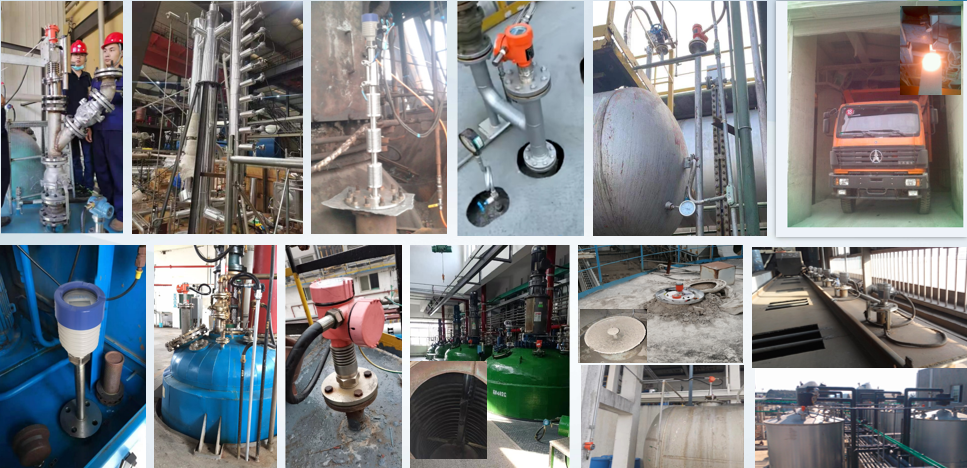
In industries ranging from water treatment to oil and gas, accurate liquid or solid level measurement is critical for operational safety, efficiency, and resource management. For decades, traditional methods like float switches, pressure sensors, and capacitance probes dominated the market—but they often struggled with harsh environments, maintenance bottlenecks, or limited applicability. Today, ultrasonic level transmitters have emerged as a transformative solution, leveraging sound wave technology to deliver non-contact, reliable measurements across diverse scenarios. Their ability to adapt to corrosive liquids, dusty solids, and dynamic tanks makes them indispensable for modern industrial and environmental operations, addressing the limitations of legacy tools while enabling smarter, data-driven decision-making.
At the core of ultrasonic level transmitters lies a straightforward yet effective scientific principle: sound wave reflection. These devices consist of three key components: a transducer, a signal processor, and a display/communication module. The transducer (typically a piezoelectric crystal) emits high-frequency ultrasonic waves (20 kHz to 200 kHz)—beyond the range of human hearing—toward the surface of the liquid or solid being measured. When these waves hit the material’s surface, they reflect back to the transducer as an echo. The signal processor calculates the time-of-flight (TOF)—the duration between the wave’s emission and the echo’s reception—and uses this data to compute the distance to the material surface. By subtracting this distance from the total height of the tank or container, the transmitter determines the exact level of the substance inside. Unlike contact-based tools (e.g., float switches), ultrasonic transmitters never touch the measured material, eliminating wear, contamination risks, and the need for frequent cleaning or replacement.
The advantages of ultrasonic level transmitters over traditional methods are both practical and far-reaching, starting with non-contact operation—a game-changer for harsh environments. In chemical processing plants, for example, tanks often hold corrosive liquids like acids or solvents that would degrade contact sensors over time. Ultrasonic transmitters, mounted above the tank, avoid direct exposure to these substances, ensuring long-term durability. Similarly, in food and beverage production, where hygiene is paramount, non-contact measurement prevents cross-contamination between the sensor and edible products, complying with strict industry standards (e.g., FDA regulations). For solid materials like grain, coal, or plastic pellets, ultrasonic transmitters also excel: they avoid the clogs and jams that plague capacitance probes, which can get stuck in granular substances, leading to inaccurate readings or sensor failure.
Another key benefit is versatility across applications and environments. Ultrasonic level transmitters work seamlessly with both liquids (e.g., water, oil, chemicals) and solids (e.g., cement, fertilizer), making them a one-stop solution for facilities with diverse measurement needs. They also perform reliably in extreme conditions: high-temperature models (rated up to 200°C) suit industrial boilers or molten material tanks, while weatherproof designs (IP67 or IP68 ratings) withstand rain, dust, and humidity for outdoor applications like wastewater lagoons or open storage tanks. Unlike pressure sensors— which are affected by changes in liquid density (e.g., temperature-induced variations in oil viscosity)—ultrasonic transmitters are density-independent, ensuring consistent accuracy regardless of the material’s physical properties. This versatility reduces the need for multiple sensor types, simplifying inventory management and maintenance for operations teams.
Ease of installation and low maintenance further solidify the value of ultrasonic level transmitters. Traditional sensors like float switches often require complex mounting (e.g., cutting holes in tank walls or adjusting mechanical arms), while pressure sensors need to be submerged in the material—adding time and labor to setup. Ultrasonic transmitters, by contrast, are typically mounted on top of tanks via flanges or threaded connections, requiring no modifications to the tank’s interior. Many models also feature user-friendly interfaces (e.g., touchscreens or mobile apps) for calibration, eliminating the need for specialized technical expertise. Maintenance is equally straightforward: without moving parts or contact with the measured material, ultrasonic transmitters have minimal wear and tear. Most only require occasional checks to ensure the transducer is clean (to avoid echo interference from dust or residue) and battery replacement (for wireless models)—a stark contrast to float switches, which often need monthly repairs due to mechanical breakdowns.
In practice, ultrasonic level transmitters support critical operations across industries. In water and wastewater management, they monitor tank levels in treatment plants, ensuring that chemical dosages (e.g., chlorine for disinfection) are precise and that storage tanks never overflow or run dry. For municipal water systems, they track reservoir levels, helping utilities anticipate supply shortages and adjust distribution plans. In the oil and gas sector, ultrasonic transmitters measure crude oil or refined fuel levels in storage tanks, preventing overfilling (a major safety hazard) and enabling accurate inventory tracking for logistics and billing. In agriculture, they monitor irrigation tank levels, ensuring that farms use water efficiently—critical in arid regions where water scarcity is a pressing issue. Even in environmental monitoring, ultrasonic transmitters play a role: they track water levels in rivers, lakes, or floodplains, providing real-time data to predict floods or assess drought conditions.
Despite their strengths, ultrasonic level transmitters face a few limitations that users must address. One common challenge is echo interference from obstacles inside tanks—such as agitators, pipes, or internal baffles—which can reflect sound waves prematurely, leading to false readings. To mitigate this, manufacturers offer transmitters with advanced signal filtering algorithms that distinguish between valid echoes (from the material surface) and invalid ones (from obstacles). Another limitation is performance in dusty or high-vapor environments: thick dust (e.g., in cement silos) or heavy vapor (e.g., in steam tanks) can absorb or scatter ultrasonic waves, reducing measurement range. For these scenarios, specialized high-power transducers or dust-resistant designs are available, ensuring reliable performance even in challenging conditions.
In conclusion, ultrasonic level transmitters have redefined level measurement by combining non-contact operation, versatility, and low maintenance—addressing the critical needs of modern industries and environmental initiatives. As global demand for efficiency, safety, and sustainability grows, these devices are no longer a niche tool but a standard for operations ranging from small-scale farms to large industrial facilities. Looking ahead, advancements in IoT connectivity and AI will further enhance their capabilities: future models may transmit real-time level data to cloud platforms for remote monitoring, or use machine learning to predict maintenance needs and optimize inventory levels. For anyone tasked with accurate, reliable level measurement, ultrasonic transmitters are a key investment—ensuring operational continuity, reducing waste, and supporting the transition to smarter, more sustainable practices.