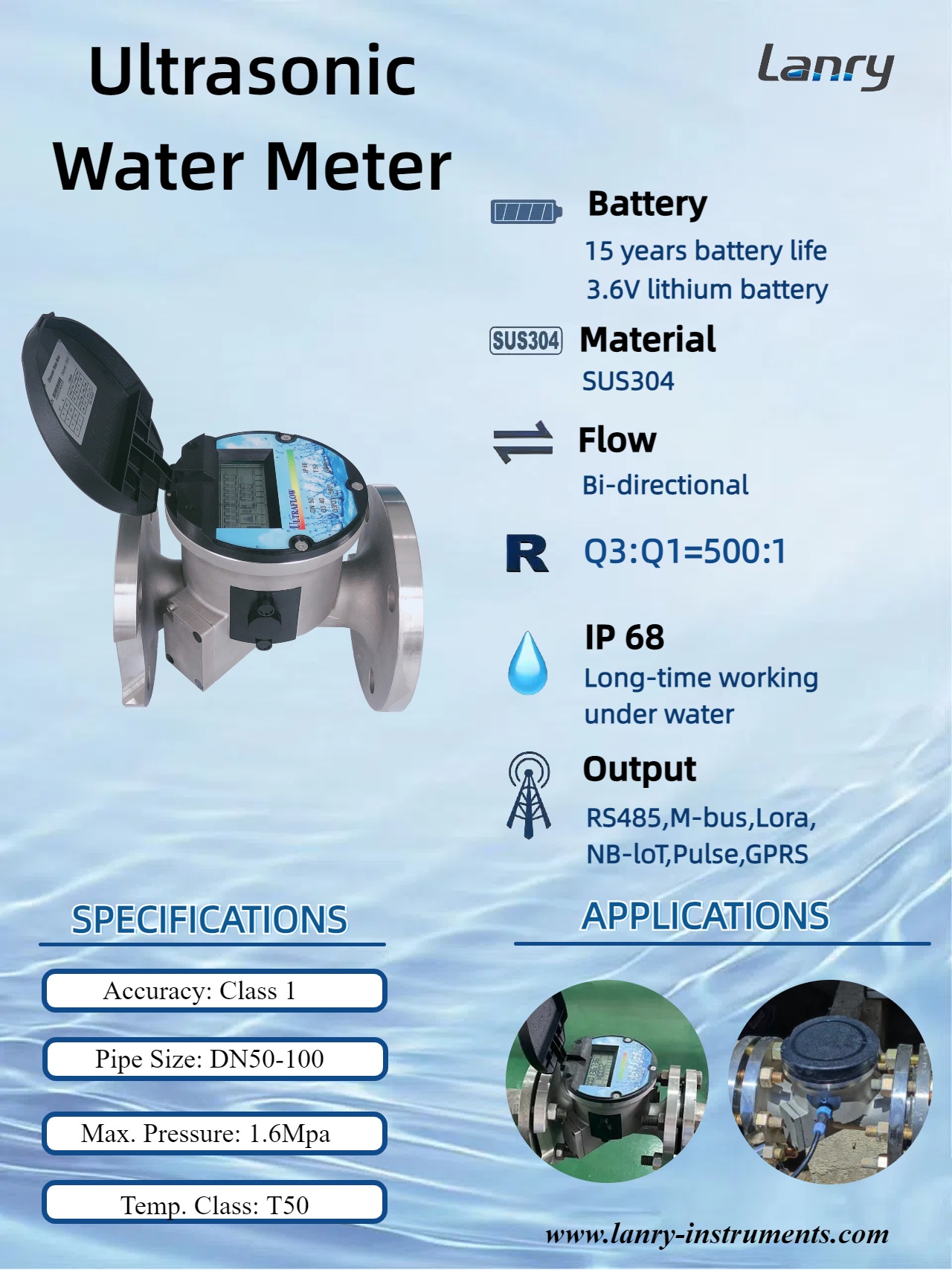
Water metering is the cornerstone of sustainable water management, enabling utilities to track consumption, detect leaks, and ensure fair billing for residential, commercial, and industrial users. For decades, mechanical water meters—relying on rotating gears or impellers—dominated the market, but their susceptibility to wear, sediment buildup, and inaccuracies over time has driven demand for more advanced solutions. Enter ultrasonic water meters: non-mechanical devices that leverage sound wave technology to measure water flow with exceptional precision, durability, and smart capabilities. As global water scarcity intensifies and utilities seek to optimize resource use, ultrasonic meters have emerged as a transformative tool, addressing the limitations of traditional models while unlocking new possibilities for efficient water governance.
At the heart of ultrasonic water meters lies a simple yet powerful scientific principle: the Doppler effect or time-of-flight (TOF) measurement. Most residential and light-commercial ultrasonic meters use the TOF method, which works by transmitting high-frequency sound waves (typically 1–5 MHz) through the water flow in two opposite directions—one aligned with the flow (downstream) and the other against it (upstream). Water molecules carry the downstream sound wave forward, reducing the time it takes to reach the receiving sensor; conversely, the upstream wave faces resistance, increasing its travel time. The meter’s internal microprocessor calculates the difference between these two travel times, then uses this data to compute water velocity and, ultimately, volumetric flow rate (in liters or gallons). For industrial applications with high levels of suspended solids (e.g., wastewater or cooling systems), Doppler-based ultrasonic meters are preferred: they emit sound waves that bounce off moving particles in the water, and the shift in the wave’s frequency (the Doppler effect) directly indicates flow velocity. Unlike mechanical meters, neither method requires moving parts, eliminating friction, wear, and the need for regular mechanical maintenance.
The advantages of ultrasonic water meters over traditional mechanical models are both practical and impactful, starting with superior accuracy and long-term reliability. Mechanical meters lose precision as internal components wear down—often deviating by 5–10% after a few years of use, especially in areas with hard water or sediment. Ultrasonic meters, by contrast, maintain an accuracy rate of ±1% (or better) over their entire lifespan (typically 10–20 years), even in challenging water conditions. This precision is critical for utilities: it ensures that users are billed exactly for the water they consume, reducing disputes, while also minimizing “unaccounted-for water”—a major issue for utilities, where up to 30% of water is lost to leaks or meter inaccuracies. For example, in a 2023 study by the International Water Association, a city in Spain replaced 10,000 mechanical meters with ultrasonic models and saw unaccounted-for water drop by 12% within a year, translating to significant cost savings and reduced water waste.
Another key benefit is resistance to environmental factors that plague mechanical meters. Sediment, sand, or mineral deposits (common in groundwater supplies) can jam the gears of mechanical meters, leading to undercounting or complete failure. Ultrasonic meters have no moving parts to clog, making them ideal for regions with poor water quality. They are also less affected by temperature fluctuations: while mechanical meters may slow down in cold water (as viscosity increases), ultrasonic sensors maintain consistent performance across a wide temperature range (-20°C to 80°C), ensuring accuracy in both freezing winters and hot summers. Additionally, their compact, lightweight design simplifies installation—they can be mounted horizontally or vertically, fitting into tight spaces where mechanical meters (which often require specific orientation) cannot.
Ultrasonic water meters also excel in smart water management integration, a critical feature in the era of digital utilities. Most modern models are equipped with communication modules (e.g., LoRaWAN, NB-IoT, or Wi-Fi) that transmit real-time consumption data to a central cloud platform. This eliminates the need for manual meter reading—utility workers no longer need to visit each property, reducing labor costs and human error. For users, this means access to real-time water usage data via mobile apps, empowering them to identify wasteful habits (e.g., a leaking faucet) and reduce consumption. For utilities, smart ultrasonic meters enable leak detection at the property level: sudden spikes in flow (even small ones, like a dripping toilet) trigger alerts, allowing rapid repairs before leaks escalate into costly water damage or significant waste. In Singapore, for instance, national water utility PUB deployed 500,000 smart ultrasonic meters and reported a 40% reduction in leak response time, saving an estimated 5 million liters of water annually.
Despite their advantages, ultrasonic water meters face a few barriers to widespread adoption, primarily higher upfront costs compared to mechanical models. While an entry-level mechanical meter may cost $20–$50, an ultrasonic meter can range from $80–$200. However, this cost gap is narrowing as manufacturing scales up, and the long-term savings—from reduced maintenance, lower unaccounted-for water, and smarter leak detection—often offset the initial investment. A 2022 cost-benefit analysis by the U.S. Environmental Protection Agency found that utilities recoup the cost of ultrasonic meters within 3–5 years, with ongoing savings lasting the meter’s lifespan. Another potential challenge is user familiarity: some consumers and small utilities may lack knowledge about how ultrasonic meters work, leading to skepticism. To address this, manufacturers and utilities are investing in educational campaigns, demonstrating the meters’ accuracy and benefits through transparent data sharing.
In conclusion, ultrasonic water meters represent a leap forward in water measurement technology, combining precision, durability, and smart capabilities to meet the demands of modern water management. As cities grow, water scarcity worsens, and utilities strive for efficiency, these meters are no longer a luxury but a necessity. They not only improve billing accuracy and reduce waste but also empower utilities and users alike to take proactive steps toward sustainable water use. Looking ahead, advancements in sensor technology and AI will likely enhance their capabilities further—future models may predict maintenance needs, optimize water pressure, or integrate with renewable energy systems to reduce carbon footprints. For anyone committed to conserving water and building resilient water infrastructure, ultrasonic water meters are a key tool in ensuring that this vital resource is managed wisely for generations to come.