

With the rapid development of smart cities and energy-saving industries, accurate and reliable thermal energy measurement has become indispensable for central heating, industrial cooling, and HVAC system management. Among various heat metering devices, the electromagnetic heat meter has emerged as a high-performance solution, widely recognized for its high precision, stable operation, and strong adaptability. It has gradually replaced traditional mechanical meters and become the core measuring instrument for modern thermal energy management.
The working principle of the electromagnetic heat meter is based on Faraday’s law of electromagnetic induction, combined with high-precision temperature sensing technology to calculate thermal energy consumption accurately. When conductive heat-carrying fluids such as heating water and air-conditioning circulating water pass through the measuring tube, the fluid cuts the magnetic field generated by the internal coil, producing an induced electromotive force proportional to the flow velocity. Electrodes capture this electrical signal, and the meter converts it into real-time flow data through internal algorithms. Meanwhile, two high-stability platinum thermal resistors installed on the inlet and outlet pipes precisely detect the temperature difference of the fluid. The built-in integrator calculates instantaneous and cumulative thermal energy according to the core thermal energy formula Q=∫m·c·ΔTdt, realizing scientific and automatic metering.
Compared with mechanical and ultrasonic heat meters, electromagnetic heat meters possess unparalleled technical advantages. First, they deliver exceptional measurement accuracy with a repeatability error lower than 0.33% and a wide measurement range, maintaining stable and precise readings even at low flow rates. Second, the meter has no mechanical moving parts or flow obstructions inside the pipeline, effectively avoiding wear, blockage, and pressure loss caused by impurities in the fluid. This structural design greatly extends the service life and reduces daily maintenance costs. In addition, it can adapt to complex working conditions, stably measuring fluids containing tiny particles and bubbles, and operates normally within a wide temperature range from -50°C to 180°C.
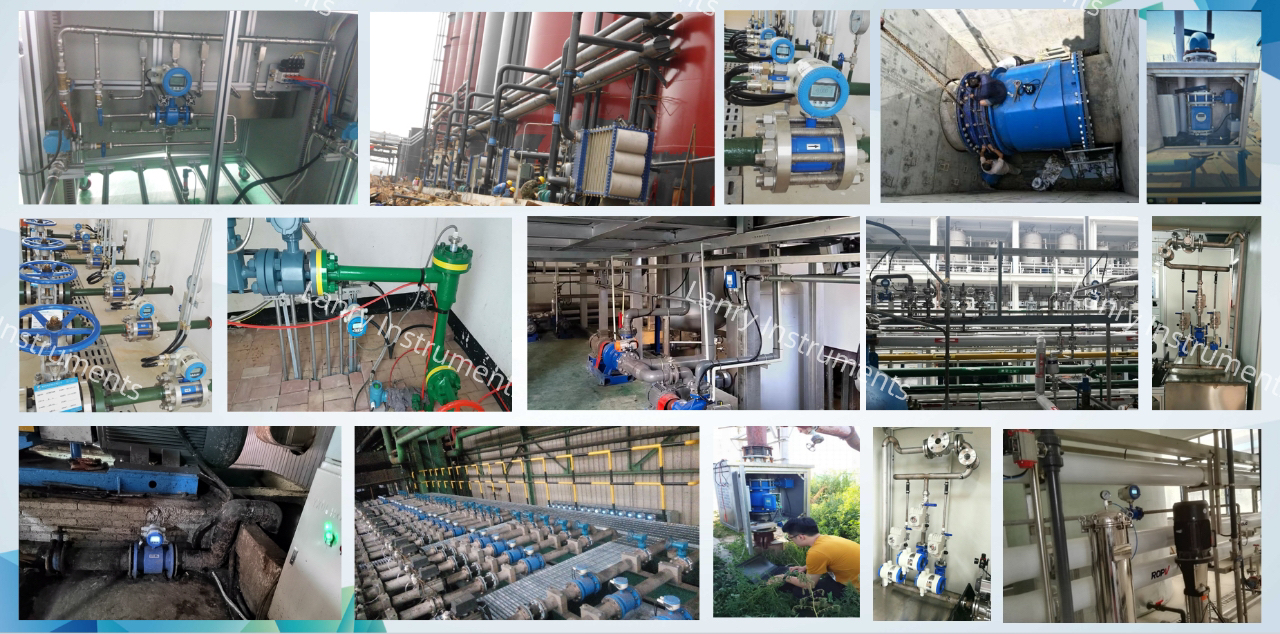
The application scenarios of electromagnetic heat meters cover civil construction, industrial production, and public energy management. In residential communities and office buildings, they support household-based heat metering, replacing the outdated area-based charging model. This fair and accurate metering method effectively raises residents’ energy-saving awareness and reduces unnecessary heating waste. In industrial fields, the meters monitor thermal energy consumption in production processes, helping enterprises optimize energy allocation, control production costs, and improve energy utilization efficiency. They also play a vital role in central heating networks, heat pump systems, and central air-conditioning systems, providing reliable data support for the intelligent operation of energy systems.
In the context of global carbon neutrality and energy conservation, the value of electromagnetic heat meters is further highlighted. Traditional heat metering methods suffer from large errors and poor stability, leading to inaccurate energy statistics and unreasonable billing, which hinder the promotion of energy-saving policies. As a smart measuring device, the electromagnetic heat meter realizes refined thermal energy monitoring and data visualization. It not only standardizes heat energy transaction and billing but also provides accurate data basis for energy consumption analysis, equipment operation optimization, and energy-saving transformation.
Although electromagnetic heat meters have a slightly higher initial cost than conventional meters, their long-term stability, low maintenance frequency, and high measurement accuracy bring higher comprehensive economic benefits. With the continuous progress of sensor technology and intelligent algorithms, modern electromagnetic heat meters are also integrated with remote data transmission and intelligent monitoring functions, enabling real-time data upload and remote fault diagnosis. This intelligent upgrade makes it more compatible with smart energy management systems.
In conclusion, the electromagnetic heat meter is a mature and efficient thermal energy measurement tool that integrates precision sensing, electromagnetic measurement, and intelligent computing technology. It solves the pain points of low accuracy and poor stability of traditional metering equipment. As urban energy management becomes increasingly refined and intelligent, electromagnetic heat meters will continue to be widely applied, playing a key role in promoting energy conservation, reducing carbon emissions, and realizing sustainable energy development.
Post time: Oct-10-2026