

01 Introduction
When selecting an ultrasonic flow meter for industrial applications, one important question is whether a single-channel model is sufficient or whether a dual-channel or multi-channel flow meter would be a better choice.
For many standard applications, a single-channel ultrasonic flow meter can provide reliable flow measurement. However, some operating conditions place higher demands on measurement accuracy, stability, and adaptability.
In these situations, a dual-channel or multi-channel transit-time ultrasonic flow meter may offer a more suitable solution.
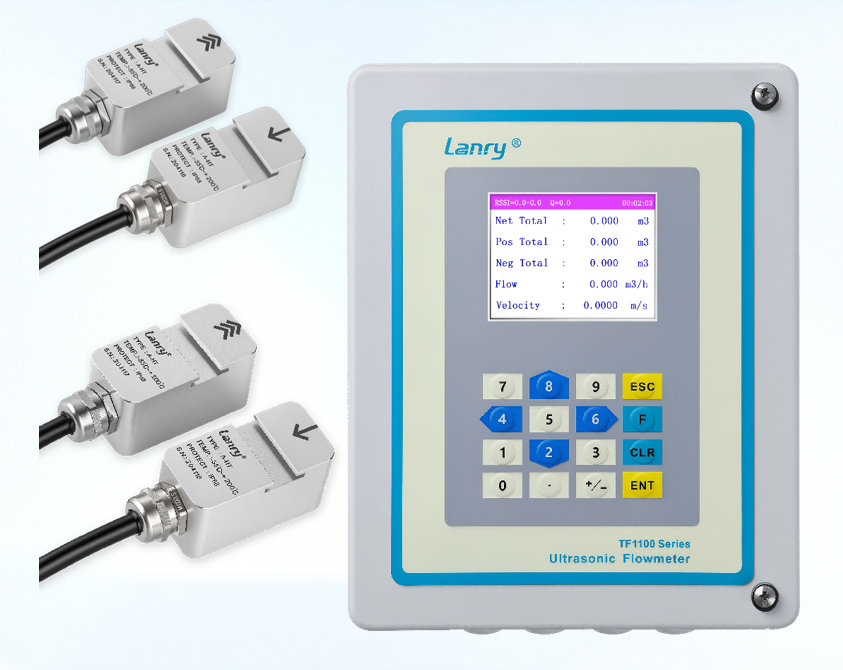
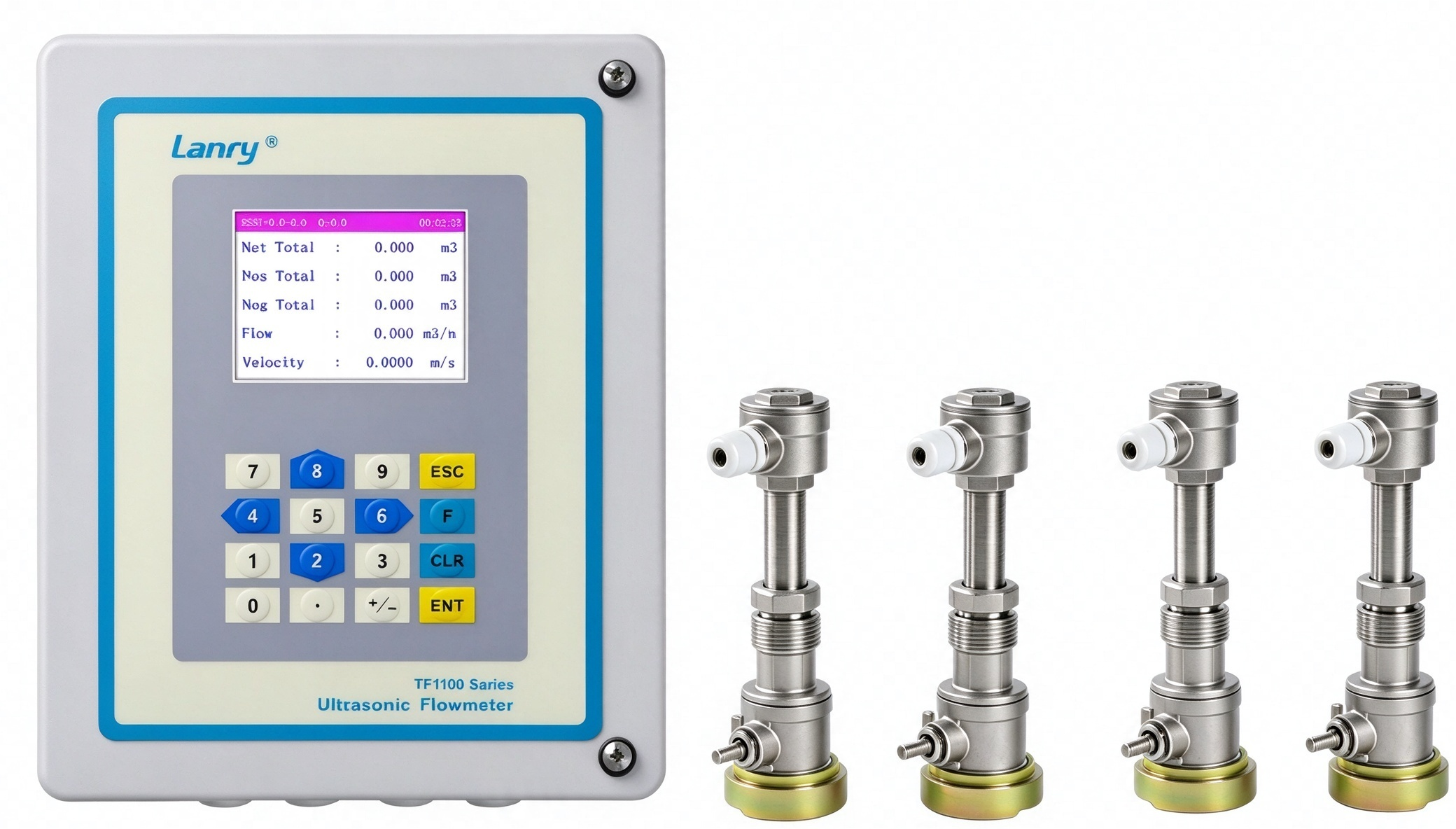
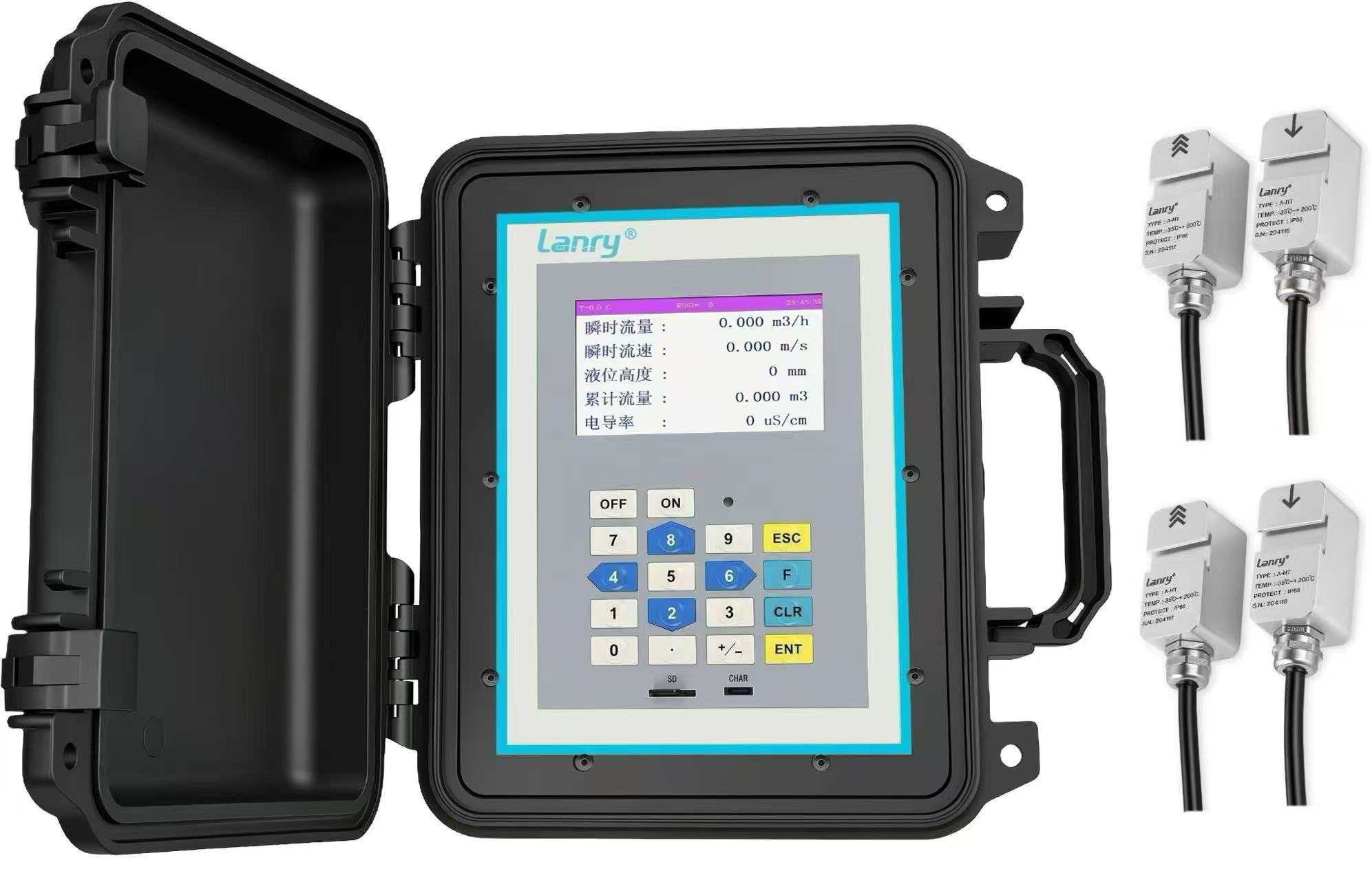
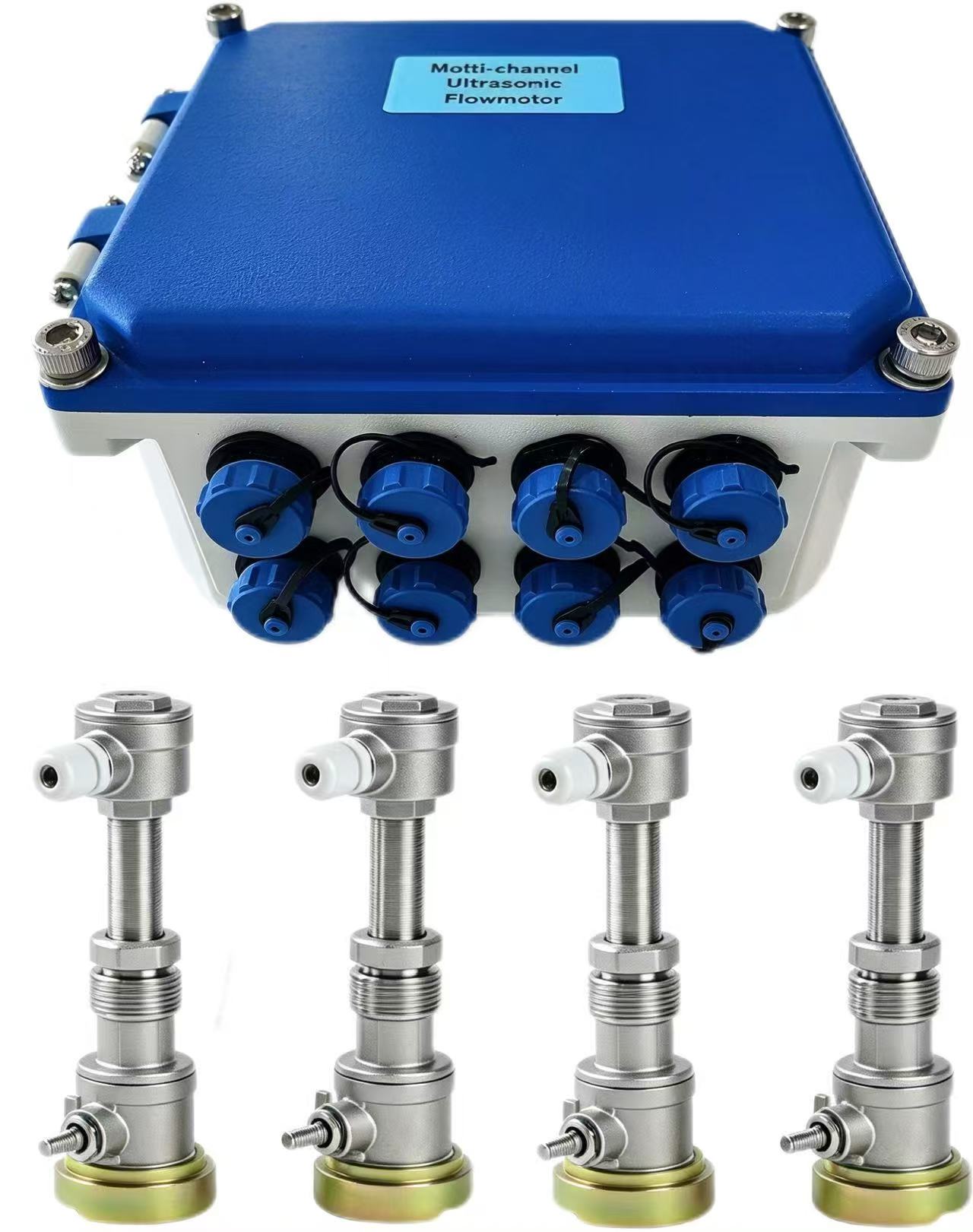
Lanry Instruments provides several options, including the TF1100-DC dual-channel clamp-on ultrasonic flow meter, TF1100-DI dual-channel insertion ultrasonic flow meter, TF1100-DP dual-channel portable ultrasonic flow meter, and TF1100-MI multi-channel insertion ultrasonic flow meter.
This article explains when to consider these models, what operating conditions they are designed to address, and how to select the right configuration for your application.
02 How Does a Dual or Multi-Channel Ultrasonic Flow Meter Work?
Transit-time ultrasonic flow meters measure liquid velocity by comparing the travel times of ultrasonic signals moving with and against the direction of flow.
A single-channel meter typically uses one pair of transducers to establish one measurement path. A dual-channel meter uses two measurement paths, while a multi-channel meter can use several paths across the pipe.
By obtaining measurements along multiple paths, the instrument can gather more information about the velocity distribution inside the pipe. This can help reduce the influence of an uneven flow profile.
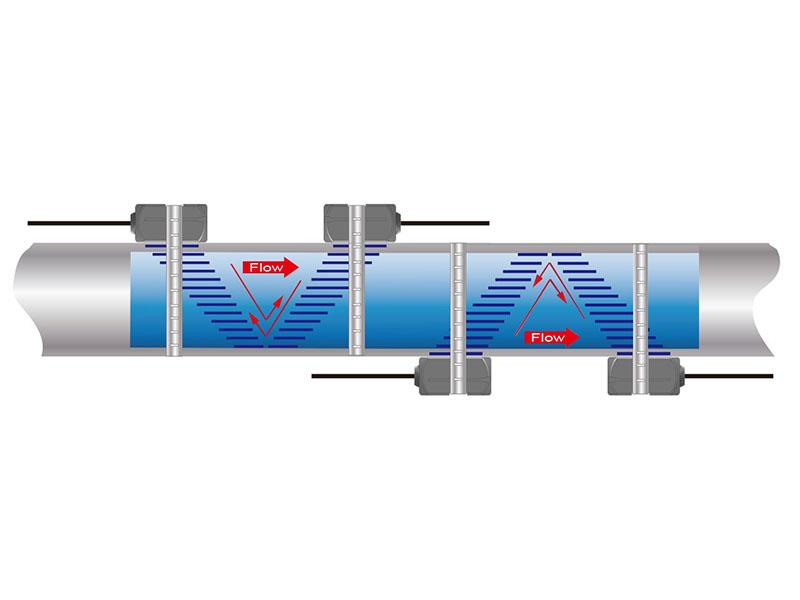
However, additional channels do not automatically eliminate every measurement error. Pipe conditions, sensor positioning, liquid properties, and the available straight pipe length remain important.
03 When Should You Choose a Dual or Multi-Channel Flow Meter?
Situation 1: Your Application Requires Higher Measurement Accuracy
Some industrial processes require tighter control of flow measurement, particularly when flow readings are used for process optimization or energy management. Examples include:
- • Cooling/chilled water monitoring
- • Boiler feedwater measurement
- • Industrial process water
- • Pump efficiency testing
Lanry’s dual-channel TF1100-DC and TF1100-DI series offer a specified accuracy of up to ±0.5% under applicable conditions.
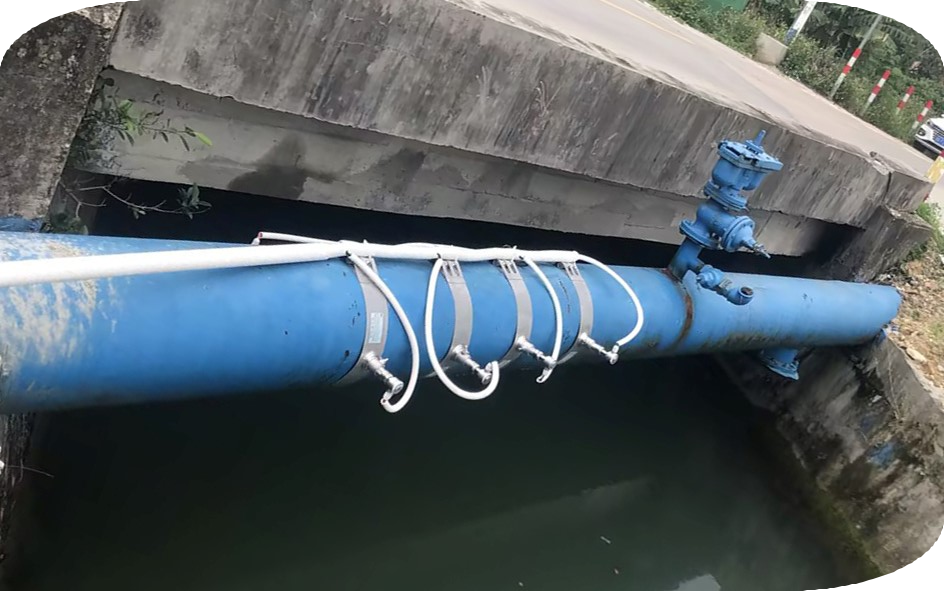
Situation 2: You Have a Large-Diameter Pipeline
In a large pipe, liquid velocity varies considerably across the cross-section. Multiple measurement paths provide additional information, making multi-channel measurement a useful option for infrastructure projects.
When to consider: Large diameter pipes where velocity profiles may be uneven.
Situation 3: The Flow Profile Is Not Ideal
Upstream elbows, tees, or pumps cause swirl and turbulence. A dual-channel flow meter provides additional measurement info to mitigate these effects, though proper installation is still paramount.
Situation 4: Stable Measurement in Continuous Operation
For demanding applications, dual-channel designs support more robust measurement. Some configurations support dynamic zero functions and data logging for continuous monitoring.
Situation 5: You Need to Measure Flow in Both Directions
Lanry’s TF1100 dual-channel and TF1100-MI series support bidirectional flow measurement, ideal for circulation loops and water distribution systems.
04 Dual-Channel vs. Multi-Channel: Which One Should You Choose?
5. When Is a Single-Channel Flow Meter Sufficient?
A dual or multi-channel meter is not necessary for every application. A single-channel ultrasonic flow meter may be sufficient when:
If these conditions are met, a single-channel meter may offer a practical and economical choice. The goal is to choose a configuration that meets the actual application requirements.
6. Important Factors to Check Before Selecting
7. Frequently Asked Questions
Q1: Is a dual-channel ultrasonic flow meter always more accurate?
Not necessarily. Performance depends on signal quality and installation, though they offer better adaptability to flow conditions.
Q2: When should I choose four-channel instead of dual-channel?
For very large pipes or particularly challenging velocity distributions where more measurement paths are justified.
Q3: Can these be installed without shutting down the process?
Yes, clamp-on models are external; insertion models can often be hot-tapped.
Q4: Can these flow meters measure dirty water or wastewater?
Suitability depends on the liquid’s acoustic properties and the model. Transit-time ultrasonic meters are generally best suited to relatively clean liquids or liquids with limited suspended solids. For liquids with substantial solids or entrained gas, consult the manufacturer about whether Doppler technology or another measurement solution would be more suitable.
Q5: Does a larger number of channels guarantee better measurement results?
No. More channels provide additional measurement paths, but good sensor placement, suitable straight pipe length, correct installation, and appropriate model selection remain essential.
08. Conclusion
Choosing between single-channel, dual-channel, and multi-channel ultrasonic flow meters should be based on the actual operating conditions rather than the number of channels alone.
A dual-channel meter is worth considering when higher measurement performance, additional flow information, or better adaptability to a challenging flow profile is required. A multi-channel meter may be more appropriate when the application calls for additional measurement paths, particularly in selected large-diameter or demanding industrial pipelines.
Lanry Instruments offers TF1100-DC, TF1100-DI, TF1100-DP and TF1100-MI configurations to address different installation and measurement requirements.
Not sure which configuration is right for your application?
Contact Lanry Instruments with your pipe diameter, liquid type, operating temperature, flow range, and installation details. Our team can help evaluate a suitable ultrasonic flow measurement solution.

Post time: Oct-30-2026