

Why Choose a TF1100-DC Dual Channel Ultrasonic Flow Meter for Industrial Flow Measurement?
No pipe cutting, no process interruption. Clamp-on transducers for transit-time flow measurement.
The TF1100‑DC dual channel ultrasonic flow meter is built for reliable industrial liquid flow measurement without pipe cutting or process shutdown. It adopts transit-time technology with external clamp-on transducers. When selecting ultrasonic flowmeters, you need to evaluate signal stability, pipe material, liquid characteristics, accuracy and signal output. This article introduces its working principle, dual-channel advantages and key points for selection and installation.

1. What Is a TF1100-DC Dual Channel Ultrasonic Flow Meter?
The TF1100-DC is a wall-mounted, dual-channel transit-time ultrasonic flow meter developed by Lanry Instruments. It uses clamp-on ultrasonic transducers installed on the outside of a full pipe to measure liquid flow without direct contact with the process fluid. Unlike a traditional mechanical flow meter, the clamp-on ultrasonic flow meter has no moving parts in contact with the liquid. This helps reduce process intrusion, mechanical wear, and maintenance associated with wetted moving components.
The TF1100-DC is a wall-mounted, dual-channel transit-time ultrasonic flow meter developed by Lanry Instruments. It uses clamp-on ultrasonic transducers installed on the outside of a full pipe to measure liquid flow without direct contact with the process fluid. Unlike a traditional mechanical flow meter, the clamp-on ultrasonic flow meter has no moving parts in contact with the liquid. This helps reduce process intrusion, mechanical wear, and maintenance associated with wetted moving components.
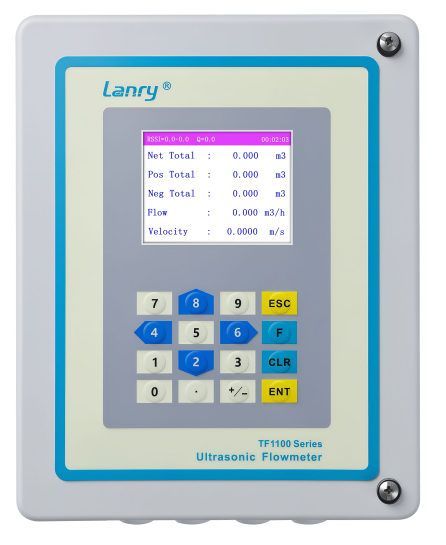
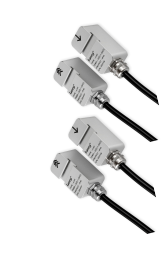
Key features include:
The TF1100-DC is suitable for applications such as water flow monitoring, cooling water measurement, HVAC systems, industrial process monitoring, pump performance testing, and energy management.
For customers looking for a dual channel ultrasonic flow meter, clamp-on ultrasonic flow meter, wall-mounted ultrasonic flow meter, or non-invasive liquid flow meter, the TF1100-DC provides a practical solution for measuring flow in closed pipelines.
2. What Is the Difference Between a Single-Channel and Dual-Channel Ultrasonic Flow Meter?
One of the most common questions from industrial users is whether a dual-channel ultrasonic flow meter offers a meaningful advantage over a single-channel model.
The main difference is the number of ultrasonic measurement channels used by the instrument. A single-channel flow meter uses one measurement channel, while a dual-channel flow meter uses two. A dual-channel design can provide additional measurement information and may improve measurement robustness under suitable installation and operating conditions. However, the actual benefit depends on the instrument's channel configuration, installation quality, pipe conditions, and flow profile.
Consider the following factors when comparing the two types:
A dual-channel flow meter should not automatically be assumed to deliver twice the accuracy of a single-channel meter. Buyers should confirm the manufacturer's accuracy specifications and the actual measurement arrangement before making a selection.
3. How Does a Dual-Channel Transit-Time Ultrasonic Flow Meter Work?
The TF1100-DC uses the transit-time difference principle to measure liquid flow velocity. Ultrasonic signals travel through a liquid at different transit times depending on whether they travel with or against the direction of flow. When the liquid is moving, the downstream signal generally travels faster relative to the flow, while the upstream signal travels more slowly.
The flow meter measures the difference between these transit times and uses it to calculate the average liquid velocity along the acoustic path. The volumetric flow rate is then calculated using the average flow velocity and the effective cross-sectional area of the pipe.

Because the instrument depends on ultrasonic signal transmission through the pipe wall and liquid, correct pipe parameters and sensor installation are essential.
For reliable transit-time ultrasonic flow measurement, the liquid should generally be sufficiently clean and capable of transmitting ultrasound. Excessive gas bubbles, suspended solids, poor acoustic coupling, or unsuitable pipe conditions may weaken the signal.
This is why transit-time ultrasonic flow meters are commonly used for water, cooling water, hot water, and other compatible industrial liquids.
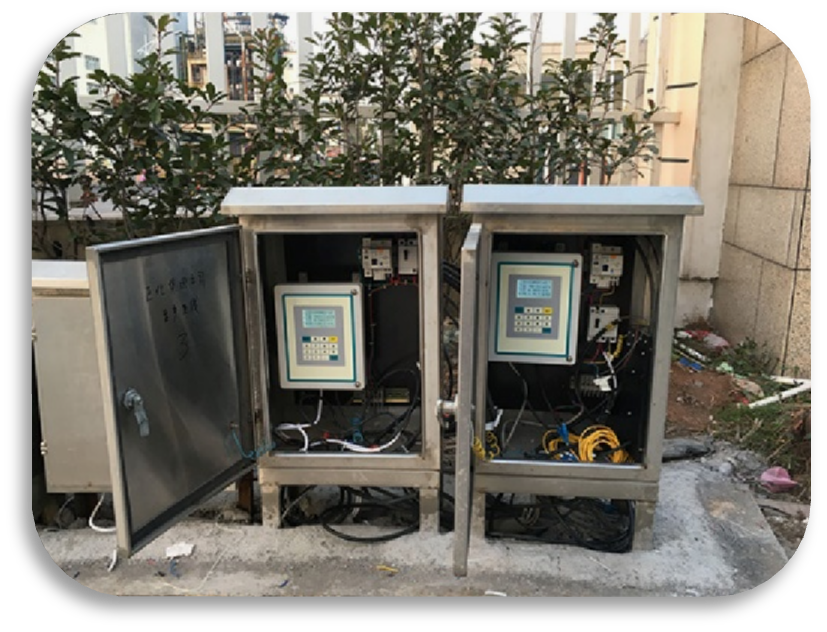
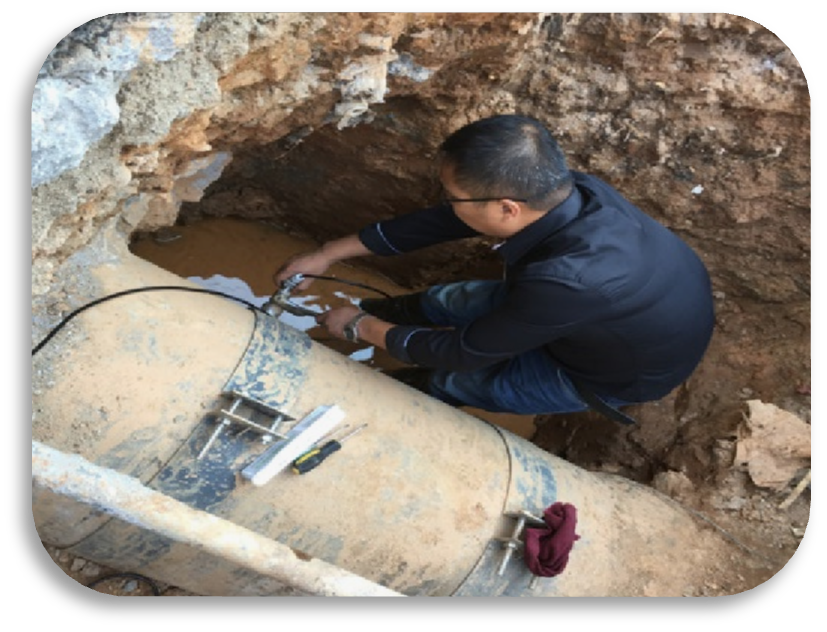
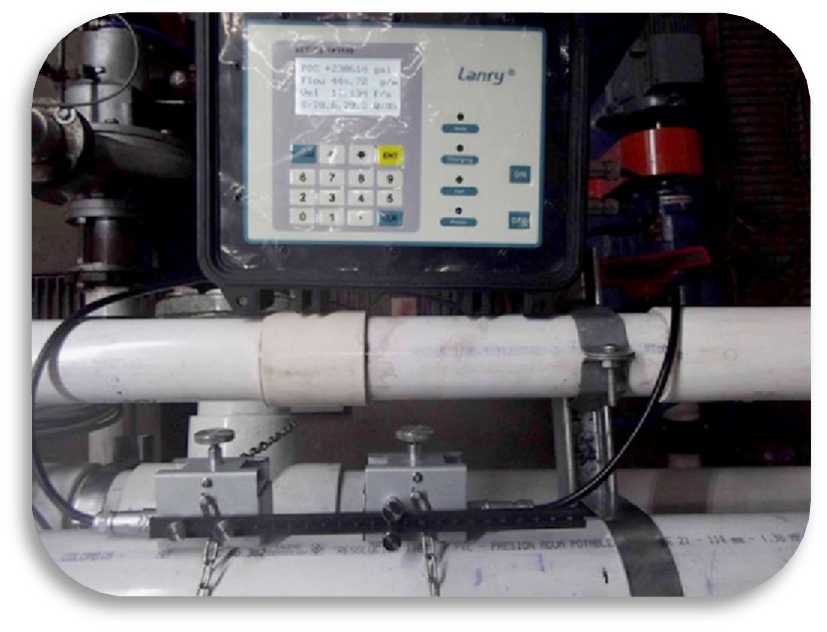
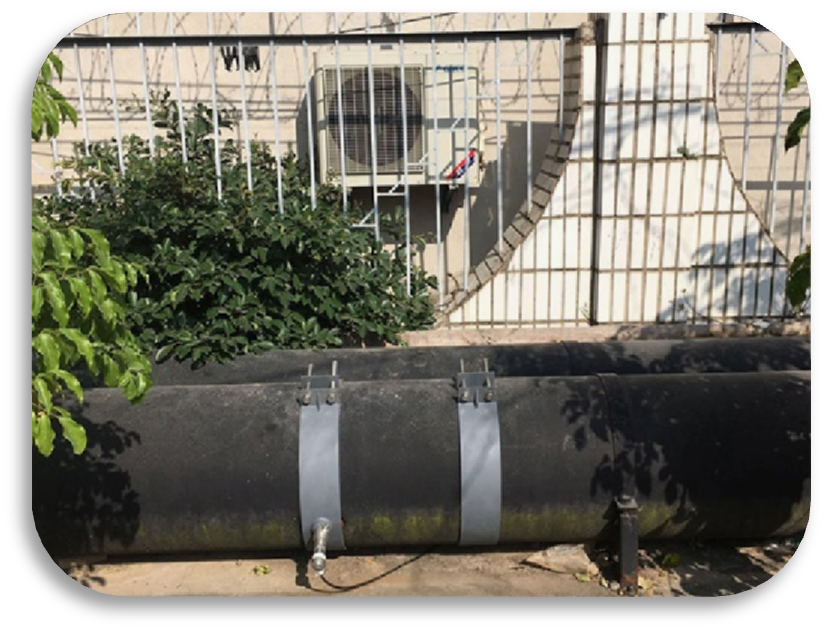
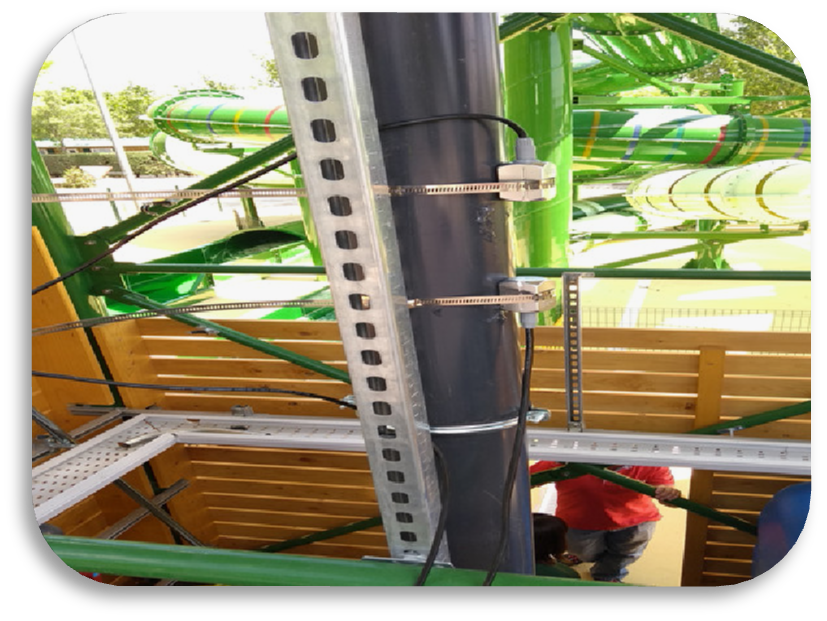
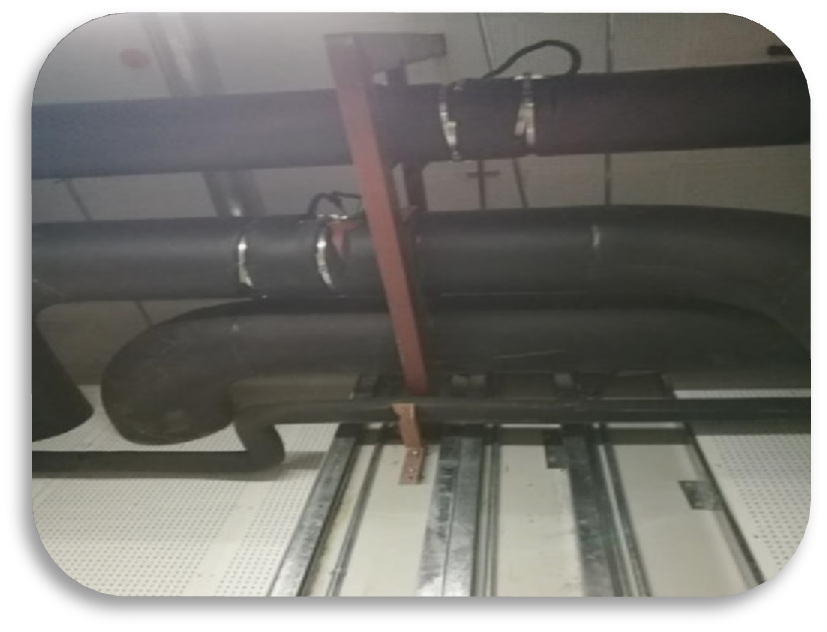
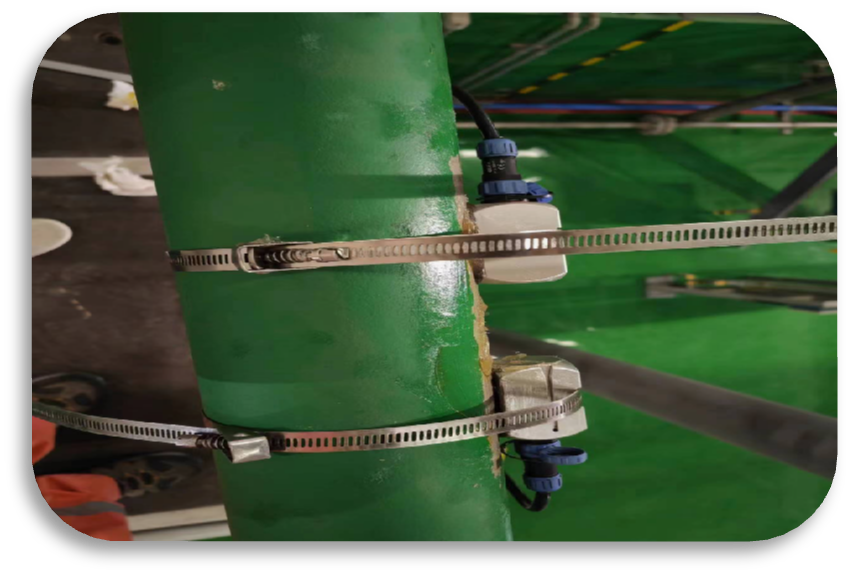
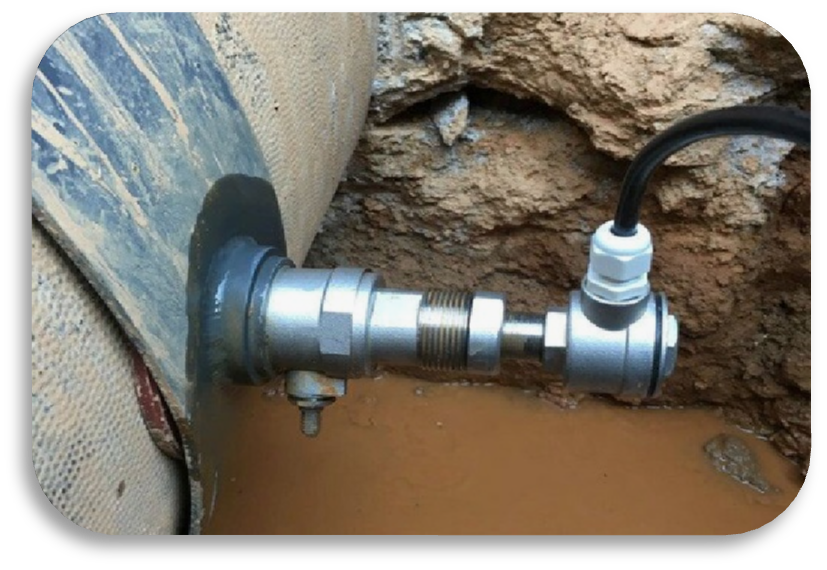
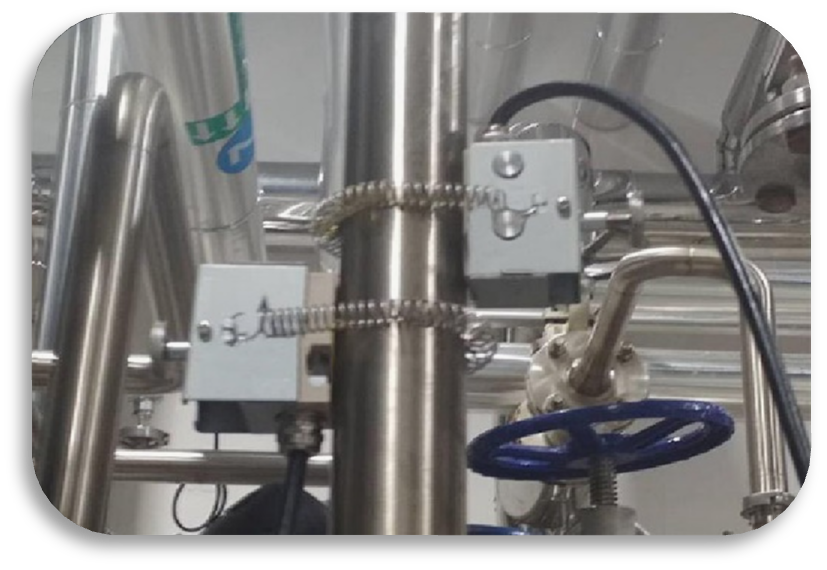
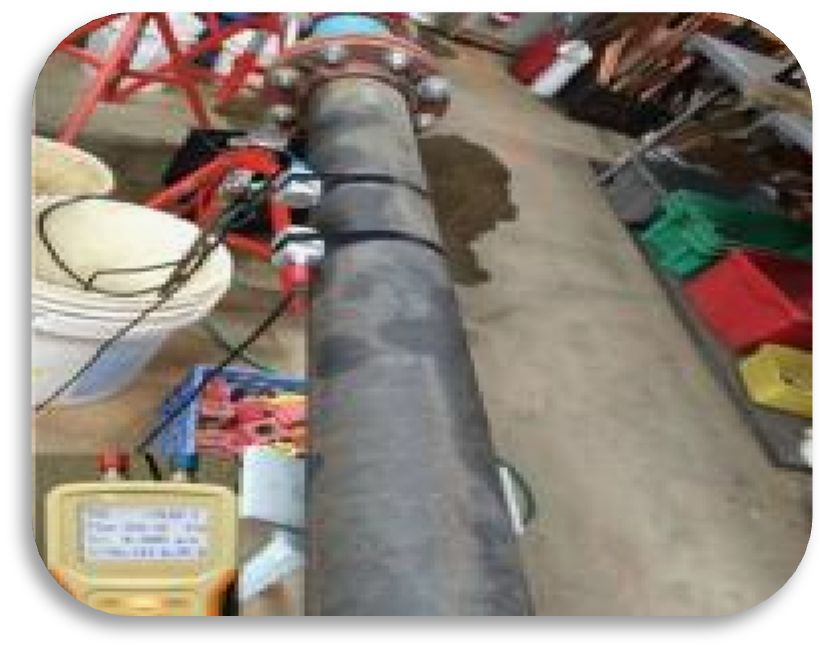
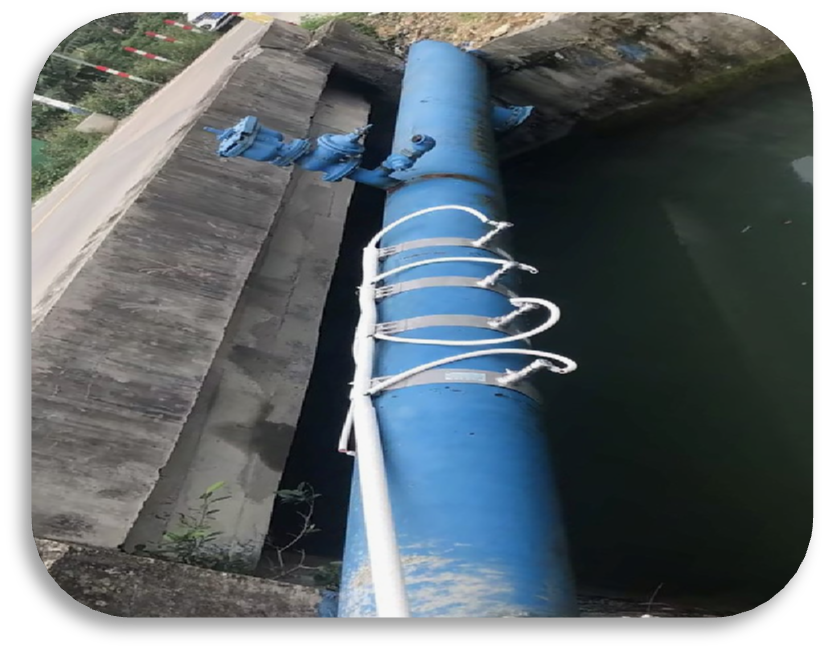
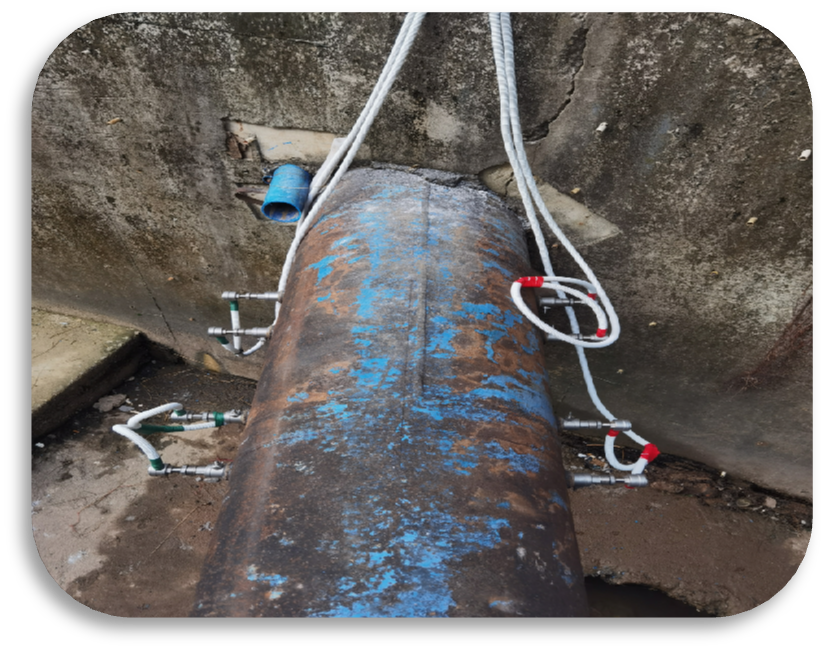
4. Can a TF1100-DC Ultrasonic Flow Meter Be Installed Without Shutting Down the Pipeline?
Yes. One of the main advantages of a clamp-on ultrasonic flow meter is that its sensors are mounted on the outside of the pipe. In a suitable application, installation does not require cutting the pipe, drilling into the pipeline, or opening the process line. This can help reduce installation time and avoid unnecessary production interruptions.
The non-invasive installation method is particularly useful for:
Cooling water circulation systems
HVAC and chilled-water systems
Pump stations and water distribution networks
Temporary flow measurement and commissioning
Checking the performance of existing flow meters
Industrial energy audits and flow surveys
However, non-invasive installation does not mean that every pipe is suitable. The pipe must allow adequate ultrasonic transmission, and the external surface must permit proper sensor mounting and acoustic coupling. Pipe material, wall thickness, liner construction, corrosion, coating, and the presence of air gaps can all affect the measurement signal.
Before purchasing a clamp-on ultrasonic flow meter, provide the manufacturer with the pipe outside diameter, wall thickness, material, liner details, liquid type and operating temperature.
5. Which Liquids Can Be Measured by the TF1100-DC?
The TF1100-DC is a transit-time ultrasonic flow meter intended for compatible liquids in full pipelines. Typical applications include:
The actual application suitability depends on the liquid's acoustic properties, temperature, viscosity, gas content and solids concentration.
6. What Pipe Conditions Affect Ultrasonic Flow Meter Accuracy?
Even a high-quality industrial ultrasonic flow meter can produce unreliable readings if the installation conditions are unsuitable. The following factors deserve particular attention.
7. Why Is the Ultrasonic Signal Weak or Unstable?
Weak signal strength is one of the most common troubleshooting concerns when installing a clamp-on ultrasonic flow meter. If the TF1100-DC displays a weak signal or unstable flow readings, check the following items in order:
A systematic installation check is usually more effective than repeatedly changing instrument settings without identifying the underlying cause.
8. What Is the Accuracy of the TF1100-DC Dual Channel Ultrasonic Flow Meter?
Measurement accuracy depends on the instrument specifications and the actual installation conditions. For the TF1100-DC, Lanry's published product information lists:
These figures should be reviewed together with the applicable measurement conditions and product documentation. It is important to distinguish between instrument accuracy and overall installed measurement accuracy. Even when a flow meter meets its stated specification under suitable conditions, the installed system may be affected by:
Poor acoustic coupling
Unsuitable sensor positioning
A distorted flow profile
Unstable or aerated liquid
Incorrect installation or configuration
For demanding applications, confirm the applicable accuracy conditions with the manufacturer and consider verification against a suitable reference instrument.
9. What Outputs and Communication Options Are Available?
Industrial customers often need to integrate an ultrasonic flow meter with a PLC, SCADA system, building management system, or data acquisition platform. The TF1100-DC product range supports multiple output and communication interfaces for seamless industrial interconnection.
Available Output & Communication Options
- 4–20 mA analog output:Transmit flow measurements to control system
- RS485 Modbus communication:Digital monitoring and system integration
- Pulse output:Flow totalization or external counting
- Relay output:Alarm trigger or simple control functions
- Data logging:Automatically record historical flow information
The available interfaces depend on the selected configuration. Confirm the required output combination before ordering, particularly if the flow meter must communicate with an existing PLC or industrial controller.
Communication protocol, register map, baud rate, device address, wiring, controller settings
Signal range verification, receiving device input configuration
10. Can the TF1100-DC Measure Heat or Thermal Energy?
The TF1100-DC can support optional thermal energy measurement. A typical thermal energy measurement system uses flow information together with the temperature difference between the supply and return lines. The system calculates the thermal energy transferred by the circulating liquid.
Typical Application Scenarios
Chilled-water systems
Hot-water circulation
Industrial heating and cooling
Energy consumption analysis
Temperature sensors and the required configuration must be selected for the application. Confirm the temperature sensor type, installation method, operating temperature, and thermal energy calculation requirements with the manufacturer.
11. What Information Should You Provide Before Buying a TF1100-DC?
To help select the correct ultrasonic flow meter and transducers, prepare the following information before requesting a quotation.
Pipe Parameters
- Pipe outside diameter
- Pipe wall thickness
- Pipe material
- Pipe liner
Liquid & Operating Conditions
- Liquid type
- Operating temperature
- Flow range
- Installation preference
Outputs & Power Supply
- Required outputs
- Power supply type
- 4–20 mA, RS485 Modbus, pulse, relay
Additional Requirements
- Data logging
- Thermal energy measurement
- Other customized needs
Providing these details helps the manufacturer evaluate acoustic compatibility, recommend a suitable transducer arrangement, and reduce the risk of installation problems.
12. Frequently Asked Questions About the TF1100-DC
Q1: Is the TF1100-DC a clamp-on ultrasonic flow meter?
Yes. The TF1100-DC is a wall-mounted dual-channel transit-time ultrasonic flow meter that uses externally mounted clamp-on transducers for non-invasive liquid flow measurement.
Q2: Does installation require cutting the pipe?
No. For a suitable application, the transducers can be installed on the outside of the pipeline without cutting the pipe or opening the process line.
Q3: Can the TF1100-DC measure bidirectional flow?
Yes. It supports forward and reverse flow measurement, subject to correct installation and configuration.
Q4: Can it measure gas flow?
The TF1100-DC is designed for compatible liquid flow measurement. Do not assume it is suitable for ordinary gas flow measurement. Contact the manufacturer if you need to measure a gas or liquefied gas under specific operating conditions.
Q5: Why does the displayed flow rate fluctuate?
Possible causes include insufficient straight pipe length, air bubbles, incorrect sensor spacing, poor acoustic coupling, unstable flow, or incorrect pipe parameters. Check the installation and liquid conditions before adjusting the instrument.
Q6: Is a dual-channel ultrasonic flow meter always more accurate than a single-channel model?
Not necessarily. Dual-channel measurement provides an additional measurement channel, but accuracy depends on the measurement design, installation, flow profile, and operating conditions. Compare the specified accuracy and application requirements of the models being considered.
Q7: Can the TF1100-DC replace an existing mechanical flow meter?
It may be used to check, monitor, or temporarily replace an existing meter in a suitable application. Suitability depends on the required accuracy, liquid characteristics, pipe conditions, and process requirements.
Q8: What should I do if I am unsure whether my pipeline is suitable?
Provide the pipe diameter, wall thickness, material, liner details, liquid type, temperature, and expected flow range to Lanry Instruments. The technical team can help assess whether the TF1100-DC and its transducers are suitable for your application.
Summary
The TF1100-DC dual channel ultrasonic flow meter is a practical choice for industrial users who need non-invasive flow measurement, bidirectional flow monitoring, and integration with industrial control systems.
Its clamp-on installation helps avoid pipe cutting and process interruption in suitable applications. However, accurate measurement still depends on correct transducer selection, reliable acoustic coupling, appropriate straight pipe length, accurate pipe parameters, and compatible liquid conditions.
If you are selecting a dual channel ultrasonic flow meter, transit-time flow meter, clamp-on liquid flow meter, or industrial ultrasonic flow measurement system, contact Lanry Instruments with your pipeline details and measurement requirements.
Tell us your flow measurement application — we'll size the meter
Share your pipe diameter, wall thickness, liquid medium, temperature, flow range and communication requirements. The Lanry technical team will recommend the proper TF1100‑DC configuration and suitable clamp‑on transducers.

With 6+ years of experience in industrial instrumentation, I provide practical solutions for flow measurement, installation, commissioning, and troubleshooting based on real-world project experience. Feel free to contact my WhatsApp.
Post time: Oct-13-2026