

How Does the TF1100‑CH Handheld Ultrasonic Flow Meter Help with On‑Site Flow Measurement?
No pipe cutting. No system shutdown. Portable clamp‑on flow verification for existing closed pipelines.
Discover how the TF1100-CH handheld ultrasonic flow meter measures liquid flow without cutting pipes. Learn about applications, accuracy, installation, signal problems, and selection tips.
1. What Is the TF1100-CH Handheld Ultrasonic Flow Meter?
When engineers need to check pipeline flow, verify an installed flow meter, or carry out maintenance, installing a new inline meter may be expensive and time-consuming.
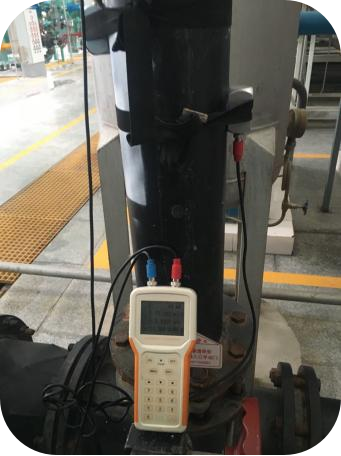
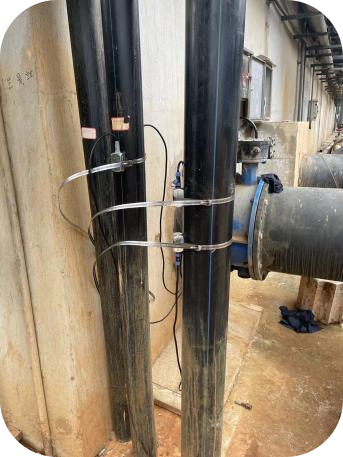
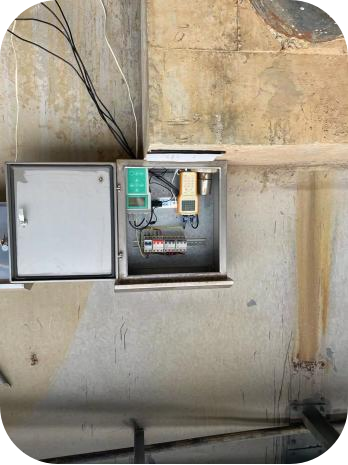
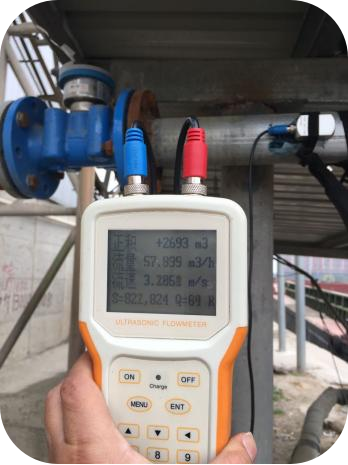
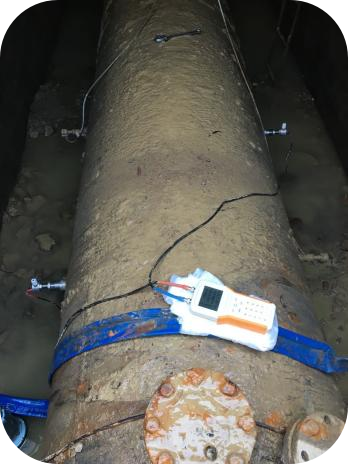
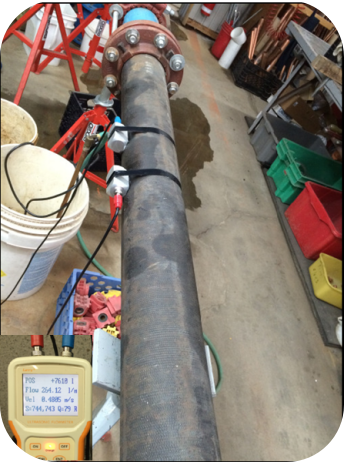
The TF1100-CH handheld ultrasonic flow meter from Lanry Instruments offers a practical alternative. It uses ultrasonic transit-time technology and clamp-on transducers mounted on the outside of a full pipe. This allows users to measure liquid flow without cutting the pipe or bringing the sensors into direct contact with the liquid.
Its portable design makes it suitable for on-site flow measurement, flow meter verification, maintenance inspections, and temporary flow monitoring.


2. How Does a Handheld Transit-Time Ultrasonic Flow Meter Work?
The TF1100-CH uses the transit-time difference method. Two ultrasonic transducers transmit and receive sound signals through the liquid inside a pipe.
When liquid flows through the pipe, the ultrasonic signal traveling downstream takes a different amount of time from the signal traveling upstream. The meter measures this time difference to calculate the liquid velocity and flow rate.
The clamp-on ultrasonic sensors are installed externally, so they do not obstruct the flow or cause pressure loss.
This technology is particularly suitable for water and other liquids that transmit ultrasonic signals adequately.

3. Can the TF1100-CH Measure Flow Without Stopping the Process?
Yes. In many applications, the TF1100-CH can measure flow while the pipeline remains in normal operation. Because the ultrasonic transducers are mounted on the outside of the pipe, there is generally no need to drain the pipeline, cut the pipe, or interrupt the process for sensor installation.
Note: The pipe must be full of liquid at the measurement point. A partially filled pipe, unsuitable pipe material, or poor acoustic transmission can affect the measurement.
Key benefits include:
Applications in water supply, cooling water, wastewater, and industrial liquid systems.

4. Which Pipes and Liquids Can the TF1100‑CH Measure?
The TF1100‑CH supports a range of pipe diameters through different transducer types. According to the product specifications, the available transducers cover common pipe sizes from DN20 up to several thousand millimeters, depending on the configuration.
TF1100-CH: no thermal measurement ability
The meter is designed for closed, full pipelines. Its suitability depends on the liquid's acoustic properties, pipe material, diameter, wall thickness, liner, and temperature.
Note: For highly aerated liquids, liquids containing substantial suspended solids, or very small pipes, confirm application compatibility with the manufacturer before ordering.
5. What Accuracy Can You Expect from the TF1100‑CH?
The published specifications state:
- ✓
Accuracy (>0.3 m/s)
±1.0% of reading at flow velocities above 0.3 m/s. - ✓
Accuracy (<0.3 m/s)
±0.003 m/s, as specified by the manufacturer. - ✓
Bidirectional velocity range
0.01 to 12 m/s.
Actual field performance depends on correct installation and suitable measurement conditions. A wide measuring range does not guarantee the same accuracy under every operating condition.
If you need to verify an existing flow meter, compare readings under stable flow conditions and account for differences in installation and measurement uncertainty.
7. How Do You Install the TF1100-CH Clamp-On Sensors?
Correct sensor installation is essential for repeatable measurements. Follow the step-by-step workflow below for reliable clamp‑on transducer setup.
Pre-installation Preparation
Parameter & Sensor Setup
Signal Check & Installation Rules
As a practical starting point, aim for approximately 10D of straight pipe upstream and 5D downstream when the installation allows it. More straight length may be necessary after pumps, control valves, elbows, or other flow disturbances.
8. Is a Handheld Ultrasonic Flow Meter Better Than an Inline Flow Meter?
Neither type is universally better. The right choice depends on the purpose of the measurement.
| Consideration | TF1100-CH handheld | Inline flow meter |
|---|---|---|
| Installation | External clamp-on sensors | Installed in the pipeline |
| Pipe cutting | Generally not required | Usually required for a new installation |
| Portability | Designed for field measurements | Usually installed permanently |
| Typical purpose | Inspection, verification, temporary measurement | Continuous process monitoring |
| Flow obstruction | No obstruction from the sensors | Depends on meter design |
| Measurement performance | Depends strongly on pipe and acoustic conditions | Depends on meter technology and installation |
The TF1100-CH is a practical choice for maintenance teams, service engineers, and users who need to measure flow at different locations without installing a permanent meter.
For continuous process control, automatic data transmission, or applications requiring a dedicated permanent installation, a fixed ultrasonic or other suitable flow meter may be more appropriate.
FAQ
Does the TF1100-CH require cutting the pipe?
No. Its clamp-on sensors are installed on the outside of a suitable closed pipeline.
Can it measure reverse flow?
Yes. The TF1100-CH supports bidirectional flow measurement.
Can it measure dirty water?
It can handle some liquids containing suspended material, subject to the liquid's acoustic properties. Heavy aeration or high solids concentrations may reduce signal quality.
Can it measure flow in plastic pipes?
Potentially, yes. Suitability depends on the plastic material, pipe wall thickness, diameter, and signal quality. Confirm the application details before ordering.
How long can it operate on its battery?
The manufacturer's manual specifies more than 14 hours of continuous operation on a fully charged internal battery. Actual runtime depends on operating conditions and battery condition.
Can it replace a permanently installed flow meter?
Tell us your flow application — we'll size the meter
Share your pipe size, flow range, liquid medium and communication needs. The Lanry team will recommend the right TF1100‑CH handheld ultrasonic flow meter configuration.

With 6+ years of experience in industrial instrumentation, I provide practical solutions for flow measurement, installation, commissioning, and troubleshooting based on real-world project experience. Feel free to contact my WhatsApp.
Post time: Oct-20-2026