

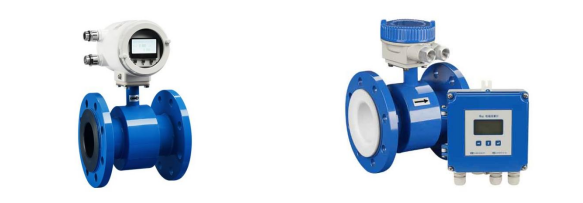
Choosing the right electromagnetic flow meter is essential for achieving accurate and reliable industrial flow measurement. Whether you work in water treatment, wastewater management, chemical processing, mining, or the pulp and paper industry, selecting the correct magnetic flow meter can improve measurement accuracy, reduce maintenance costs, and increase system efficiency.
1. Make Sure Your Liquid Is Conductive
An electromagnetic flow meter (mag meter) works according to Faraday's Law of Electromagnetic Induction, making it suitable for measuring conductive liquids with conductivity above 5 μS/cm. It is widely used for water flow measurement, wastewater, acids, alkalis, slurry, pulp, and other conductive liquid-solid mixtures. However, it is not suitable for oils, gases, or other non-conductive fluids.
2. Select the Correct Pipe Size
Pipe size directly affects measurement performance. The Lanry Mag-11 Electromagnetic Flow Meter offers flange sizes from DN10 to DN2000, as well as threaded models from DN10 to DN40 for low-flow applications. Selecting the correct diameter helps maintain optimal flow velocity and measurement accuracy while reducing installation costs.
3. Choose Suitable Lining and Electrode Materials
Different process media require different wetted materials.
- PTFE, FEP and PFA linings provide excellent chemical resistance for corrosive liquids.
- PU lining is ideal for abrasive media such as slurry and pulp.
- Neoprene (Ne) is suitable for industrial water and wastewater.
Electrode materials including SS316L, Hastelloy C, Hastelloy B, Titanium, Tantalum, Tungsten Carbide, and Platinum-Iridium ensure compatibility with various corrosive and abrasive applications.
4. Consider Communication and System Integration
Modern industrial plants require seamless automation. The Mag-11 supports multiple communication options, including RS485 Modbus RTU, HART, Bluetooth, Data Logger, and optional GPRS communication. Standard 4–20 mA and pulse outputs make integration with PLC, DCS, and SCADA systems simple and reliable.
5. Evaluate Accuracy and Reliability
Measurement accuracy is critical in industrial processes. The Mag-11 provides stable performance with accuracy up to ±0.2%, excellent repeatability, and online parameter adjustment. With no moving parts, the meter eliminates pressure loss, minimizes clogging, and requires very little maintenance, making it an ideal long-term flow measurement solution.
6. Check Environmental Requirements
Installation conditions should also be considered. The Mag-11 is available in compact and remote versions, with protection ratings up to IP68, allowing reliable operation in demanding industrial environments. It supports power supplies including 24VDC, 220VAC, and 100–240VAC, providing flexibility for different installations.
Applications
Electromagnetic flow meters are widely used in:
- Water and wastewater treatment
- Chemical processing
- Mining and slurry transportation
- Pulp and paper production
- Food and beverage manufacturing
- Municipal water distribution
- Industrial process control

Conclusion
Selecting the right electromagnetic flow meter involves more than matching the pipe size. Conductivity, lining materials, electrode selection, communication protocols, accuracy, and environmental protection all influence long-term performance. The Lanry Mag-11 Electromagnetic Flow Meter combines high accuracy, multiple communication options, durable construction, and flexible configurations to provide dependable flow measurement for a wide range of industrial applications.
If you are looking for a reliable magnetic flow meter for water, wastewater, chemicals, or slurry measurement, Lanry Instruments offers customized solutions to meet your specific process requirements.
Post time: Jul-28-2026