

Liquid level measurement is a fundamental part of industrial process monitoring, widely applied in water treatment, chemical processing, petroleum storage, food production and energy industries. A liquid level meter is a specialized instrument used to detect, display and control the liquid height in tanks, vessels and pipelines. With the upgrading of industrial automation, traditional manual observation has been phased out, and modern intelligent level meters have become essential equipment to ensure production safety, stabilize process parameters and realize efficient resource management. Different types of level meters adopt diverse working mechanisms, each with unique advantages to adapt to complex working conditions.
According to measurement modes, industrial liquid level meters are mainly divided into contact and non-contact types, covering low-cost conventional models and high-precision intelligent devices. Traditional contact level meters include float level meters, magnetic flap level meters and submersible pressure level meters. Float level meters operate based on buoyancy principle: the float rises and falls with the liquid level, and the mechanical or magnetic transmission structure converts displacement into visual or electrical signals. This type of meter features simple structure, low cost and easy installation, suitable for conventional water and low-viscosity liquid measurement in civil and general industrial scenarios.
Magnetic flap level meters are optimized based on float structures and are one of the most widely used contact measuring devices. Equipped with a sealed measuring chamber and internal magnetic float, they drive the external magnetic indicator to flip and display liquid level height through magnetic coupling. Fully sealed design avoids liquid leakage, with excellent corrosion resistance and explosion-proof performance, making them applicable for flammable, explosive and corrosive media such as chemical solvents and oil products. Submersible level meters calculate liquid level by detecting hydrostatic pressure, delivering stable analog signals and realizing real-time remote monitoring, which is ideal for deep water tanks and underground liquid storage facilities.
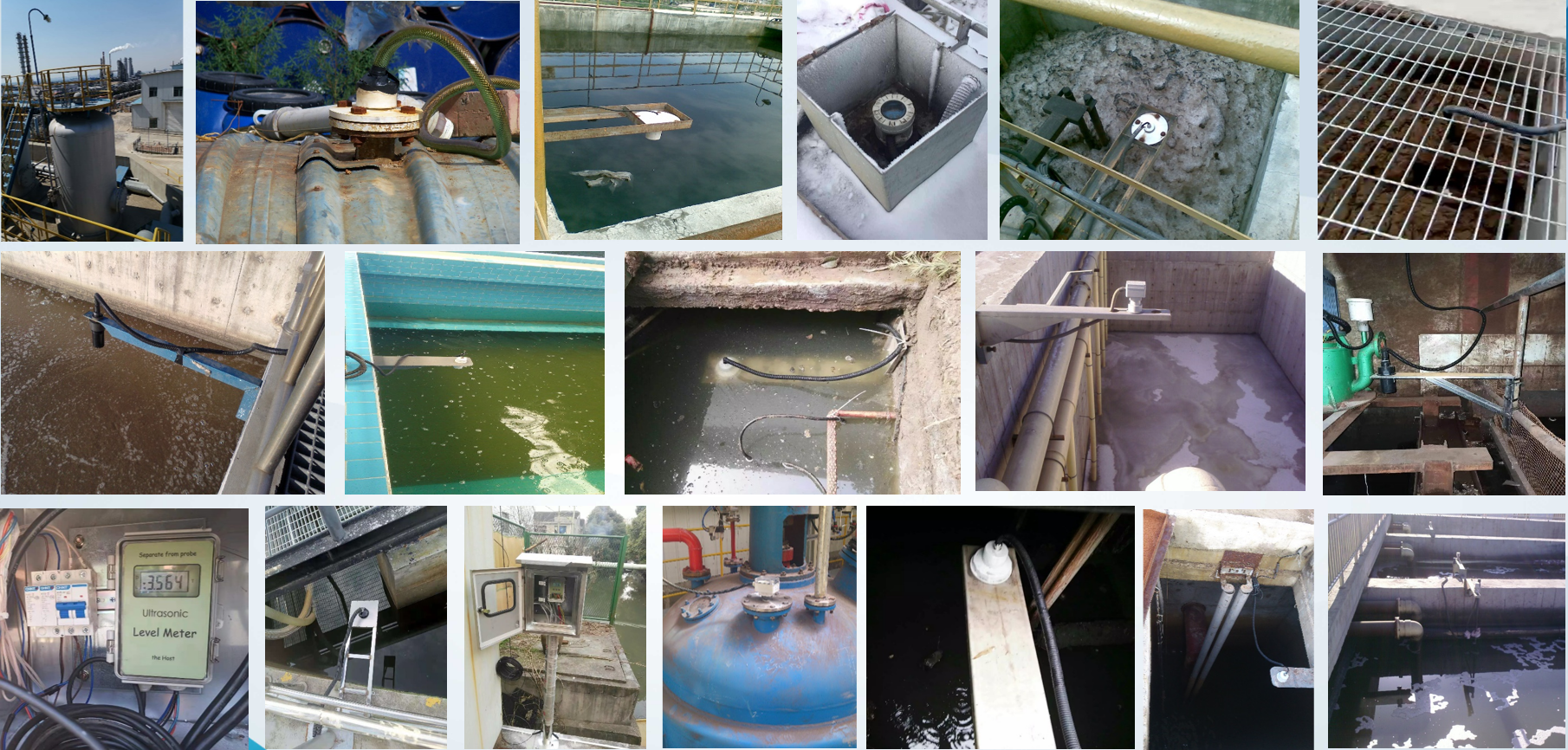
In contrast, non-contact level meters represented by ultrasonic and radar level meters are the mainstream of modern intelligent measurement. They work on the time-of-flight principle, emitting ultrasonic or electromagnetic waves to the liquid surface and calculating level height according to signal reflection time. The biggest advantage of non-contact meters is zero contact with measured media, completely avoiding probe contamination, corrosion and medium interference. Ultrasonic level meters are cost-effective, easy to calibrate and suitable for most non-volatile clean liquids. Radar level meters, with stronger signal penetration and anti-interference ability, can stably measure high-temperature, high-pressure, volatile and steam-containing working conditions, widely used in petrochemical and high-precision industrial scenarios.
Modern liquid level meters possess prominent comprehensive performance advantages. Firstly, they deliver high measurement accuracy and long-term stability, effectively avoiding manual reading errors. Secondly, most intelligent models support real-time data transmission, remote viewing and automatic alarm functions, which can linkage-control feeding and discharging systems to prevent tank overflow or liquid shortage. In addition, excellent environmental adaptability enables them to work stably in extreme temperature, humidity and electromagnetic interference environments, with low failure rate and simple daily maintenance. Unlike traditional measuring tools, they cause no medium pollution or pressure loss, meeting industrial energy-saving and environmental protection requirements.
In industrial production, the selection of level meters depends on medium characteristics, working pressure, temperature and measurement accuracy requirements. Conventional contact meters meet low-budget and conventional working condition demands, while non-contact intelligent meters adapt to high-end and harsh industrial scenarios. As industrial automation and intelligent management continue to develop, liquid level meters are evolving towards higher precision, stronger anti-interference and smarter data linkage, providing reliable basic guarantee for safe, efficient and standardized operation of various industrial fluid systems.
Post time: Aug-04-2026