

1. Highlights of Doppler Ultrasonic Flow Meters
01 Wide Flow Velocity Range:
The DF6100-EC can measure flow velocity from approximately 0.05 to 12 m/s.
02 Doppler Ultrasonic Measurement
Uses the Ultrasonic Doppler Principle to detect reflections from moving particles or bubbles and calculate liquid velocity.
03 Non-Invasive Clamp-On Installation:
Sensors are mounted on the outside of the pipe without cutting the pipeline or interrupting the process.
04 Wide Range of Applications:
Suitable for wastewater, sewage, sludge, pulp, slurry, industrial drainage, and other liquids containing impurities.
05 Fixed and Portable Options:
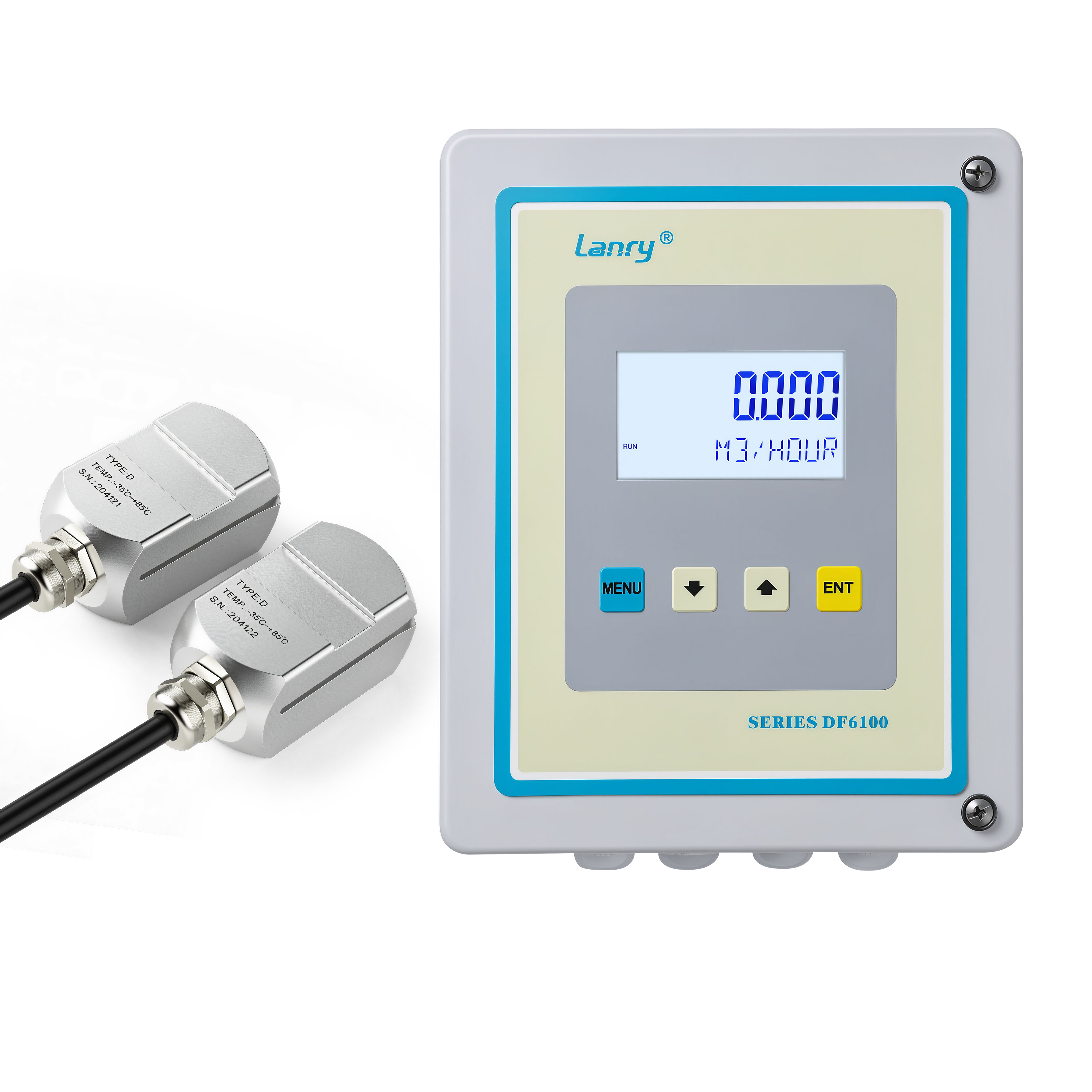
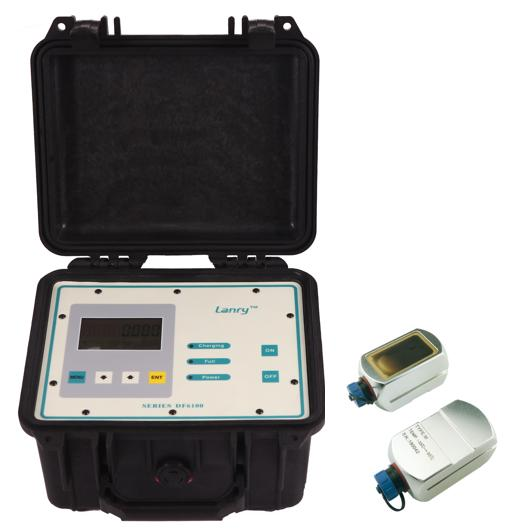
DF6100-EC is designed for fixed flow monitoring, while DF6100-EP provides a portable solution for field measurement and testing.
2. Why Is a Doppler Flowmeter Suitable for Pipelines with Air Bubbles?
Pipelines carrying wastewater, sludge, industrial drainage, and other complex liquids often contain air bubbles or suspended particles. These conditions can make flow measurement more difficult for some flowmeter technologies.
The Lanry Instruments DF6100 Series Doppler Ultrasonic Flow Meter is specifically designed for these types of applications. Unlike measurement methods that require a relatively clean liquid, the Doppler principle uses suspended particles or gas bubbles in the liquid as ultrasonic reflectors.
The transmitter sends ultrasonic energy into the liquid. When the ultrasonic signal encounters moving particles or bubbles, part of the signal is reflected back toward the receiving transducer. The frequency of the reflected signal changes according to the movement of the particles or bubbles. The instrument analyzes this frequency shift and converts it into liquid velocity.
Therefore, a pipeline containing a suitable amount of air bubbles or suspended solids can provide the reflectors required for Doppler measurement.
3. How Does the DF6100 Series Measure Flow in Aerated Liquids?
The DF6100 Series uses the Ultrasonic Doppler Principle to measure liquid velocity.
The transmitting transducer sends ultrasonic waves through the pipe wall and into the liquid. Suspended particles or air bubbles moving with the liquid reflect part of the transmitted ultrasonic energy back to the receiving transducer.
The frequency difference between the transmitted and reflected signals is related to the velocity of the moving reflector. The flowmeter processes this Doppler frequency shift and calculates the liquid velocity.
For the DF6100 series, useful sonic reflectors include suspended particles and bubbles larger than approximately 100 microns. Therefore, the liquid must contain a certain amount of suitable reflectors for effective Doppler measurement.
This principle makes the DF6100 particularly suitable for dirty or aerated liquids.
4. What Liquid Conditions Are Suitable for the DF6100 Series?
The DF6100 Series is designed to measure liquids flowing through full closed pipelines where a certain amount of air bubbles or suspended solids is present.
Typical liquid conditions include:
| Liquid Condition | DF6100 Suitability |
|---|---|
| Liquid with air bubbles | Suitable |
| Liquid with suspended solids | Suitable |
| Wastewater | Suitable |
| Sewage | Suitable |
| Sludge | Suitable |
| Pulp or slurry | Suitable |
| Clean tap water with insufficient reflectors | Generally unsuitable |
| Full pipeline | Required |
The presence of particles or bubbles is important because the Doppler measurement depends on reflected ultrasonic signals. The DF6100 documentation specifically notes that clean liquids without sufficient reflectors are not suitable for this measurement principle.
For clean water applications, a transit-time ultrasonic flowmeter can be considered instead.
5. What Applications Is the DF6100 Series Suitable For?
The DF6100 Series is designed for applications where liquids contain suspended particles or bubbles. Its measurement principle makes it particularly useful in wastewater and industrial processes.
| Application | Typical Measurement Conditions |
|---|---|
| Wastewater Treatment | Raw sewage, activated sludge, plant drainage |
| Industrial Wastewater | Industrial drainage and waste liquids |
| Pulp and Paper | Pulp and slurry-containing liquids |
| Mining | Ore slurry and impure circulating water |
| Chemical Industry | Chemical slurry and mixed liquids |
| Cooling Systems | Circulating water containing impurities |
| Animal Processing | Wastewater containing solid components |
| Groundwater | Water containing suspended components |
The DF6100 documentation lists raw sewage, return activated sludge, waste activated sludge, internal plant drainage, pulp, ore slurry, chemical slurries, and impurity-containing circulation water among its applications.
These applications have one thing in common: the liquid is not necessarily clean and may contain particles or bubbles that can act as ultrasonic reflectors.
6. What Makes the DF6100 Series a Non-Invasive Flow Measurement Solution?
One of the main advantages of the DF6100 Series is its clamp-on installation method.
The ultrasonic transducers are installed directly on the outside surface of the existing pipeline. There is no need to cut the pipe or insert a measuring element into the liquid.
This provides a practical solution for existing pipelines where process interruption or pipe modification is undesirable.
The installation method offers several benefits:
- ✓ No pipe cutting
- ✓ No need to empty the pipeline
- ✓ No direct contact between the sensor and process liquid
- ✓ No additional pressure loss caused by an inserted flow element
- ✓ Convenient installation on existing pipelines
- ✓ Suitable for retrofit flow measurement
For the DF6100-EC, the transducers are clamped onto the external pipe wall, with acoustic couplant used to improve ultrasonic transmission between the sensor and pipe.
7. What Should Be Considered When Installing the DF6100?
Although the DF6100 uses non-invasive installation, the installation position still affects measurement performance.
A suitable pipe section should provide sufficient straight pipe upstream and downstream of the sensor installation point. This helps the liquid develop a more stable and symmetrical velocity profile before entering the measurement area.
The pipe surface should also provide good acoustic contact with the transducer. Proper acoustic couplant should be applied between the sensor and pipe wall to help ultrasonic energy pass through the pipe wall effectively.
Another important condition is that the pipeline should remain full of liquid during measurement. The DF6100-EP documentation specifies that the pipeline must be full and contain a certain amount of air bubbles or suspended solids.
8. What Is the Difference Between DF6100-EC and DF6100-EP?
The DF6100 Series provides both fixed and portable configurations to meet different flow monitoring requirements.
| Feature | DF6100-EC | DF6100-EP |
|---|---|---|
| Type | Fixed clamp-on flowmeter | Portable clamp-on flowmeter |
| Main Application | Long-term monitoring | Temporary measurement and field testing |
| Installation | Fixed | Portable and movable |
| Measurement Principle | Doppler ultrasonic | Doppler ultrasonic |
| Pipe Condition | Full pipeline | Full pipeline |
| Liquid Condition | Bubbles or suspended solids | Bubbles or suspended solids |
| Typical Applications | Wastewater and industrial systems | Site surveys, testing and troubleshooting |
The DF6100-EC is suitable when the measurement point needs to remain installed for continuous monitoring.
The DF6100-EP is more suitable when engineers need to move the instrument between different measurement locations or perform temporary field testing. It can display flow rate and totalized flow and provides 4–20 mA and OCT outputs.
9. What Flow Velocity Range Can the DF6100-EC Measure?
The DF6100-EC provides a flow velocity measurement range of approximately 0.05–12 m/s.
This range allows the flowmeter to monitor different flow conditions, from relatively slow-moving liquids to faster industrial flows. The sensors can also achieve an IP68 protection level, which is useful for demanding environments with moisture and other harsh operating conditions.
For wastewater treatment plants and industrial facilities, this combination of wide velocity range and protected sensors can support long-term flow monitoring in challenging environments.
10. Can the DF6100 Series Measure Clean Water?
The answer depends on whether the water contains sufficient ultrasonic reflectors.
The DF6100 Doppler flowmeter requires suspended particles or gas bubbles to reflect ultrasonic energy back to the receiving transducer. Therefore, clean tap water with very few particles or bubbles may not provide sufficient reflected signals for reliable measurement.
This is an important distinction when selecting an ultrasonic flowmeter.
For clean liquids: a transit-time ultrasonic flowmeter may be more appropriate.
For liquids containing sufficient suspended particles or air bubbles: a Doppler ultrasonic flowmeter such as the DF6100 can be considered.
The correct technology should therefore be selected according to the actual liquid conditions rather than simply the pipe size or installation requirements.
11. What Makes the DF6100 Series Suitable for Complex Flow Measurement?
The DF6100 Series combines the Doppler measurement principle with non-invasive clamp-on installation, providing a practical solution for challenging liquid conditions.
Its main characteristics include:
- ✓ Doppler ultrasonic measurement
- ✓ Suitable for aerated and dirty liquids
- ✓ Measurement using suspended particles or bubbles as reflectors
- ✓ Non-invasive external installation
- ✓ Full-pipe measurement
- ✓ Fixed and portable versions
- ✓ Applications in wastewater and industrial processes
- ✓ 0.05–12 m/s velocity range for DF6100-EC
- ✓ IP68 sensor protection
- ✓ 4–20 mA and OCT outputs for DF6100-EP
These features allow the DF6100 Series to be used across a wide range of applications where liquids contain impurities, suspended solids, or air bubbl

Daniel Chen | Technical Support Engineer
Technical Support Engineer of Lanry Instruments, brings more than a decade of field-proven experience in flow metering. I excel at technical advisory, site application diagnostics and tailored solution development across Lanry’s complete flow meter product line.
Post time: Sep-16-2026